CAIIB ABFM: Five Functions of Management सरल हिंदी में
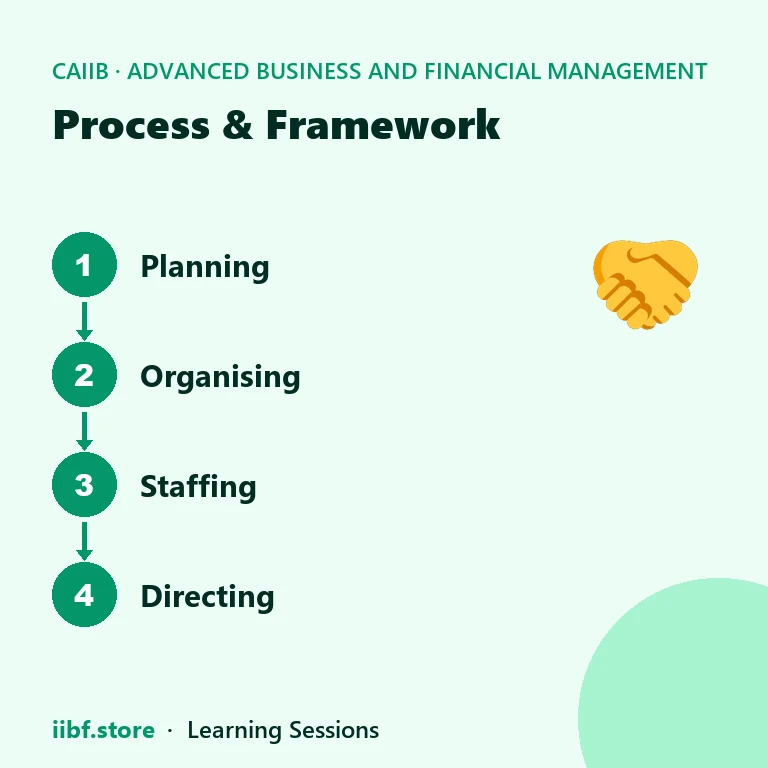
management के पाँच functions — Planning, Organising, Staffing, Directing और Controlling — CAIIB Advanced Business and Financial Management (ABFM) के सबसे लगातार पूछे जाने वाले टॉपिक्स में से एक हैं। हर साल candidates Organising और Staffing को आपस में मिलाकर, या यह भूलकर कि Controlling वापस Planning तक loop बंद करती है, आसान marks गँवा देते हैं। इस guide में five functions of management को उसी तरह समझाया गया है जैसे IIBF CAIIB ABFM syllabus में इन्हें प्रस्तुत करता है, साथ में वे distinctions भी दिए गए हैं जो examiners पूछना पसंद करते हैं और एक quick-reference table है जिसे आप exam से एक रात पहले revise कर सकते हैं।
📋 Planning: जहाँ से Five Functions of Management शुरू होते हैं
Planning पूरी management process का starting point है, और यह लगभग हमेशा वह पहला function होता है जिससे CAIIB ABFM candidates सबसे पहले परिचित होते हैं। यह एक intellectual, forward-looking function है — पहले से तय करना कि क्या किया जाना है, कब किया जाना है, और कौन इसे करेगा। एक bank branch manager जो quarterly deposit-mobilisation target तय करता है, या एक treasury team जो liquidity forecast बनाती है, वह Planning function ही कर रहा होता है। Planning कोई एक बार होने वाली घटना नहीं है; यह objectives तय करने, environment का forecast करने, alternatives का मूल्यांकन करने और सबसे efficient course of action चुनने की एक continuous process है।
CAIIB examiners अक्सर Planning की characteristics पूछते हैं: यह pervasive है (हर level पर की जाती है), यह futuristic है, और बाकी चारों functions इसी की नींव पर टिके होते हैं — आप उस goal के लिए resources को organise या लोगों को direct नहीं कर सकते जिसकी योजना कभी बनाई ही नहीं गई। Planning का विस्तृत chapter plans के प्रकार (strategic, tactical, operational), planning process के steps, और rigid policies या अपर्याप्त information जैसी common barriers को कवर करता है। इसे basic of management chapter के साथ पढ़ें, जो वह vocabulary — objectives, policies, procedures और standards — तय करता है जो बाकी हर function में बार-बार आती है।
💡 Exam Tip: अगर कोई CAIIB question किसी activity को "पहले से तय करना" बताता है, तो जवाब लगभग हमेशा Planning ही होता है — चाहे scenario credit appraisal या budget preparation जैसे banking context में क्यों न सजाया गया हो।
🗂️ Organising और Staffing: Structure बनाना
एक बार plan बन जाए, तो management को वह structure बनाना होता है जो उसे लागू करे — यही Organising function है। Organising का मतलब है objective हासिल करने के लिए ज़रूरी activities की पहचान करना, उन्हें departments या roles में समूहित करना, authority सौंपना, और relationships स्थापित करना ताकि लोगों को पता हो कि कौन किसे report करता है। span of control, delegation, departmentation और scalar chain जैसी concepts इसी function के अंदर आती हैं। किसी bank में यह तय करना कि credit processing केंद्रीय रूप से hub पर होगी या branch-level officers को सौंपी जाएगी, एक classic organising decision है। Organising का chapter formal बनाम informal organisation structures और sound organisational design के principles को विस्तार से समझाता है।
Staffing वह function है जिसे candidates सबसे ज़्यादा Organising के साथ confuse करते हैं, और यह CAIIB का एक पसंदीदा trap है। Organising chart पर positions बनाती है; Staffing उन्हें सही लोगों से भरती है। Staffing में manpower planning, recruitment, selection, training, placement और performance appraisal आते हैं — यानी सही व्यक्ति को सही role से मिलाना और career development के ज़रिए इस match को बनाए रखना। समर्पित STAFFING chapter manpower forecasting से लेकर separation तक staffing process को step by step समझाता है, और इसे Organising के तुरंत बाद पढ़ना चाहिए ताकि दोनों के बीच की boundary दिमाग में साफ बनी रहे।
⚠️ Common Mistake: Candidates अक्सर recruitment और training से जुड़े questions को "Organising" मान लेते हैं क्योंकि दोनों लोगों से जुड़े हैं। याद रखें — Organising structure और roles के बारे में है; Staffing उन लोगों के बारे में है जो उन roles पर बैठते हैं।
🎯 Directing: Plans को Action में बदलना
Directing वह function है जो कागज़ पर बने plan को ज़मीन पर performance में बदलती है। यह management का executive, लोगों से जुड़ा function है, और CAIIB ABFM इसके अंतर्गत चार elements रखता है: supervision, motivation, leadership और communication। कोई manager जब team को direct करता है, तो वह सिर्फ instructions नहीं दे रहा होता — वह subordinates का मार्गदर्शन कर रहा होता है, उन्हें प्रेरित कर रहा होता है और उनसे communicate कर रहा होता है ताकि individual effort organisational objectives के साथ align हो सके। चूँकि Directing hierarchy के हर level पर लगातार होती रहती है, और चूँकि यह सीधे human behaviour से जुड़ी है, इसे अक्सर वह function कहा जाता है जो organisation को गति में "actuate" करता है।
DIRECTING chapter में leadership theories, motivation models और communication barriers को विस्तार से कवर किया गया है — यह वह section भी है जिसके ABFM में behavioural-finance से जुड़े questions के साथ overlap होने की सबसे ज़्यादा संभावना है, इसलिए इसे सरसरी तौर पर न पढ़कर ध्यान से पढ़ें। Directing, Staffing से गहराई से जुड़ी है (आप लोगों को तभी lead कर सकते हैं जब वे जगह पर हों) और यह सीधे Controlling में जाकर मिलती है, क्योंकि supervision स्वाभाविक रूप से उन gaps को सामने लाती है जिन्हें controlling बाद में औपचारिक रूप से मापती है।
📌 Remember: Planning और Organising मुख्यतः "सोचने और structure बनाने" वाले functions हैं जो काम शुरू होने से पहले किए जाते हैं; Directing और Controlling "करने और जाँचने" वाले functions हैं जो काम के दौरान और उसके बाद किए जाते हैं।
🔍 Controlling: Management Loop बंद करना
Controlling पाँचवाँ और आख़िरी function है, और यही management को एक सीधी लाइन के बजाय एक genuine cycle बनाता है। Controlling का मतलब है actual performance को planning के दौरान तय standards से मापना, deviations की पहचान करना, उनके कारणों का विश्लेषण करना, और corrective action लेना। banking की भाषा में, यह बिल्कुल वही है जो तब होता है जब किसी branch के actual disbursement figures की तुलना month-end पर budgeted target से की जाती है, या जब NPA levels में variance credit process की समीक्षा को ट्रिगर करता है। चूँकि Controlling से मिलने वाला corrective action अक्सर सीधे एक revised plan में feed होता है, यही function management cycle को बंद — और फिर से शुरू — करता है।
Controlling chapter control process (standards तय करना, performance मापना, तुलना करना, सुधारना) और budgetary control, statistical reports, break-even analysis तथा management information systems (MIS) जैसी common control techniques का विवरण देता है। Candidates को यह भी ध्यान रखना चाहिए कि जहाँ Planning अनिवार्यतः forward-looking है, वहीं Controlling अपने measurement में backward-looking लेकिन अपने corrective intent में forward-looking है — यह एक ऐसा nuance है जिसे CAIIB "which statement is most accurate" शैली के questions से जाँचना पसंद करता है।
एक बार जब five functions of management आपके दिमाग में पाँच अलग-अलग topics के बजाय एक जुड़े हुए cycle के रूप में बैठ जाते हैं, तो related CAIIB ABFM material को समझना कहीं आसान हो जाता है। उदाहरण के लिए, capital structure theories के अंतर्गत पढ़े जाने वाले capital allocation decisions अंततः Planning function के outputs हैं, economic value added EVA जैसे performance metrics Controlling-function के tools हैं जिनसे यह मापा जाता है कि actually value बनी या नहीं, और lease versus buy decision analysis के अंतर्गत कवर किए गए asset-acquisition विकल्प Organising शुरू होने से पहले होने वाले classic Planning-stage मूल्यांकन हैं। risk के मोर्चे पर, CAIIB Risk Management में sale of stressed assets to ARCs जैसे decisions रोज़मर्रा के operations के बजाय balance-sheet clean-up पर लागू वही Planning-Organising-Controlling logic दिखाते हैं।
📊 एक नज़र में Five Functions of Management
| Function | यह कौन-सा मुख्य प्रश्न हल करता है? | मुख्य Tools / Activities | मुख्यतः People-Focused? |
|---|---|---|---|
| Planning | क्या किया जाना है, और कैसे? | Forecasting, objective-setting, budgeting, SWOT analysis | ❌ |
| Organising | कौन क्या करता है, और कौन किसे report करता है? | Org charts, departmentation, delegation, span of control | ❌ |
| Staffing | हर role के लिए सबसे उपयुक्त कौन है? | Recruitment, selection, training, appraisal | ✅ |
| Directing | रोज़मर्रा action को कैसे guide किया जाता है? | Leadership, motivation, supervision, communication | ✅ |
| Controlling | क्या हमने वही हासिल किया जिसकी योजना बनाई थी? | Budgetary control, variance analysis, MIS reports | ❌ |
official CAIIB examination structure और वर्तमान ABFM syllabus weightage के लिए, हमेशा IIBF की अपनी published material iibf.org.in पर जाँच लें, न कि secondhand notes पर भरोसा करें, क्योंकि paper structures समय-समय पर revise होते रहते हैं।

🧠 Practice MCQs: Five Functions of Management
Q1. Management का कौन-सा function organising और controlling के बीच "bridge" कहा जाता है क्योंकि इसमें subordinates को guide और motivate करना शामिल है? (a) Planning (b) Staffing (c) Directing (d) Controlling
Answer: (c) — Directing structure और plans को leadership और motivation के ज़रिए actual performance में बदलकर organisation को actuate करती है।
Q2. span of control तय करना और positions के बीच authority सौंपना management के किस function के अंतर्गत आता है? (a) Planning (b) Organising (c) Staffing (d) Controlling
Answer: (b) — Organising activities को समूहित करने, authority सौंपने, और reporting relationships तय करने से जुड़ी है।
Q3. Management का कौन-सा function अनिवार्यतः forward-looking है और इसमें objectives तय करना तथा पहले से course of action decide करना शामिल है? (a) Controlling (b) Directing (c) Planning (d) Staffing
Answer: (c) — Planning वह intellectual, अग्रिम function है जो बाकी सभी management activity से पहले आता है।
Q4. Recruitment, selection, training और performance appraisal किस function की core activities हैं? (a) Organising (b) Staffing (c) Directing (d) Planning
Answer: (b) — Staffing सही लोगों को organising function द्वारा बनाए गए roles से मिलाने से जुड़ी है।
Q5. actual performance की planned standards से तुलना करना और corrective action लेना किस function का वर्णन करता है? (a) Planning (b) Organising (c) Directing (d) Controlling
Answer: (d) — Controlling performance को standards से मापती है और loop को वापस planning तक बंद करती है।
100+ MCQs वाले chapter-wise mock tests चाहिए? अभी free practice शुरू करें →
❓ अक्सर पूछे जाने वाले प्रश्न
क्या five functions of management sequential हैं या continuous?
इन्हें एक strict sequence के बजाय एक continuous cycle के रूप में समझना बेहतर है। Planning और Organising आमतौर पर पहले आते हैं, लेकिन Directing और Controlling रोज़मर्रा के operations के साथ-साथ चलते रहते हैं, और Controlling का output नियमित रूप से वापस एक नए Planning round में feed होता है।
functions-of-management framework सबसे पहले प्रस्तावित करने का श्रेय किसे जाता है?
यह framework management theorist Henri Fayol तक जाता है, जिन्होंने planning, organising, commanding, coordinating और controlling को core administrative functions बताया था। CAIIB ABFM material इसी नींव पर बना एक simplified five-function version प्रस्तुत करता है।
CAIIB ABFM में Staffing, Organising से कैसे अलग है?
Organising structure बनाती है — departments, positions और reporting lines। Staffing recruitment, training और appraisal के ज़रिए उन positions को उपयुक्त लोगों से भरती है। पहले structure आता है; लोग बाद में आते हैं।
Controlling को management cycle की आख़िरी कड़ी क्यों कहा जाता है?
Controlling actual results को Planning के दौरान तय standards से मापती है और gap होने पर corrective action ट्रिगर करती है। चूँकि वह corrective action आमतौर पर अगले planning round को नया आकार देता है, Controlling cycle को बंद भी करती है और फिर से शुरू भी करती है।
Five functions of management को अलग-अलग topics के बजाय एक connected cycle के रूप में समझ लेने से आपको CAIIB ABFM paper के बड़े हिस्से के लिए एक mental map मिल जाता है, और इससे capital budgeting से लेकर performance metrics तक जुड़े topics को समझना कहीं आसान हो जाता है। यहाँ जो पढ़ा है उसे iibf.store पर IIBF CAIIB course के topic-wise mock questions और full-length CAIIB practice papers से reinforce करें, और Advanced Business and Financial Management tag hub पर ABFM की और coverage देखें।
Quick quiz on this topic
5 exam-style questions from our free test bank — check yourself before you move on.
Practice this topic
मुफ़्त मॉक टेस्ट दें, चैप्टर PDF डाउनलोड करें या वीडियो क्लास देखें — सब iibf.store पर मुफ़्त है।
पढ़ना जारी रखें