Income Recognition and Asset Classification: IIBF CCP Guide
Every credit officer eventually meets the moment when a healthy account stops behaving. What happens next is not a judgement call — it is governed by the RBI Master Circular on income recognition and asset classification, the prudential rulebook that decides when interest stops flowing into your profit and loss account and how much provision must be carved out of earnings. For the Certified Credit Professional paper this is high-yield territory, because the examiner tests day-counts, classification stages and provisioning percentages, not opinions.
🧾 What Income Recognition and Asset Classification Governs
The IRACP framework bundles three linked disciplines: income recognition, asset classification and provisioning. They are sequential. First you decide whether the account is performing; that decision then dictates whether interest can be booked; and the classification stage finally fixes the provision.
The governing principle for income recognition and asset classification is that a bank must not recognise income on a non-performing asset on an accrual basis. Interest, fees and commission on an NPA go to the profit and loss account only when actually realised. If interest was already accrued and taken to income and the account subsequently slips, that unrealised interest must be reversed, not carried forward as a receivable.
The second principle is objectivity. Classification is driven by the record of recovery — not by the value of the collateral, the standing of the promoter, or a pending sanction for enhancement. A fully secured account with 200% security cover still becomes an NPA the day the recovery record fails the test. Banks operationalise these rules through their board-approved credit policy, which is why the credit policy chapter and the IRACP norms have to be read together in the CCP syllabus.
Guarantees deserve special attention. An advance backed by a Central Government guarantee is not treated as NPA for asset classification and provisioning until the guarantee is invoked and repudiated — but interest on it still cannot be taken to income unless realised. A State Government guaranteed advance enjoys no such shelter: it becomes an NPA on the ordinary overdue test.
💡 Exam Tip: The Central Government guarantee exemption suspends classification, never income recognition. Questions are almost always built on that split, so read the stem for which of the two it is asking about.
⏳ The 90-Day Rule: When an Account Turns NPA
An asset becomes non-performing when it ceases to generate income for the bank. Income recognition and asset classification questions in CCP nearly always hinge on picking the right test for the facility:
- Term loan — interest and/or instalment of principal remains overdue for more than 90 days.
- Cash credit / overdraft — the account remains out of order.
- Bills purchased and discounted — the bill remains overdue for more than 90 days. This is where bill discounting and bills purchase exposures turn bad, because the drawee’s default surfaces only at maturity.
- Short-duration crop loans — instalment or interest remains overdue for two crop seasons.
- Long-duration crop loans — overdue for one crop season.
“Overdue” means any amount due to the bank that is not paid on the due date fixed by the bank — there is no built-in grace period.
The three limbs of “out of order”
A running account is out of order if any one of these holds:
- The outstanding balance remains continuously in excess of the sanctioned limit or drawing power for 90 days; or
- There are no credits continuously for 90 days; or
- Credits during that period are not enough to cover the interest debited.
Limb one is why drawing power discipline matters. A stale stock statement can keep an account looking compliant while it is technically out of order — the reason working capital assessment and DP computation are examined alongside IRACP. On the term-loan side, the repayment schedule built from the debt service coverage ratio at appraisal is the same schedule that later defines the due dates.
🚩 Common Mistake: Treating classification as a month-end exercise. NPA identification is a day-end process — the account is flagged on the date the 90-day count completes.
🪜 The Four Asset Classes and the Provisioning Ladder
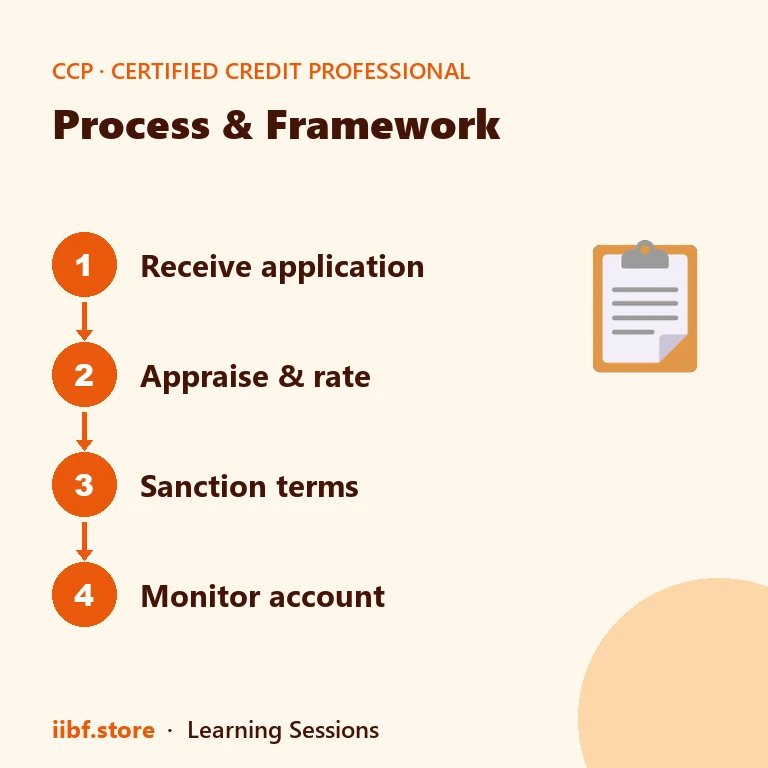
Once an account is an NPA, it moves down a defined ladder. A sub-standard asset is one that has been an NPA for a period of up to 12 months. Beyond 12 months in the sub-standard bucket it becomes doubtful, sub-divided into D1 (up to one year as doubtful), D2 (one to three years) and D3 (over three years). A loss asset is one where loss has been identified by the bank, its auditors or the RBI inspection, but the amount has not been written off.
| Asset class | Trigger | Provision on secured portion | Interest to P&L on accrual? |
|---|---|---|---|
| Standard | Account performing | 0.40% general; 0.25% direct agriculture & micro/small enterprises; 1.00% commercial real estate | ✅ |
| Sub-standard | NPA up to 12 months | 15% (unsecured exposure 25%) | ❌ |
| Doubtful | NPA beyond 12 months | 25% (D1) / 40% (D2) / 100% (D3); unsecured portion 100% | ❌ |
| Loss | Loss identified, not yet written off | 100% of outstanding | ❌ |
Two refinements matter. First, the provision on the unsecured portion of a doubtful asset is 100% regardless of whether it is D1, D2 or D3 — the graded 25/40/100 scale applies only to the secured portion. Second, for a sub-standard asset that is unsecured ab initio, the provision is 25%, relaxed to 20% for infrastructure accounts where escrow arrangements give a first claim on cash flows.
Provisions and capital are two different buffers and the exam likes to blur them. Specific provisions are netted off to arrive at net NPA; general provisions on standard assets are eligible for Tier 2 capital only within the prescribed ceiling on credit risk-weighted assets. If that distinction feels shaky, revisit the capital adequacy ratio for banks and the standardised approach to credit risk before attempting numericals.
🔁 Upgradation, SMA Flags and the Traps CCP Examiners Love
Deterioration is signalled before the 90th day. Accounts are tagged as special mention accounts: SMA-0 when principal or interest is overdue between 1 and 30 days, SMA-1 between 31 and 60 days, and SMA-2 between 61 and 90 days. For cash credit and overdraft facilities, only SMA-1 and SMA-2 apply. Banks report borrowers with aggregate exposure of ₹5 crore and above to the Central Repository of Information on Large Credits, so stress is visible across lenders.
Upgradation is the most misunderstood rule in income recognition and asset classification. An NPA can be upgraded to standard only when the entire arrears of interest and principal are paid by the borrower. Part payment of overdue interest, a fresh sanction that regularises the outstanding, or a few months of good conduct do not restore standard status.
Other traps are structural, not arithmetic:
- Classification is borrower-wise, not facility-wise. If one facility of a borrower is NPA, all facilities of that borrower are NPA, barring the carve-outs the circular itself allows.
- Ratings do not override the recovery record. An external rating is an input to pricing and capital, not to classification; see the credit rating chapter for where rating actually bites.
- Evergreening is a conduct failure, not a technique. Sanctioning a fresh facility to service an existing one to defer NPA recognition is what supervisory reviews look for, and it sits within the Indian ethos and values in banking the IIBF ethics paper examines.
When you revise, work from dates. Take a due date, count 90 days, fix the classification date, run it forward 12 months for the doubtful migration, then compute the provision. That sequence answers most CCP numericals; more worked examples sit in the Certified Credit Professional article hub.
📎 Always cross-check the current text of the governing circular on the IIBF website before you rely on it in the exam hall or at your desk.
🧠 Practice MCQs: Income Recognition and Asset Classification
Q1. A cash credit account is treated as "out of order" when the outstanding balance remains continuously in excess of the sanctioned limit or drawing power for — (a) 30 days (b) 60 days (c) 90 days (d) 180 days
Answer: (c) — Continuous excess over the sanctioned limit or drawing power for 90 days makes the account out of order, and therefore an NPA.
Q2. The provision required on the secured portion of a doubtful asset that has been doubtful for up to one year (D1) is — (a) 15% (b) 25% (c) 40% (d) 100%
Answer: (b) — D1 attracts 25% on the secured portion; the scale rises to 40% for D2 and 100% for D3.
Q3. A short-duration crop loan is classified as NPA when the instalment or interest remains overdue for — (a) 90 days (b) one crop season (c) two crop seasons (d) twelve months
Answer: (c) — Short-duration crop loans use a two crop season test; long-duration crop loans use one crop season.
Q4. A borrower enjoys a term loan, a cash credit limit and a bill limit; only the term loan has slipped. The correct classification treatment is — (a) only the term loan is NPA (b) all facilities of that borrower are NPA (c) each facility is classified by its own security cover (d) NPA status applies only if the slipped facility exceeds half the exposure
Answer: (b) — Asset classification is borrower-wise, so all facilities of the borrower are classified as NPA.
Q5. An NPA can be upgraded to the standard category when — (a) the overdue interest alone is paid (b) the entire arrears of interest and principal are paid (c) the account shows satisfactory conduct for 90 days (d) the sanctioning authority permits it on merit
Answer: (b) — Upgradation requires repayment of the entire arrears of interest and principal; partial recovery does not restore standard status.
Want chapter-wise mock tests with 100+ MCQs? Start practising free →
❓ FAQs on Income Recognition and Asset Classification
Does strong collateral prevent an account from becoming an NPA?
No. Classification depends on the record of recovery, not on security cover. Collateral affects the provisioning amount, because the secured portion attracts a lower rate, but it never delays the NPA date itself.
What happens to interest already booked before the account slipped?
Unrealised interest that was taken to the profit and loss account in earlier periods must be reversed when the account is classified as NPA. From that date, interest is recognised only on actual realisation.
Is an advance guaranteed by a State Government exempt from NPA classification?
No. Only Central Government guaranteed advances stay out of the NPA classification until the guarantee is invoked and repudiated. State Government guaranteed advances follow the normal overdue test, and income on them is still recognised only on realisation.
How do SMA buckets differ from NPA classification?
SMA is an early-warning tag applied before the 90-day threshold is breached: SMA-0 for 1 to 30 days overdue, SMA-1 for 31 to 60 days and SMA-2 for 61 to 90 days. NPA classification begins only after 90 days, so SMA is a supervisory signal rather than a provisioning trigger.
Income recognition and asset classification is the one topic in the Certified Credit Professional syllabus where marks are purely mechanical: learn the day-counts, the four classes, the provisioning percentages and the upgradation rule, and the numericals answer themselves. Build the habit of writing the classification date on every problem before you compute anything. When you are ready to test that discipline under time pressure, work through the full question bank on the IIBF credit and banking course pages and keep repeating the date-arithmetic sums until they take under a minute each.
Quick quiz on this topic
5 exam-style questions from our free test bank — check yourself before you move on.
Practice this topic
Take a free mock test, download chapter PDFs, or watch a video class — all included on iibf.store.
Keep reading