Internal Ombudsman in Banks: RBI Direction, Role and Escalation (BCP)
Every complaint file about the internal ombudsman in banks follows the same script: a customer complaint gets rejected, and the file has one more stop before it can reach the regulator. That stop is the Internal Ombudsman (IO), a role every specified bank must staff under the RBI's Internal Ombudsman Direction. For BCP candidates, this chapter tests three things: who must appoint an IO, what the IO's mandate actually covers, and how the IO's decision feeds into the RBI Ombudsman Scheme. Get the escalation chain right and most exam questions on this topic become routine.
🏛️ What Is the Internal Ombudsman in Banks
The RBI's Internal Ombudsman Direction requires designated banks — public sector banks, private banks, and select NBFCs and payment banks — to appoint a senior officer as Internal Ombudsman. The IO sits above the bank's own grievance redress desk. Once a branch or a nodal officer rejects a complaint, wholly or partly, that file must go to the IO before the bank sends its final reply.
This structure exists because most customer complaints never need a regulator. A strong internal review layer catches genuine errors — a wrong charge, a missed disclosure, a delayed refund — before the customer has to file anything with the RBI Ombudsman. For the bank, it also builds a paper trail: every rejected complaint the IO reviews gets logged, reasoned, and reported upward.
The IO's title varies bank to bank — Chief Customer Service Officer or Internal Ombudsman — but the RBI Direction sets the job description regardless of the label. The officer cannot come from a business-facing role in the two years before appointment, and cannot return to one immediately after. This cooling-off period exists so the person judging the bank's own decisions has no incentive to protect them.
If you are also revising related governance rules, read our chapter on Loans and Advances Regulatory Restrictions, and compare the appointment discipline here with our branch authorisation policy for banks chapter — both rest on the same RBI insistence that specified structures must exist before a bank can operate a function.
⚖️ Independence and Reporting Line
Independence is the exam's favourite angle on this topic, because it is where most candidates slip. The Internal Ombudsman reports functionally to the MD & CEO or to a board-level committee — never to a business vertical, and never to the operations team that handles routine complaint disposal.
This reporting line matters because the IO's job is to overrule the bank when the bank got it wrong. A reporting structure that runs through business heads would create pressure to uphold rejections rather than reverse them. The RBI Direction removes that pressure by placing appointment, removal, and performance review with the board or a designated committee, not with operational management.
⚠️ Common Mistake: Candidates often assume the Internal Ombudsman reports to the compliance department. It does not. The reporting line sits with the MD & CEO or a board committee, precisely to keep the office out of business-line pressure.
Removal of an Internal Ombudsman is not a routine HR decision. It needs board or committee approval, with reasons recorded. This protects the officer from being quietly removed after an inconvenient ruling against the bank. The same independence logic runs through our chapter on fit and proper criteria for bank directors, where RBI again insists a governance role sit above day-to-day business influence.
For the exam, remember the reporting line lives with the top of the house, not the middle. That single fact answers most of the "who does the IO report to" questions you will face.
📋 Mandate: Wholly or Partly Rejected Complaints
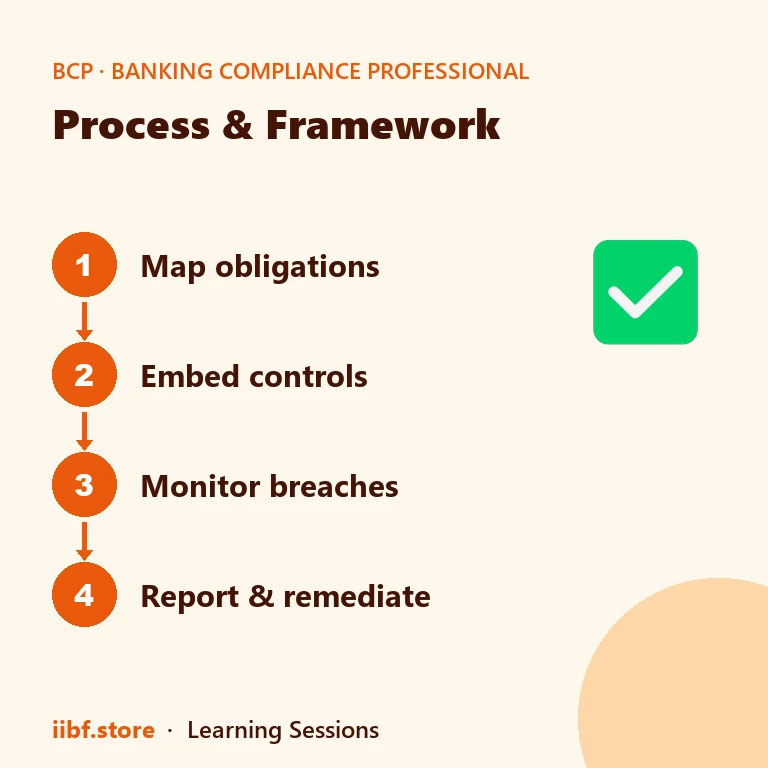
The IO's mandate is narrow by design: complaints that the bank's own grievance redress mechanism has rejected, wholly or partly. If a branch resolves a complaint fully in the customer's favour, the IO never sees the file. The trigger is rejection, not the complaint itself.
"Wholly or partly rejected" matters because banks sometimes offer partial relief — refunding half a disputed charge, say — and treat that as closure. Under the Direction, a partial rejection still routes through the IO before the bank can send its final reply to the customer.
💡 Exam Tip: The trigger word is "rejected", not "received". A complaint the branch resolves fully never reaches the Internal Ombudsman. Only a wholly or partly rejected complaint does.
Some categories fall outside the IO's mandate. Internal administrative or HR matters, disputes already before a court or tribunal, and complaints outside the bank's own grievance framework are examples the Direction carves out. The precise exclusion list sits inside the RBI Direction itself, so read the primary source rather than relying on any single summary — including this one — for the exhaustive list.
Once the IO reviews a file, the officer can either uphold the branch's rejection or overrule it in the customer's favour. If the CEO or a delegated authority disagrees with the IO's finding and decides not to accept it, that disagreement itself must be recorded and reported. Nothing about an IO's adverse finding can quietly disappear from the bank's records. This mirrors the discipline our chapter on compliance culture in banks covers on documenting overrides rather than burying them.
📊 MIS to the Board and Escalation to RBI Ombudsman 2026
The Internal Ombudsman's work does not stay inside one file. Banks must place periodic MIS before the board or its designated committee — how many complaints the IO reviewed, how many rejections were upheld, how many were overturned, and how many CEO-level overrides occurred with reasons. This MIS is a compliance officer's evidence trail: it shows the regulator that the internal layer is actually functioning, not just existing on paper.
Escalation is where this chapter connects to the customer-facing side of grievance redress. If the IO upholds a rejection — or a partial rejection — the customer is not stuck. The next step is the RBI Ombudsman, now governed by the RBI Integrated Ombudsman Scheme, 2026 (RB-IOS 2026), which replaced RB-IOS 2021 with effect from 1 July 2026. You can read the scheme text on the RBI website.
Under RB-IOS 2026, a customer must file within 90 days of the bank's final reply — a shorter window than the one-year limit under the older scheme. Compensation ceilings also moved: the RBI Ombudsman can now award up to Rs 30 lakh for the underlying complaint and up to Rs 3 lakh for the customer's actual loss of time and harassment, both higher than the earlier caps.
📌 Remember: Internal Ombudsman → bank's final reply → RBI Ombudsman under RB-IOS 2026, filed within 90 days. Skip a step in your answer and the examiner will catch it.
As banks lean on automated triage to sort and pre-classify complaints, questions of AI ethics in banking increasingly overlap with how fairly an Internal Ombudsman's caseload gets flagged in the first place.
| Aspect | Internal Ombudsman | RBI Ombudsman (RB-IOS 2026) |
|---|---|---|
| Who appoints | The bank ✅ | The RBI ✅ |
| Trigger | Complaint wholly/partly rejected by the bank | Complaint still rejected after Internal Ombudsman review |
| Filing window | Automatic internal referral, no customer filing needed | 90 days from the bank's final reply |
| Compensation ceiling | Not applicable ❌ | Up to Rs 30 lakh (complaint) / Rs 3 lakh (loss of time) |
| Cost to customer | Free ✅ | Free ✅ |
🎯 Exam-Ready Recap and Next Step
Hold three facts together and this chapter stops being confusing. One, the Internal Ombudsman reviews only complaints the bank has wholly or partly rejected. Two, the IO reports to the MD & CEO or a board committee, never to a business line. Three, if the IO's review does not resolve things, the customer's next stop is the RBI Ombudsman under RB-IOS 2026, with a 90-day filing window and the current Rs 30 lakh / Rs 3 lakh ceilings.
This chapter also pairs well with our coverage of IRAC Norms and Wilful Defaulters, since customer complaints about classification and recovery often route through the same internal grievance chain before any ombudsman gets involved. For the full governance picture, browse more Banking Compliance Professional chapters on iibf.store.
Test yourself with the MCQs below before you move to the next chapter.
🧠 Practice MCQs: Internal Ombudsman in Banks
Q1. Under the RBI Internal Ombudsman Direction, at what stage must a complaint be referred to the Internal Ombudsman? (a) As soon as the complaint is received (b) Only if the customer specifically requests it (c) When the complaint is wholly or partly rejected by the bank (d) Only after the RBI Ombudsman rejects it
Answer: (c) — The IO reviews complaints only once the bank's own grievance mechanism has rejected them, wholly or partly.
Q2. To whom does the Internal Ombudsman typically report? (a) The branch manager (b) The business head of retail banking (c) The MD & CEO or a designated board committee (d) The nodal grievance officer
Answer: (c) — This reporting line keeps the IO independent of business-line pressure.
Q3. What replaced the RBI Ombudsman Scheme, 2021 with effect from 1 July 2026? (a) The Banking Ombudsman Scheme, 2006 (b) The RBI Integrated Ombudsman Scheme, 2026 (RB-IOS 2026) (c) An amendment to the Consumer Protection Act (d) The Digital Lending Guidelines, 2026
Answer: (b) — RB-IOS 2026 superseded RB-IOS 2021 from 1 July 2026, with a shorter filing window and higher compensation ceilings.
Q4. Under RB-IOS 2026, within how many days must a customer file with the RBI Ombudsman after the bank's final reply? (a) 30 days (b) 60 days (c) 90 days (d) One year
Answer: (c) — RB-IOS 2026 sets a 90-day filing window, shorter than the one-year limit under the earlier scheme.
Q5. What must a bank do if the CEO overrides an Internal Ombudsman's finding in the bank's own favour? (a) Nothing further is required (b) Record the reasons and report the override (c) Immediately remove the Internal Ombudsman (d) Refer the matter directly to the RBI Ombudsman
Answer: (b) — Overrides must be documented and reported, so an adverse IO finding cannot quietly disappear.
Want chapter-wise mock tests with 100+ MCQs? Start practising free →
What is the Internal Ombudsman in banks?
The Internal Ombudsman is a senior officer appointed under the RBI's Internal Ombudsman Direction to review complaints a bank has wholly or partly rejected, before the bank sends its final reply to the customer.
Is appointing an Internal Ombudsman mandatory for all banks?
It is mandatory for the banks and other specified entities named in the RBI Direction. Check the current coverage list on the RBI website, since it is periodically updated.
What is the RBI Ombudsman filing window in 2026?
Under RB-IOS 2026, which replaced RB-IOS 2021 from 1 July 2026, a customer has 90 days from the bank's final reply to file a complaint with the RBI Ombudsman.
Can the Internal Ombudsman award compensation to a customer?
No. The Internal Ombudsman only reviews and recommends within the bank. Compensation ceilings of Rs 30 lakh and Rs 3 lakh apply only at the RBI Ombudsman stage under RB-IOS 2026.
Practice this topic
Take a free mock test, download chapter PDFs, or watch a video class — all included on iibf.store.
Keep reading