Branch Authorisation Policy for Banks: Banking Outlets and URC Norms (BCP)
Every compliance officer sitting for BCP needs a working grip on the branch authorisation policy for banks — the framework that decides where a bank may open a banking outlet, when it needs prior RBI clearance, and how it must serve unbanked rural centres. This article walks through the general permission regime, the definitions that examiners love to test (banking outlet, part-time outlet, fixed-point BC), the unbanked rural centre (URC) obligation, and the approval-and-reporting trail for shifting or closing outlets. Keep this alongside your notes on Lead Bank Scheme and Government Schemes, since rural outlet expansion and lead bank obligations are tested together.
📜 General Permission: How Branch Authorisation Works Today
Until 2017, domestic scheduled commercial banks needed RBI's prior permission for every branch they wanted to open. That changed with RBI's rationalised branch authorisation framework, which grants banks general permission to open banking outlets anywhere in India without seeking a licence for each location, subject to a board-approved policy and compliance with prescribed conditions.
The general permission is not unconditional. Banks must have a board-approved Financial Inclusion Plan (FIP), maintain minimum capital adequacy, stay within supervisory comfort on asset quality, and meet the unbanked rural centre allocation discussed below. RRBs, small finance banks, and payments banks follow their own differentiated licensing conditions rather than this general permission route.
Banks that fail these preconditions — for instance, one under a Prompt Corrective Action framework — lose the general permission and must revert to seeking RBI's case-by-case approval. This distinction is a favourite in BCP objective questions, so remember: general permission is a privilege tied to sound financials, not an unconditional right.
💡 Exam Tip: "General permission" does not mean "no conditions" — it means no prior case-by-case RBI approval, provided the bank's board-approved policy and eligibility conditions are met.
🏘️ Banking Outlets, Part-Time Outlets and BC Outlets
A Banking Outlet is a fixed point service delivery unit, manned by the bank's own staff or its business correspondent (BC), where services are provided for a minimum of four hours a day and at least five days a week. This includes brick-and-mortar branches and BC outlets that meet this minimum time threshold.
A Part-time Banking Outlet is one that functions for fewer hours or fewer days than the four-hour/five-day norm — it exists but does not count toward a bank's Banking Outlet numbers for regulatory purposes. Similarly, a BC point that operates on an itinerant or irregular basis (a mobile agent visiting a village periodically) is treated as a Part-time BC outlet, distinct from a Fixed-Point BC outlet that meets the full-time threshold and therefore qualifies as a Banking Outlet in its own right.
This layered classification matters directly for priority-sector and financial-inclusion reporting — revisit your notes on Priority Sector, MSME and Microfinance to see how outlet-level data feeds into inclusion metrics.
🌾 The Unbanked Rural Centre (URC) Obligation
The branch authorisation policy is deliberately weighted toward financial inclusion. Domestic scheduled commercial banks (other than RRBs) are required to open at least 25% of the total Banking Outlets they add in a financial year in Unbanked Rural Centres — villages or rural revenue circles, typically Tier 5 and Tier 6 centres, that have no banking outlet of any scheduled commercial bank, RRB, or Small Finance Bank.
Only outlets that meet the full "Banking Outlet" threshold — four hours a day, five days a week — count toward this 25% target. A part-time or itinerant BC visit to a village does not satisfy the URC obligation, even though it technically provides some banking access. Banks track this centre-wise, using RBI's centre classification (Tier 1 to Tier 6, based on 2011 Census population bands) to identify which locations qualify as unbanked.
Compliance officers should also connect this obligation to lead bank responsibilities in a district's Service Area Approach, since URC coverage gaps are routinely flagged in District Consultative Committee (DCC) and State Level Bankers' Committee (SLBC) reviews.
⚠️ Common Mistake: Candidates often assume any BC touchpoint in a village satisfies the URC norm. Only a full Banking Outlet (or a Fixed-Point BC outlet meeting the time threshold) counts — part-time coverage does not.
🔄 Shifting, Merger and Closure of Banking Outlets
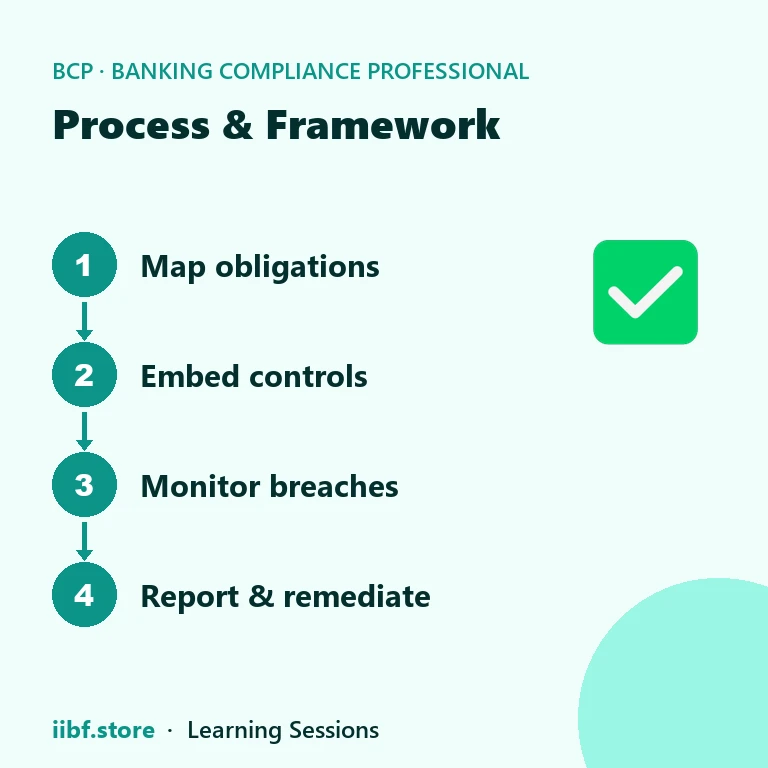
Opening a banking outlet is easier under general permission, but shifting, merging, or closing one is deliberately harder — especially in rural and semi-urban areas where a branch may be the sole banking presence. Banks need a board-approved policy governing shifting and closure, and rural branch closures generally require prior examination in the district's DCC/SLBC forum along with public notice to affected customers, so that alternative service arrangements are visible before an outlet shuts down.
Shifting an outlet even within the same locality needs internal sign-off under the board policy and must not leave a Tier 5/6 centre without any banking presence unless an alternative — such as a BC outlet — is arranged. Closure or merger of outlets in metropolitan and urban centres has comparatively lighter procedural requirements, since alternative banking access is rarely a concern there.
Whatever the category, every shift, merger, or closure decision must be documented, board/committee-ratified as per delegated authority, and reported to RBI. This audit trail is what BCP examiners test through scenario-based questions on "can the branch head approve this closure independently?" — usually the answer is no, because delegated authority under the board policy rarely extends that far down.
📊 Reporting Requirements at a Glance
Every action under the branch authorisation policy — opening, shifting, merging, or closing a banking outlet — carries a reporting obligation to RBI, typically through the bank's structured branch/outlet reporting system. The table below summarises how the main outlet categories are treated for counting and reporting purposes.
| Outlet Category | Minimum Service Norm | Counts as Banking Outlet? | Counts Toward 25% URC Target? |
|---|---|---|---|
| Staffed branch / banking outlet | ≥4 hrs/day, ≥5 days/week | ✅ | ✅ (if in URC) |
| Fixed-Point BC outlet | ≥4 hrs/day, ≥5 days/week | ✅ | ✅ (if in URC) |
| Part-time Banking Outlet | Below the 4-hr/5-day norm | ❌ | ❌ |
| Part-time / itinerant BC outlet | Irregular visits | ❌ | ❌ |
Beyond outlet-level reporting, banks report aggregate branch expansion, URC compliance, and closure data periodically to RBI, and lapses are treated as supervisory findings during inspection. Persistent shortfalls against the URC target, or closures processed without the required board policy and DCC intimation, are the two most common findings compliance teams need to pre-empt through internal audit checkpoints and self-certification before the reporting deadline.
📌 Remember: Reporting is not optional paperwork — RBI treats gaps in outlet-level reporting and unauthorised closures as compliance breaches, not administrative oversights.
Get the fuller regulatory-restrictions picture from Loans and Advances Regulatory Restrictions, which sits in the same compliance module as branch authorisation in the BCP syllabus.
🧠 Practice MCQs: Branch Authorisation Policy for Banks
Q1. Under RBI's branch authorisation policy, "general permission" to open banking outlets means (a) no conditions apply (b) no prior case-by-case RBI approval, subject to eligibility conditions (c) only RRBs are covered (d) approval is granted only for metro centres
Answer: (b) — General permission removes the need for case-by-case RBI approval but remains conditional on eligibility criteria such as capital adequacy and a board-approved policy.
Q2. A Banking Outlet, as defined under the branch authorisation policy, must be operational for at least (a) 2 hours a day, 3 days a week (b) 4 hours a day, 5 days a week (c) 6 hours a day, 6 days a week (d) full business hours, 7 days a week
Answer: (b) — The minimum threshold for a fixed-point unit to qualify as a Banking Outlet is four hours a day and at least five days a week.
Q3. What proportion of new Banking Outlets must domestic scheduled commercial banks (other than RRBs) open in Unbanked Rural Centres each financial year? (a) 10% (b) 15% (c) 25% (d) 50%
Answer: (c) — Banks must open at least 25% of the Banking Outlets added in a year in Unbanked Rural Centres.
Q4. A BC point visited by an itinerant agent only twice a week, for two hours each visit, is classified as (a) a full Banking Outlet (b) a Fixed-Point BC outlet (c) a Part-time BC outlet (d) an unbanked centre
Answer: (c) — Since it falls short of the four-hour/five-day norm, it is treated as a Part-time BC outlet and does not count as a Banking Outlet.
Q5. Closure of a bank's sole rural banking outlet in a Tier 5/6 centre typically requires (a) only the branch manager's approval (b) no approval, only intimation after closure (c) board-approved policy compliance and prior examination through the district forum before closure (d) RBI head office approval within 24 hours
Answer: (c) — Rural closures, especially where the outlet is the sole banking presence, need board-policy compliance and prior review through the district-level (DCC/SLBC) forum with public notice, before the closure takes effect.
Want chapter-wise mock tests with 100+ MCQs? Start practising free →
What is the branch authorisation policy for banks in simple terms?
It is RBI's framework governing where and how banks may open, shift, merge, or close banking outlets, replacing branch-by-branch prior approval with a conditional general permission regime introduced in 2017.
Do all banks get general permission to open branches freely?
No. General permission applies to domestic scheduled commercial banks that meet eligibility conditions such as capital adequacy and a board-approved expansion policy; banks under supervisory restrictions such as Prompt Corrective Action need RBI's specific approval instead.
Why does the unbanked rural centre obligation exist?
It ensures branch expansion does not concentrate only in profitable urban and metro locations, pushing banks to extend at least a quarter of their new Banking Outlets into rural areas that currently have no banking presence.
Can a bank close a rural branch without any approval process?
No. Closure, especially of a sole rural outlet, needs compliance with the bank's board-approved policy and prior examination through the district-level consultative forum, along with public notice and reporting to RBI.
✅ Conclusion: Master This for Your BCP Exam
The branch authorisation policy for banks is one of those BCP topics that rewards precision over prose — examiners test exact thresholds (four hours, five days, 25%) and the difference between a Banking Outlet and a part-time or itinerant BC point. Anchor your revision around the general permission conditions, the URC allocation rule, and the approval trail for shifting and closing outlets, since these three areas generate most of the scenario-based questions.
For the regulatory backbone behind these rules, see the RBI's branch authorisation and financial inclusion guidelines. To round out your compliance-culture reading, pair this chapter with compliance culture in banks, compliance breach reporting and root cause analysis, and RBI enforcement action on banks — a branch authorisation lapse that goes unreported is exactly the kind of breach those chapters cover. Compliance also has a people dimension: see workplace ethics for bank employees for how front-line staff conduct at these very outlets ties back into the bank's compliance framework.
Browse more BCP chapters on the Banking Compliance Professional tag hub, then test yourself with a full chapter-wise mock at iibf.store/tests before exam day.
Practice this topic
Take a free mock test, download chapter PDFs, or watch a video class — all included on iibf.store.
Keep reading