Merchanting Trade Transactions: RBI Rules for IIBF ITF (2026)
Merchanting trade transactions are one of the quietest but most heavily tested corners of the IIBF International Trade Finance syllabus. In a merchanting trade transaction (also called intermediary or third-country trade), an Indian trader buys goods from a supplier in one foreign country and sells them to a buyer in another foreign country, while the goods never physically enter India. Because two foreign legs are settled through an Indian bank, the RBI has built a tight rule-book around timelines, payments and documentation. This guide breaks down the current FEMA framework so you can answer every merchanting trade transactions question in the exam with confidence.
Unlike a plain export or import, here the Indian entity earns a margin purely as an intermediary. The value addition happens on paper and in foreign-exchange flows, not on Indian soil, which is exactly why examiners love to test the boundary conditions.
🌐 What Are Merchanting Trade Transactions?
A merchanting trade transaction has a strict three-country structure. The supplier of goods is resident in one foreign country, the buyer of goods is resident in another foreign country, and the merchant or intermediary is resident in India. The Indian trader simultaneously imports (the import leg) and exports (the export leg) the same consignment without the goods entering the Domestic Tariff Area (DTA) of India.
The defining test is physical movement: the goods move from the supplier's country directly to the buyer's country. They may transit through Indian ports or airports in a customs-bonded area, but they must not cross into the DTA and must not be subjected to customs clearance for home consumption. Limited value addition or processing is permitted only with the AD bank's approval. Understanding these modes of payment in international trade is the foundation for grasping how the two legs settle.
💡 Exam Tip: If a question says the goods were cleared through Indian customs into the DTA, it is NOT a merchanting trade — it becomes a normal import followed by a re-export. This one distinction accounts for a large share of MTT marks.
The goods dealt in must also be permissible for export and import under India's prevailing Foreign Trade Policy — items on the prohibited list can never form part of a merchanting trade transaction.
🏦 RBI Rules Every Merchant Trader Must Know
The RBI Master Direction on merchanting trade transactions (revised January 2020) lays down the operating discipline that AD Category-I banks must enforce. First, both the export leg and the import leg must be routed through the same AD bank, and the bank must ensure one-to-one matching of each transaction — no netting across unrelated deals is allowed.
The AD bank must satisfy itself about the genuineness of the trade and the bona fides of the trader, verifying documentary evidence such as the invoice, packing list and transport documents for both legs. Payment for the import leg can be funded from the trader's Exchange Earners' Foreign Currency (EEFC) account balances, and short-term credit — either supplier's credit or buyer's credit — may be availed for the portion of the import leg not backed by advance. However, agency commission is not payable in a merchanting trade transaction, and no third-party payments are permitted on either leg.
⚠️ Common Mistake: Candidates assume agency commission is allowed because it is common in ordinary trade. In MTT it is expressly disallowed — mark that firmly.
Because these deals sit squarely under FEMA, the same regulators that oversee cross-border flows apply here. Reviewing the regulators of foreign trade helps you place merchanting trade within the wider compliance map alongside export and import monitoring systems.
⏱️ The Nine-Month and Four-Month Timelines
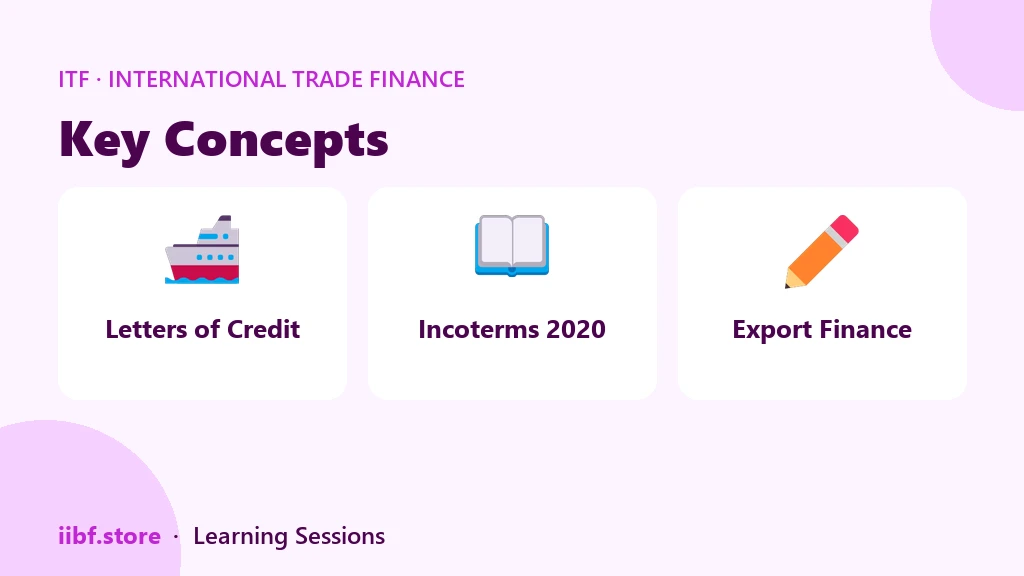
Two numbers dominate every merchanting trade transactions question: nine and four. The entire merchanting trade must be completed within an overall period of nine months, and there shall not be any outlay of foreign exchange beyond four months. In plain terms, the gap between the money leaving India (import-leg payment) and the money returning (export-leg receipt) cannot exceed four months, and the whole cycle cannot exceed nine months.
The commencement date is taken as the earliest of the date of shipment, the date of receipt of advance for the export leg, or the date of payment for the import leg. If either limit is breached, the AD bank must report the default. Traders who habitually leave export proceeds outstanding — broadly where 5% or more of their annual export earnings remain unrealised — can be placed on the RBI caution list, which severely restricts future merchanting activity.
📌 Remember: Overall cycle = 9 months; foreign-exchange outlay = maximum 4 months. Mixing these two figures is the single most common trap in ITF mocks.
Managing this window is essentially a credit risk in trade finance exercise for the bank: a delayed export leg leaves the AD bank exposed to the funded import leg. This overlap with export finance is why studying post-shipment credit in export finance alongside MTT pays off in the exam.
💵 Payment Legs, Advances and the USD 500,000 Rule
The payment structure of a merchanting trade transaction is where precise thresholds are tested. An Indian merchant trader may make advance payment for the import leg on demand by the overseas supplier. But there is a guardrail: any advance payment for the import leg beyond USD 500,000 per transaction must be backed by a bank guarantee or an unconditional, irrevocable standby letter of credit issued by an international bank of repute.
On the export side, if the merchant receives an advance against the export leg, the funds must be held in a separate deposit or current account and cannot be diverted for other purposes. Any short-term credit availed on the import leg must be for genuine merchanting purposes only. These flows draw directly on the mechanics of factoring and forfaiting when the trader wants to convert receivables into upfront cash.
Below is a quick comparison that examiners frequently exploit for one-mark questions.
| Feature | Merchanting Trade | Normal Export/Import |
|---|---|---|
| Goods enter Indian DTA | ✗ No | ✓ Yes |
| Trader's residence | India | India |
| Both legs via same AD bank | ✓ Mandatory | ✗ Not required |
| Overall completion window | 9 months | Per FEMA export/import limits |
| Max foreign-exchange outlay | 4 months | Not applicable |
| Agency commission allowed | ✗ No | ✓ Generally yes |
| BG/SBLC for advance | ✓ Above USD 500,000 | Depends on contract |
For deeper syllabus coverage, the IIBF International Trade Finance study material maps where MTT sits within the module structure.
🧾 Compliance, FEMA Reporting and Exam Relevance
Because merchanting trade sits under FEMA, reporting discipline is non-negotiable. AD banks report MTT flows to the RBI, and defaults, extensions and write-offs must be documented. Delays in realising the export leg can attract the same FEMA consequences as any other unrealised export receivable, including the possibility of a late submission fee where reporting timelines slip. Traders should therefore treat the four-month outlay clock as a hard compliance deadline, not a guideline.
From an exam-strategy standpoint, MTT questions cluster around four themes: the three-country structure, the two timelines, the USD 500,000 advance threshold, and the "goods must not enter DTA" test. Master these and you cover almost every objective question the paper can throw. It also connects neatly with wider export monitoring — pairing your revision with export documentation and EDPMS gives you the full lifecycle from documentation to settlement.
💡 Exam Tip: When a numerical MTT case appears, first check whether the outlay exceeds four months before checking the nine-month cycle — a breach of the shorter limit alone makes the transaction non-compliant.
For structured revision on the whole subject, browse the International Trade Finance resource hub and drill the concepts with full-length practice papers on iibf.store tests.

🧠 Practice MCQs: Merchanting Trade Transactions
Q1. Within what overall period must a merchanting trade transaction be completed? (a) 6 months (b) 9 months (c) 12 months (d) 4 months
Answer: (b) — The entire MTT must be completed within an overall period of nine months.
Q2. The outlay of foreign exchange in an MTT should not exceed which period? (a) 3 months (b) 4 months (c) 6 months (d) 9 months
Answer: (b) — There shall not be any outlay of foreign exchange beyond four months.
Q3. Advance payment for the import leg beyond which amount must be backed by a BG or standby LC from an international bank? (a) USD 100,000 (b) USD 250,000 (c) USD 500,000 (d) USD 1,000,000
Answer: (c) — Advance beyond USD 500,000 per transaction requires a bank guarantee or unconditional, irrevocable standby LC.
Q4. In a valid MTT, the goods must NOT enter which of the following? (a) A foreign port (b) The Domestic Tariff Area of India (c) A bonded warehouse abroad (d) The buyer's country
Answer: (b) — Goods must not enter the Domestic Tariff Area of India; only bonded transit is allowed.
Q5. Both legs of a merchanting trade transaction must be routed through: (a) Two different banks (b) The same AD Category-I bank (c) Any NBFC (d) The RBI directly
Answer: (b) — The import and export legs must be handled by the same AD Category-I bank with one-to-one matching.
Want chapter-wise mock tests with 100+ MCQs? Start practising free
❓ Frequently Asked Questions
Authoritative reference: see the latest guidelines on the Reserve Bank of India website and the IIBF syllabus portal.
Is a merchanting trade transaction the same as re-export?
No. In re-export, goods first enter India and clear customs before being exported again. In an MTT, the goods move directly between the two foreign countries and never enter the Domestic Tariff Area.
Can the export and import legs of an MTT use different banks?
No. RBI requires both legs to be routed through the same AD Category-I bank so it can perform one-to-one matching and monitor the timelines.
Is agency commission payable in a merchanting trade transaction?
No. Agency commission is not permitted in MTT, and third-party payments are also disallowed on either leg.
What happens if the trader fails to realise the export leg on time?
The AD bank must report the default. Persistent non-realisation — broadly 5% or more of annual export earnings outstanding — can lead to the trader being placed on the RBI caution list.
Merchanting trade transactions reward candidates who memorise the exact numbers and the DTA test. Lock in the nine-month, four-month and USD 500,000 thresholds, then prove your recall under time pressure with a full International Trade Finance mock test today.
Prefer revising from a printed book?
Chapter-wise books with MCQs after every chapter — minimal pages, complete coverage, delivered anywhere in India. Every book has a free sample to read first.































Practice this topic
Take a free mock test, download chapter PDFs, or watch a video class — all included on iibf.store.