Open Credit Enablement Network OCEN: Digital Lending Rails Explained
Small-ticket, short-tenor credit — a Rs 5,000 kirana purchase loan, a three-month invoice advance, or a gig-worker's weekly cash-flow gap — has always been uneconomical for traditional lenders to originate. The cost of acquiring the customer and underwriting the loan often exceeds the interest the lender earns on the loan itself. The Open Credit Enablement Network OCEN was designed to fix exactly this problem. It is a set of open, interoperable protocols and application programming interfaces — not a company, an app, or a single platform — that lets any regulated lender plug into any digital platform a borrower already uses and originate credit at a fraction of the earlier cost. For JAIIB and CAIIB candidates studying Digital Banking, understanding how OCEN reshapes loan origination is exam-relevant, because it sits at the intersection of the India Stack, embedded finance, and RBI's digital lending framework.
💰 Why Small-Ticket Credit Needed New Rails
Before OCEN, a lender wanting to serve a small kirana store or a gig-economy driver had two unattractive options: build a costly direct-to-customer acquisition funnel, or rely on a physical branch network that could never reach the ticket sizes involved. Underwriting was equally expensive — pulling bureau data, verifying income, and manually assessing a borrower who had no formal salary slip or audited balance sheet consumed as much analyst time as underwriting a much larger corporate loan.
This mismatch between transaction cost and loan value is the core problem the Open Credit Enablement Network OCEN addresses. Rather than every lender building its own integration with every retail platform, OCEN standardises the messages exchanged between the two sides, so a single integration effort by a platform opens it up to many lenders, and a single integration effort by a lender opens it up to many platforms. This is covered in more depth in the Overview of Digital Banking chapter, which frames OCEN alongside other digital lending infrastructure.
The result is a sharp drop in per-loan acquisition and underwriting cost, which finally makes short-tenor, small-value credit commercially viable at scale rather than a loss-leading corporate social responsibility exercise.
🔗 OCEN's Three-Role Architecture: Lender, LSP and Data Layer
A useful way to remember the Open Credit Enablement Network OCEN for exam purposes is to fix the three roles it defines. The lender is the regulated bank or NBFC that actually disburses the loan, carries the credit risk, and books the asset on its balance sheet — OCEN never disburses credit itself.
The Loan Service Provider (LSP) is the platform the borrower already trusts and uses daily — an e-commerce marketplace, a kirana billing app, a gig-aggregator, or a farm-input platform. The LSP embeds a "buy now, pay via credit" or "get a loan" option directly into its existing user journey, so the borrower never has to visit a separate lending app. This embedding is the essence of what makes the network cheap to acquire customers through, and it is a theme also explored in the site's coverage of neo banks in India, which use a similar embedded, platform-first distribution logic.
The third layer is the consented data source — principally the Account Aggregator ecosystem, along with GST returns, e-invoices, and other digital footprints — which supplies the lender with verified financial information without the borrower having to photocopy bank statements. Together, lender, LSP and data layer form the triangle around which every OCEN transaction is structured. The Financial Inclusion chapter is useful background reading here, since OCEN's stated goal is widening formal credit access to borrowers traditional underwriting excluded.
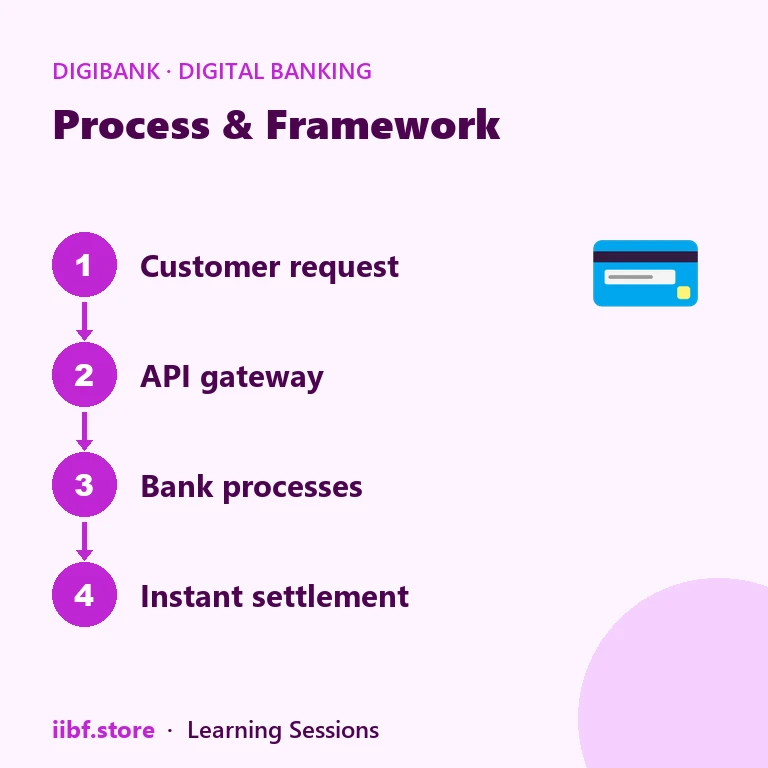
💡 Exam Tip: If a question asks "who bears the credit risk in an OCEN loan," the answer is always the lender, never the LSP or the network itself — OCEN is a messaging layer, not a balance sheet.
🔄 The Loan Lifecycle: Offer, Application, Disbursement, Repayment
The Open Credit Enablement Network OCEN standardises a loan into a predictable sequence of API messages so any compliant lender and any compliant LSP can transact without custom coding for each pair. The flow typically runs: a loan offer generated against the borrower's consented data profile, an application in which the borrower accepts terms inside the LSP's app, a disbursement instruction that moves funds to the borrower or directly to the merchant being paid, and a repayment and collection leg that reconciles instalments back to the lender.
This sequence does not operate in isolation — it sits alongside, and depends on, the rest of the India Stack. Aadhaar-based e-KYC establishes borrower identity, the Account Aggregator framework moves consented bank and GST data to the lender for underwriting, and UPI or NACH-based mandates typically execute the actual disbursement and repayment legs. Readers who want the payment-rail half of this picture should also study UPI architecture and transaction flow, which explains how the money actually moves once an OCEN-originated loan is approved.
Because every message in the chain — offer, application, disbursement, repayment, collection — is standardised, a lender can plug the same underwriting engine into a dozen different LSPs, and an LSP can offer its borrowers credit from multiple lenders without rebuilding its checkout flow each time. This standardisation is the direct answer to the acquisition-cost problem described earlier, and it is why examiners frequently frame OCEN questions around "interoperability" rather than around any single product feature.
| Parameter | Traditional Direct Model | OCEN-Enabled Model |
|---|---|---|
| Customer acquisition | Branch or direct-to-app, high cost | Embedded inside an existing platform, low cost |
| Underwriting data source | Manual documents, bureau pull only | Consented Account Aggregator, GST, e-invoice data |
| Viable below Rs 10,000 ticket size | ❌ Rarely economical | ✅ Commercially viable |
| Integration effort per lender-platform pair | Custom, one-off | Standardised API messages |
| Who carries credit risk | Lender | Lender (unchanged) |
🌾 Real-World Use Cases and the Compliance Boundary
The Open Credit Enablement Network OCEN model is already visible across several Indian credit segments. In invoice financing, a supplier uploads or auto-syncs an e-invoice on a marketplace, and a lender extends short-tenor working capital against that receivable through the platform itself. In purchase finance for kirana stores, a billing or inventory app embeds a "buy stock now, repay in 30 days" option so the retailer never has to approach a bank separately — a use case that connects naturally to the site's discussion of prepaid payment instruments in India, since both rely on embedded, platform-native transaction flows.
Gig-worker advances use a driver or delivery platform's own earnings data as the underwriting signal for a short cash-flow loan, while sachet crop loans extend small, single-season agricultural credit through input-supply or farm-service apps, using land-record and sowing data instead of a traditional collateral file. Each of these is structurally similar to what is covered in analyses of buy now pay later regulation in India, where credit is likewise embedded inside a checkout journey rather than sold as a standalone product.
None of this embedding dilutes regulatory obligation. Every lender, LSP, and data-sharing entity operating on OCEN remains fully bound by RBI's digital lending directions — covering the Key Fact Statement, mandatory reporting of all loans to credit information companies, a borrower cooling-off period, and a ban on automatic credit-limit increases without explicit consent — as well as the data-privacy and purpose-limitation conditions attached to Account Aggregator consent. Candidates should treat OCEN as a distribution and messaging layer that sits on top of, not instead of, these obligations; the underlying framework is published by the Reserve Bank of India and is periodically updated, so always verify the current directions before an exam or a client conversation.
⚠️ Common Mistake: Candidates often assume OCEN itself is regulated as a lending entity. It is not — RBI regulates the lender and, separately, the Account Aggregator; the OCEN specification itself is a technical protocol, not a licensed entity.
📌 Remember: The four use cases to recall by name for exam purposes are invoice financing, kirana purchase finance, gig-worker advances, and sachet crop loans — each maps to a different LSP category but uses the identical Open Credit Enablement Network OCEN message flow underneath.
For a broader grounding in how these embedded-credit journeys sit within retail digital delivery, revisit the Retail Banking - Digital Banking Class 12 chapter before attempting the practice questions below.
🧠 Practice MCQs: OCEN
Q1. What is OCEN? (a) A public sector bank offering small loans (b) A set of open protocols and APIs enabling lenders to plug into platforms (c) A mobile wallet application (d) A credit information company
Answer: (b) — OCEN is a common set of open protocols and APIs, not an entity, application, or lender.
Q2. In the OCEN architecture, which participant embeds credit inside a platform the borrower already uses? (a) The lender (b) The Loan Service Provider (LSP) (c) The Account Aggregator (d) The credit bureau
Answer: (b) — The Loan Service Provider embeds the credit offer within its own existing user journey.
Q3. Which framework typically supplies consented financial data for underwriting in an OCEN-based loan? (a) UPI (b) The Account Aggregator framework (c) NACH (d) RuPay
Answer: (b) — The Account Aggregator framework moves consented bank, GST, and financial data to the lender.
Q4. Which OCEN use case refers to small, single-season agricultural credit disbursed through farm-service apps? (a) Purchase finance (b) Sachet crop loans (c) Invoice discounting (d) Gig-worker advances
Answer: (b) — Sachet crop loans are small-ticket, season-specific loans distributed via farm-input or farm-service platforms.
Q5. Regardless of the platform involved, every lender transacting on OCEN remains bound by which obligation? (a) The SEBI takeover code (b) RBI's digital lending directions and data-privacy norms (c) The GST e-invoice mandate alone (d) FEMA remittance limits
Answer: (b) — OCEN is a messaging layer; it does not replace RBI's digital lending directions or consent-based data-privacy obligations.
Want chapter-wise mock tests with 100+ MCQs? Start practising free →
Is OCEN itself a lender?
No. OCEN is a set of open protocols and APIs. Loans are always originated and funded by a regulated bank or NBFC acting as the lender; OCEN only standardises the messages exchanged between the lender, the Loan Service Provider, and the data sources.
Who can become a Loan Service Provider under OCEN?
Any platform that a borrower already uses regularly — a marketplace, a billing app, a gig-aggregator, or a farm-service app — can become an LSP by partnering with one or more regulated lenders and integrating the standard OCEN message set.
How does the Account Aggregator framework fit into an OCEN loan?
The borrower consents to share specific financial data — bank statements, GST returns, or e-invoices — through an Account Aggregator, and this consented data feeds the lender's underwriting decision within the OCEN flow, replacing manual document collection.
Does OCEN change RBI's digital lending compliance requirements?
No. Every participant on OCEN — lender, LSP, and data provider — must still comply fully with RBI's digital lending directions, including the Key Fact Statement, credit bureau reporting, and consent-based data use; OCEN only changes how the loan is originated and delivered, not the regulatory obligations attached to it.
✅ Conclusion: Why Digital Banking Candidates Must Know OCEN
The Open Credit Enablement Network OCEN matters for exam purposes and for practice because it directly answers the oldest problem in retail credit — how to profitably lend small amounts for short periods to borrowers with thin formal records. By standardising the lender-LSP-data interaction into open, interoperable protocols, OCEN turns embedded, low-cost credit into a repeatable model rather than a one-off partnership, while leaving credit risk and regulatory accountability squarely with the licensed lender. Revisit the Mobile Banking chapter and the full Digital Banking tag hub for related topics, then test your understanding with a full mock. Start your CAIIB Digital Banking preparation on iibf.store →
Quick quiz on this topic
5 exam-style questions from our free test bank — check yourself before you move on.
Practice this topic
Take a free mock test, download chapter PDFs, or watch a video class — all included on iibf.store.
Keep reading