RBI Intervention in the Foreign Exchange Market: Tools and Sterilisation (CAIIB CB)
Every candidate preparing for the Central Banking elective in CAIIB must understand how RBI intervention in the foreign exchange market keeps the rupee stable without pushing India into a hard peg or a fully clean float. India runs a managed float, and the Reserve Bank steps into the spot, forward and swap segments whenever volatility threatens orderly price discovery. This piece walks through why RBI intervenes, the instruments it deploys, how sterilisation through OMO and the Market Stabilisation Scheme offsets the liquidity effect, and how the forward book connects back to the inflation target.
📊 The Managed Float: Why RBI Intervenes
India's exchange rate regime is best described as a managed float. The rupee is not pegged to any currency, and the RBI does not defend a fixed level against the US dollar. What it does defend is orderliness — it intervenes to curb excessive volatility, one-sided speculative pressure, and disruptive overshoots that can destabilise trade, capital flows and inflation expectations, without trying to hold the rupee at a particular number.
The rationale rests on several strands covered under the theory and practice of central banking: a sharp depreciation feeds imported inflation through crude oil and other dollar-priced imports, while a sharp appreciation hurts exporters and widens the current account gap. Unchecked volatility also raises hedging costs for importers, exporters and banks running open positions, and can trigger self-reinforcing capital outflows during global risk-off episodes.
Importantly, intervention is discretionary and need-based rather than rule-bound. The RBI does not announce a target band in advance, and it intervenes on both sides of the market — buying dollars when the rupee is under appreciation pressure from strong capital inflows, and selling dollars when outflows or global shocks push the rupee down too fast. This two-way approach is also why the central bank continually builds and draws down reserves, a theme closely tied to management of foreign exchange reserves in your CB syllabus.
💱 Spot, Forward and Swap Intervention Tools
The RBI operates across three linked segments of the USD-INR market, and CAIIB questions frequently test whether you can tell them apart. Spot intervention is the most direct: the RBI's dealing desk buys or sells dollars for near-immediate settlement, moving the exchange rate and simultaneously injecting or absorbing rupee liquidity on the same value date.
Forward intervention lets the RBI commit to buying or selling dollars on a future date at a rate agreed today, without any spot-market cash flow until maturity. This is useful when the central bank wants to influence expectations or manage pressure without immediately altering banking-system liquidity. The stock of such outstanding commitments is tracked as the forward book.
FX swaps — typically a buy/sell or sell/buy swap combining a spot leg with an opposite forward leg — let the RBI adjust the maturity profile of its dollar exposure or roll over intervention without a lasting spot-market footprint. A sell/buy swap, for instance, can temporarily inject dollar liquidity into the banking system while committing to reverse it later, a tool the RBI has used during periods of tight dollar funding.
| Intervention Tool | Market Segment | Immediate Liquidity Impact | Sterilisation Needed |
|---|---|---|---|
| Spot dollar purchase | Spot USD-INR | Releases rupee liquidity | ✅ Yes |
| Spot dollar sale | Spot USD-INR | Absorbs rupee liquidity | ❌ No |
| Forward purchase/sale | Forward book | Deferred to settlement date | ✅ Yes, at maturity |
| Buy/sell FX swap | Swap market | Minimal near-term impact | ❌ Usually not |
💡 Exam Tip: Spot intervention affects liquidity immediately; forward intervention defers the liquidity effect to the settlement date; swaps are used to manage the timing mismatch between the two.
🏦 Sterilisation: OMO and the Market Stabilisation Scheme
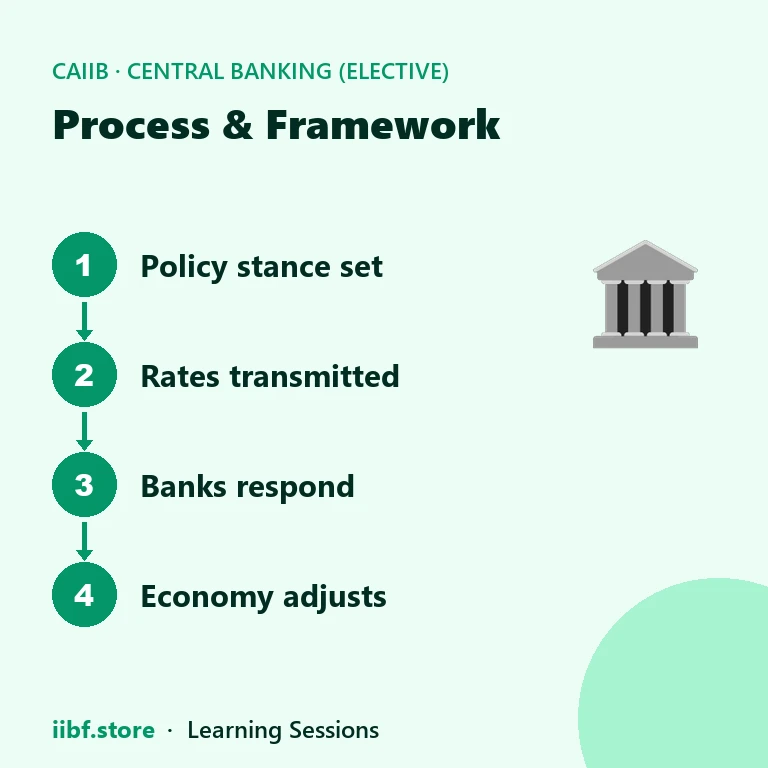
When the RBI buys dollars in the spot market, it pays out rupees, which adds to banking-system liquidity. Left unaddressed, this can loosen monetary conditions beyond what the Monetary Policy Committee intends. Sterilisation is the offsetting operation that neutralises this side effect while leaving the exchange-rate intervention itself unchanged.
The RBI's primary sterilisation tool is open market operations — selling government securities to absorb the surplus rupee liquidity created by dollar purchases. You can revisit the mechanics of this liquidity toolkit under liquidity management in the system, which also covers how OMO interacts with day-to-day money-market rates.
The Market Stabilisation Scheme (MSS) is a dedicated instrument for large, sustained sterilisation needs. Under MSS, the government issues treasury bills or dated securities specifically to mop up liquidity from persistent capital inflows; the proceeds are held in a separate account distinct from the normal government cash balance, so the operation does not show up as ordinary government borrowing and does not fund expenditure. Readers who track how banks position their forex desks for customers alongside this can compare notes with payment systems oversight in India, where the RBI again balances a market-facing role against its core monetary responsibility.
⚠️ Common Mistake: Candidates often assume all RBI dollar purchases are sterilised. In practice, the RBI chooses the sterilisation quantum deliberately — partial or unsterilised intervention is a valid policy choice when some liquidity easing is actually desired.

📈 Reserve Money, the Forward Book and the Inflation Target
Reserve money (M0) is built from net RBI credit to the government, credit to banks and the commercial sector, and net foreign assets (NFA), less the RBI's net non-monetary liabilities. Every dollar the RBI buys in the spot market raises NFA and, absent sterilisation, raises reserve money one-for-one — the direct channel through which forex intervention feeds into the broader money supply.
Because forward and swap deals defer the actual cash flow, the RBI separately discloses its net outstanding forward sales/purchases (NOFS) position — essentially the undelivered forward book — in its monthly bulletin and Financial Stability Report. A large net short forward book signals dollars the RBI is committed to delivering later, an important number when reserves adequacy is assessed alongside spot reserves, a theme that also runs through the functions of central banks.
Since India adopted flexible inflation targeting, the Monetary Policy Committee's mandate is the CPI inflation target within its notified band, delivered chiefly through the repo rate, while FX intervention remains a separate instrument run by the RBI's dealing desk. The two are not independent: unsterilised dollar purchases can push short-term money-market rates below the policy rate and dilute the intended stance, while a weakening rupee itself raises imported inflation, so timely, well-sterilised intervention indirectly supports the inflation target even though it is not an inflation tool by design. For authoritative background on the RBI's exchange-rate approach and reserves data, see the Reserve Bank's own publications at rbi.org.in.
📌 Remember: Spot purchases change reserve money today; forward purchases change the forward book today and reserve money only at settlement.
Conclusion: Master This for Your CAIIB CB Paper
RBI intervention in the foreign exchange market is one of the most frequently tested linkages in the Central Banking elective because it ties together the exchange rate, bank liquidity, the reserve money equation and the inflation target in a single operational story. Know the difference between spot, forward and swap intervention, understand why sterilisation via OMO and MSS is necessary, and be able to explain how the forward book and NOFS sit outside the headline reserve number.
For deeper context on central bank autonomy in setting these operations, see central bank independence, and if G-secs used in OMO and MSS interest you, revisit the RBI Retail Direct Scheme. ABM candidates studying how banks package forex products for customers should also see marketing of banking services. Browse more chapters under the Central Banking Elective tag hub, and track live rates at RBI rates and policy resources before you test yourself below.
📖 Also read: minimum reserve system of note issue — Minimum Reserve System of Note Issue: RBI's 1957 Reform
🧠 Practice MCQs: RBI Intervention in the Foreign Exchange Market
Q1. India's exchange rate regime is best described as: (a) a fixed peg to the US dollar (b) a fully clean float with zero intervention (c) a managed float (d) a currency board arrangement
Answer: (c) — The RBI intervenes to curb excessive volatility but does not defend a fixed rupee level, which is the definition of a managed float.
Q2. Which RBI intervention tool has NO immediate spot-market liquidity impact until the settlement date? (a) Spot dollar purchase (b) Spot dollar sale (c) Forward intervention (d) Overnight repo
Answer: (c) — Forward intervention commits to a future buy or sell of dollars, so the rupee liquidity effect only materialises at maturity.
Q3. Sterilisation of a dollar purchase by the RBI is most commonly carried out through: (a) raising the repo rate (b) OMO sale of government securities (c) increasing the CRR to zero (d) suspending forward contracts
Answer: (b) — Selling government securities via open market operations absorbs the surplus rupee liquidity created when the RBI buys dollars.
Q4. Funds raised under the Market Stabilisation Scheme (MSS) are: (a) merged with the government's normal cash balance and spent on expenditure (b) held in a separate account and not used for government expenditure (c) transferred directly to public sector banks as capital (d) used to pay interest on the fiscal deficit
Answer: (b) — MSS proceeds sit in a distinct account precisely so the sterilisation operation does not fund government spending.
Q5. In the reserve money equation, an unsterilised RBI purchase of dollars primarily increases reserve money through a rise in: (a) net RBI credit to the government (b) net foreign assets (NFA) (c) net non-monetary liabilities (d) credit to the commercial sector
Answer: (b) — Dollar purchases raise the RBI's net foreign assets, which is one of the direct components of reserve money (M0).
Want chapter-wise mock tests with 100+ MCQs? Start practising free →
Why does the RBI intervene in the foreign exchange market if India follows a managed float?
Because a managed float still allows discretionary intervention to smooth excessive volatility and one-sided pressure; the RBI does not defend a fixed rupee level, but it does step in to prevent disorderly moves that hurt trade, inflation and capital flows.
What is the difference between spot, forward and swap intervention?
Spot intervention settles almost immediately and changes rupee liquidity right away. Forward intervention defers both settlement and the liquidity effect to a future date. FX swaps combine a spot and an opposite forward leg to manage the timing of liquidity impact without a lasting spot-market change.
Why is sterilisation necessary after the RBI buys dollars?
Dollar purchases inject rupee liquidity into the banking system, which can loosen monetary conditions beyond the stance the Monetary Policy Committee intends. Sterilisation through OMO or MSS absorbs this surplus liquidity so the FX operation does not quietly dilute the policy rate's effect.
What is the net outstanding forward sales (NOFS) position?
NOFS is the RBI's undelivered forward book — dollars it is committed to buy or sell on future dates. It is disclosed separately from spot reserves because it represents a future liquidity commitment not yet reflected in headline reserve figures.
Quick quiz on this topic
5 exam-style questions from our free test bank — check yourself before you move on.
Practice this topic
Take a free mock test, download chapter PDFs, or watch a video class — all included on iibf.store.
Keep reading