
Foreign Currency Accounts for Residents: EEFC, RFC & DDA Explained (JAIIB PPB

Foreign currency accounts for residents are one of the most frequently tested topics in JAIIB Principles &. Practices of Banking (PPB). And one of the most practical in real banking life.
If you have ever wondered how an exporter in Surat keeps dollars without converting them. Or how a returning NRI continues to draw a Canadian pension in India. The answer lies in this single chapter.
This 2026 guide breaks down PPB Chapter 10, Part 1 in plain English. You will learn what foreign currency accounts are. The three account types every candidate must memorise — EEFC.
RFC and the Diamond Dollar Account (DDA) — who can open them. And exactly how examiners frame these questions. By the end you will be able to answer any MCQ on this topic with confidence.
Key Takeaways
- EEFC &ndash. Lets exporters &. Service providers hold foreign earnings without immediate conversion to INR.
- RFC &ndash. Built for NRIs who return to India permanently. Want to retain overseas funds.
- DDA – a niche account for diamond. Gem & jewellery exporters who import rough and export polished stones.
- All three operate under the Foreign Exchange Management Act (FEMA). 1999 and RBI regulations.
- Always confirm turnover limits. Account numbers. Interest rules on the latest official IIBF notification. RBI Master Direction before the exam.
What Are Foreign Currency Accounts for Residents?
A foreign currency account is a bank account that is denominated. Maintained in a foreign currency &mdash. Such as US Dollars.
Euros, Pounds or Yen — rather than in Indian Rupees. For residents. These accounts allow individuals and businesses to hold.
Receive. Spend foreign exchange without being forced to convert every inflow into INR the moment it arrives.
The core idea is simple. When you earn in dollars and immediately convert to rupees. You pay a conversion spread.
If you later need dollars again. You convert back and pay a second spread. A foreign currency account lets you skip that round trip.
You hold the currency. Use it when you need it. And convert only when it genuinely suits you.
Why These Accounts Exist
India follows a managed foreign exchange regime. Holding foreign currency is therefore a regulated privilege, not an unrestricted right. These accounts give legitimate earners a legal. Transparent channel to retain forex while keeping the system compliant. The three biggest benefits are:
- Reduced conversion cost – avoid paying exchange spreads on every transaction.
- Lower exchange-rate risk &ndash. No exposure to rupee swings between earning and spending.
- Simpler global transactions – pay overseas vendors, fees and imports directly.
The Governing Law: FEMA, 1999
Every foreign currency account in India is governed by the Foreign Exchange Management Act (FEMA). 1999, administered by the Reserve Bank of India (RBI). FEMA replaced the older.
Far stricter FERA. Shifted the philosophy from "everything is forbidden unless permitted" to "foreign exchange is managed. Not policed." For JAIIB.
Remember this one-liner: FEMA is the parent law. RBI Master Directions carry the operational rules.
The Three Foreign Currency Accounts You Must Know
For PPB Chapter 10. Three account types do the heavy lifting in the exam: EEFC. RFC and DDA.
Learn who opens each, why, and what makes it distinct. We will take them one at a time. Then compare them side by side.
1. EEFC Account – Exchange Earner’s Foreign Currency Account
The EEFC account is designed for people. Businesses that earn foreign exchange. Instead of converting every dollar to rupees. The earner parks it in this account and uses it later.
Who can open it?
- Exporters and service providers earning in foreign currency
- IT professionals and freelancers receiving payments from abroad
- Consultants working for international clients
Key benefits:
- Hold export earnings in foreign currency without forced conversion
- Reduce exchange-rate risk on receivables
- Pay directly for imports and overseas expenses
📍. Worked Example: An IT company in Hyderabad receives payments from European clients in Euros. Instead of converting immediately to INR.
It keeps the funds in its EEFC account. Later uses them for software licences and overseas consultant fees &mdash. Paying twice from the same balance with zero conversion loss.
Exam pointer: The EEFC is a non-interest-bearing current account in nature. And a percentage cap may apply on how much can be retained. These operational figures change over time. So confirm the exact percentage. Conditions on the latest RBI Master Direction before relying on a number in the exam.
2. RFC Account – Resident Foreign Currency Account
The RFC account is the homecoming account. It is built for a Non-Resident Indian (NRI) who returns to India permanently. Wants to keep the foreign funds. Assets accumulated abroad without converting them to rupees on day one.
Who can open it?
- NRIs returning to India for permanent settlement (now Resident but Ordinarily Resident)
- Individuals receiving pensions, salaries or investment income from abroad
Key benefits:
- Retain foreign earnings without immediate conversion
- Use funds freely for overseas travel, education and remittances
- Convert to INR whenever the rate is favourable
📍 Worked Example: Rajesh. A retired professor returning from Canada. Continues to receive his pension in Canadian Dollars.
He credits it to his RFC account. Converts to INR only when he needs rupees. The rate looks good &mdash.
Turning currency timing into a small saving every month.
Exam pointer: RFC balances are freely usable abroad. Can be converted to INR at any time. Do not confuse the RFC (for returning residents) with the RFC(D) domestic account or with NRI accounts like NRE/NRO &mdash. Examiners love this trap.
3. Diamond Dollar Account (DDA)
The Diamond Dollar Account is the specialist of the trio. It serves firms in the diamond. Gem and jewellery trade who import rough stones and export polished ones. Settling both legs of the business in dollars.
Who can open it?
- Exporters dealing in diamonds, jewellery and precious stones
- Firms meeting the prescribed export turnover. Track-record norms (the legacy threshold often quoted is around ₹5 crore &mdash. Confirm the current figure on the latest official notification)
Key benefits:
- Maintain export earnings in foreign currency without conversion
- Pay for imports of rough diamonds directly in dollars
- Open multiple DDA accounts (a small capped number) per eligible firm
📍 Worked Example: Kohinoor Diamonds Pvt Ltd exports polished diamonds to the US. Rather than converting earnings to INR. It deposits dollars in its DDA. Uses the same balance to import rough diamonds &mdash. Matching dollar income against dollar expense and cutting out forex friction.
EEFC vs RFC vs DDA: Quick Comparison Table
This is the single most exam-relevant section. If you remember nothing else, remember this table. It captures who each account is for and what makes it unique.
| Feature | EEFC | RFC | DDA |
|---|---|---|---|
| Full form | Exchange Earner’s Foreign Currency | Resident Foreign Currency | Diamond Dollar Account |
| Primary holder | Exporters & forex earners | Returning NRIs | Diamond/gem exporters |
| Core purpose | Hold export earnings in forex | Retain overseas funds on return | Settle import & export in dollars |
| Currency | Any permitted foreign currency | Any permitted foreign currency | US Dollars |
| Conversion to INR | Optional, when needed | Anytime, at choice | Optional, when needed |
Note: Specific turnover limits. Retention percentages. Interest rules and permitted-currency lists are revised periodically by the RBI. Always cross-check the live figures on the latest official IIBF notification. RBI Master Direction.
How to Study This Topic for JAIIB PPB
Foreign currency accounts reward smart memory work, not rote cramming. Use this proven four-step method to lock the chapter in before exam day.
- Anchor on the holder. Tie each account to one person: EEFC = the exporter. RFC = the returning NRI, DDA = the diamond merchant. Names beat definitions in the exam hall.
- Memorise the full forms. Direct "what does RFC stand for" questions are common and free. Do not lose them.
- Drill the comparison table. Cover one column and recall it. Most MCQs are really "which account fits this person" in disguise.
- Practise application MCQs. Reinforce with our mock tests and revise weak areas using our free guides. Solving beats re-reading.
A Simple Memory Hook
Use the phrase "Earners. Returners. Diamonds" — EEFC for Earners, RFC for Returners, and DDA for Diamonds. Three accounts, three roles, one phrase you will not forget under pressure.
Common Mistakes Students Make
Most marks lost on this topic come from a handful of avoidable errors. Watch for these:
- Confusing RFC with NRE/NRO. RFC is for residents who have returned. NRE/NRO are for those still non-resident. Different status, different account.
- Mixing up EEFC and RFC holders. EEFC is for current earners of forex. RFC is for past earners now settled in India.
- Quoting outdated figures as fact. Turnover thresholds and retention caps change. If a number is not on the current notification. Treat it as "to be confirmed," not gospel.
- Forgetting the parent law. Whenever a question asks "under which Act," the answer is FEMA. 1999 — not FERA, not the Banking Regulation Act.
- Ignoring the currency clue. The word Dollar in Diamond Dollar Account is itself a hint &mdash. DDA is dollar-denominated.
Frequently Asked Questions (FAQ)
What is a foreign currency account for residents?
It is a bank account held in a foreign currency that lets eligible Indian residents. Businesses hold. Receive and spend forex without converting every inflow into rupees. The main types in JAIIB PPB are EEFC. RFC and the Diamond Dollar Account, all governed by FEMA, 1999.
Who can open an EEFC account?
Any resident who earns foreign exchange — exporters. IT professionals, freelancers and consultants serving overseas clients. It lets them retain earnings in foreign currency. Pay for imports or overseas expenses without forced conversion to INR.
What is the difference between EEFC and RFC?
EEFC is for residents currently earning foreign exchange. Wanting to hold it. RFC is for NRIs who have returned to India permanently. Want to keep funds accumulated abroad. EEFC is about ongoing income; RFC is about repatriated savings.
Who is eligible for a Diamond Dollar Account?
Firms in the diamond. Gem and jewellery trade that import rough stones and export polished ones. Subject to prescribed export turnover and track-record norms. The DDA is maintained in US Dollars. Confirm the current turnover threshold on the latest official notification.
Are foreign currency accounts legal in India?
Yes. They are fully legal when opened under the Foreign Exchange Management Act (FEMA). 1999 and the relevant RBI Master Directions. They simply require eligibility. Compliance with the applicable conditions for each account type.
Conclusion: Make This Chapter a Guaranteed Score
Foreign currency accounts look intimidating at first glance. But they reduce to one clean idea: legitimate forex earners. Returning residents get a legal way to hold dollars instead of being forced into rupees. Master the three holders — earner. Returner, diamond merchant — and you have mastered the chapter.
Lock in the full forms. Drill the comparison table. And verify every figure against the latest IIBF and RBI sources.
Do that. And the EEFC–RFC–DDA questions in JAIIB PPB shift from tricky to easy marks. You have got this &mdash.
Now go convert this knowledge into a confident pass.
Related Guides
📚 Free Learning Sessions resources — connect & crack your exam
- 📝 Free mock tests — chapter-wise, exam-pattern, with instant solutions
- 🎮 Matching games — gamified revision of key terms & concepts
- 📄 Study notes & PDFs — downloadable chapter material
- 🎥 Video classes on YouTube — subscribe to @learningsessions
💬 Want the full course? WhatsApp your course name to 8360944207 and our team will set you up.
📱 Study on the go — get our iOS & Android app at iibf.store/app.
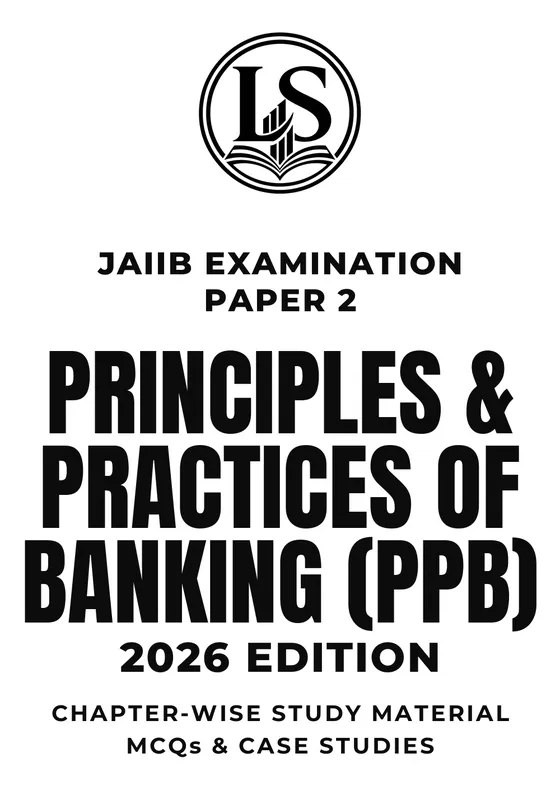
Prefer revising from a printed book?
Chapter-wise books with MCQs after every chapter — minimal pages, complete coverage, delivered anywhere in India. Every book has a free sample to read first.










































Take a free mock test, download chapter PDFs, or watch a video class — all included on iibf.store.