JAIIB AFM Numerical Tricks — Ratio Problems को प्रो की तरह हल करें
JAIIB AFM का paper देते समय ज़्यादातर candidates की एक ही शिकायत होती है — time कम पड़ गया। असल में numerical questions लंबे नहीं होते, हम उन्हें लंबा बना देते हैं क्योंकि formula याद करने में ही आधा मिनट निकल जाता है। इस article में हम ratio families, depreciation, partnership goodwill और BRS के वो shortcuts देखेंगे जो AFM के 60% numerical questions cover कर देते हैं।
Ratio Families — चार बक्सों में सब कुछ
Ratios को अलग-अलग याद करने के बजाय इन्हें चार families में सोचिए। एक बार family पहचान ली, तो formula अपने आप आ जाता है।
- Liquidity Ratios — Current Ratio (CA/CL), Quick Ratio ((CA−Stock−Prepaid)/CL), Cash Ratio ((Cash+Marketable Securities)/CL)। याद रखें — जैसे-जैसे numerator कड़ा होता जाता है, ratio का standard भी कम होता जाता है (2:1, 1:1, 0.5:1)।
- Profitability Ratios — GP% = (GP/Sales)×100, NP% = (NP/Sales)×100, ROA = (NP/Total Assets)×100, ROE = (NP/Shareholders' Funds)×100। एक trick — अगर question में "shareholders" शब्द है तो denominator हमेशा equity होगा, "assets" है तो total assets।
- Solvency Ratios — Debt-Equity (Long-term Debt/Equity), Interest Coverage (EBIT/Interest), DSCR = (NP + Depreciation + Interest on term loan)/(Installment + Interest on term loan)। DSCR में सबसे common mistake — short-term interest add कर देना। केवल term loan का interest लेना है।
- Activity Ratios — Inventory Turnover (COGS/Avg Stock), Debtor Turnover (Credit Sales/Avg Debtors), Creditor Turnover (Credit Purchases/Avg Creditors)।
Operating Cycle — एक formula में पूरा working capital
Working banker के लिए सबसे useful concept है Operating Cycle। Formula simple है:
Operating Cycle = Stock Days + Debtor Days − Creditor Days
Stock Days = 365/Inventory Turnover, Debtor Days = 365/Debtor Turnover, Creditor Days = 365/Creditor Turnover। Exam में अक्सर तीन ratios देकर operating cycle पूछा जाता है — सीधा 365 से divide करिए और plug-in कर दीजिए। ये concept CAIIB ABM में भी detail से आता है, इसलिए अभी अच्छी तरह set कर लें।
Depreciation — तीन methods, तीन shortcuts
- SLM (Straight Line Method) — Annual Dep = (Cost − Scrap)/Life। हर साल same amount। Book value linearly गिरती है।
- WDV (Written Down Value) — Dep = Opening Book Value × Rate%। हर साल depreciation घटती जाती है। Tax authorities का favourite method।
- Units of Production — Dep per unit = (Cost − Scrap)/Total Estimated Units। Manufacturing units के लिए। Question में जब "machine hours" या "units produced" का mention हो, यही method लगेगा।
एक quick check — अगर question में rate% दिया है तो 90% chance WDV है। अगर useful life years में दी है तो SLM।
Partnership Goodwill — चार methods, situation-based
Goodwill calculation में confusion इसलिए होता है क्योंकि चार methods हैं और question हर बार पूछता है कि कौनसा लगाना है। याद रखने का तरीका:
- Average Profit Method — Goodwill = Average Profit × Number of years' purchase। सबसे basic।
- Super Profit Method — Super Profit = Actual Profit − Normal Profit; Goodwill = Super Profit × Years' purchase।
- Capitalisation Method — Capitalised Value = Average Profit × (100/Normal Rate); Goodwill = Capitalised Value − Net Assets।
- Annuity Method — Goodwill = Super Profit × Annuity Factor (table से)।
BRS Direction Logic — Add या Less का confusion खत्म
Bank Reconciliation Statement में सबसे ज़्यादा गलती direction की होती है। एक simple rule — जिस side से शुरू कर रहे हैं, वहाँ का balance जिस तरह से दूसरी side पहुँचेगा वो entry वैसी ही होगी। Cash Book balance से शुरू कर रहे हैं तो — cheque issued but not presented (bank में अभी debit नहीं हुआ) means bank का balance ज़्यादा है, इसलिए Add करेंगे। Cheque deposited but not credited means bank का balance कम है, इसलिए Less करेंगे।
Exam Day की 3-Pass Strategy
120 minutes में 100 questions के लिए mathematics सीधा है — average 72 seconds per question। लेकिन सबको equal time देना smart नहीं है।
- Pass 1 (15 min) — पूरा paper skim करें। Theory और easy ratio questions पहले attempt करें। यहाँ 30-35 questions निकल जाने चाहिए।
- Pass 2 (70 min) — Medium difficulty के numerical। Depreciation, single-formula ratios, BRS। यहाँ 45-50 questions target रखें।
- Pass 3 (30 min) — Hard questions और जो छोड़े थे। आखिर में educated guess से बाकी attempt कर दें — JAIIB में negative marking नहीं है।
Practice के लिए iibf.store/tests पर sectional और full-length AFM mock tests available हैं। साथ ही complete JAIIB course में हर ratio का video explanation और practice sheet मिलेगा। पिछले हफ्ते की AFM Last-Week Revision Cheatsheet भी ज़रूर देख लें।
Q. DSCR में depreciation क्यों add करते हैं?
Q. Quick Ratio और Current Ratio में से कौनसा बेहतर है?
Q. WDV और SLM में depreciation amount कब बराबर होती है?
Q. Operating Cycle short हो तो अच्छा है या long?
Prefer revising from a printed book?
Chapter-wise books with MCQs after every chapter — minimal pages, complete coverage, delivered anywhere in India. Every book has a free sample to read first.
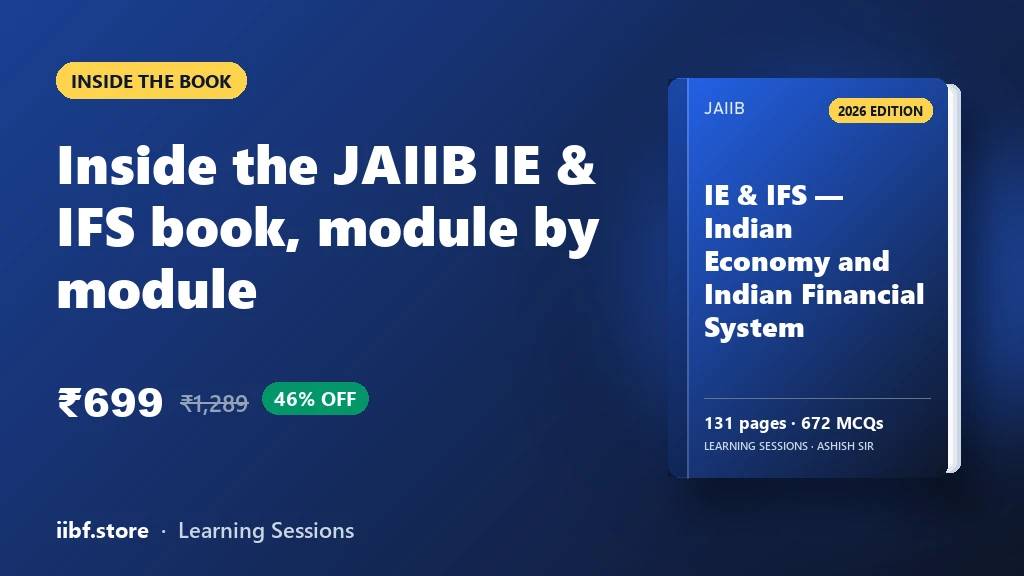
131 pages · 672 MCQs
Learning Sessions · Ashish Sir
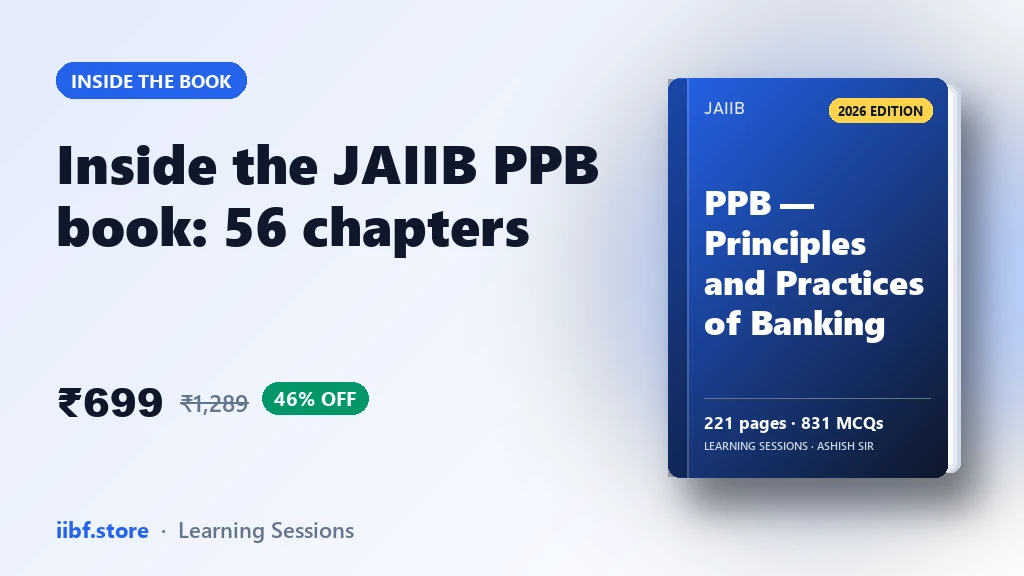
221 pages · 831 MCQs
Learning Sessions · Ashish Sir
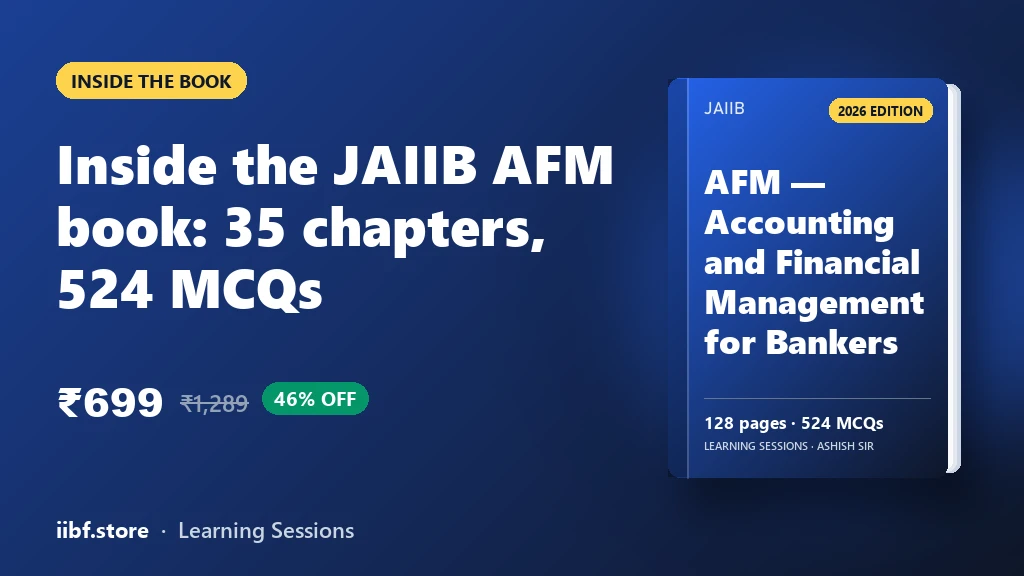
128 pages · 524 MCQs
Learning Sessions · Ashish Sir
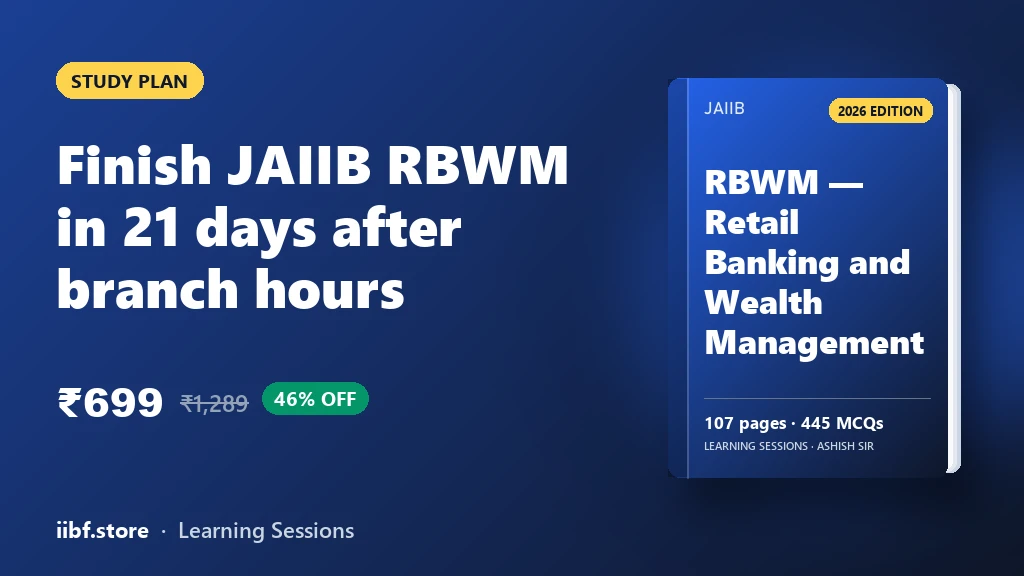
107 pages · 445 MCQs
Learning Sessions · Ashish Sir
148 pages · 478 MCQs
Learning Sessions · Ashish Sir
151 pages · 465 MCQs
Learning Sessions · Ashish Sir
148 pages · 375 MCQs
Learning Sessions · Ashish Sir
216 pages · 895 MCQs
Learning Sessions · Ashish Sir
109 pages · 300 MCQs
Learning Sessions · Ashish Sir
104 pages · 360 MCQs
Learning Sessions · Ashish Sir
82 pages · 297 MCQs
Learning Sessions · Ashish Sir
151 pages · 600 MCQs
Learning Sessions · Ashish Sir
98 pages · 282 MCQs
Learning Sessions · Ashish Sir
132 pages · 225 MCQs
Learning Sessions · Ashish Sir
188 pages · 435 MCQs
Learning Sessions · Ashish Sir
117 pages · 236 MCQs
Learning Sessions · Ashish Sir
Learning Sessions · Ashish Sir
118 pages · 299 MCQs
Learning Sessions · Ashish Sir
Learning Sessions · Ashish Sir
Learning Sessions · Ashish Sir
Learning Sessions · Ashish Sir
115 pages · 255 MCQs
Learning Sessions · Ashish Sir
Learning Sessions · Ashish Sir
334 pages · 936 MCQs
Learning Sessions · Ashish Sir
Learning Sessions · Ashish Sir
115 pages · 344 MCQs
Learning Sessions · Ashish Sir
107 pages · 240 MCQs
Learning Sessions · Ashish Sir
90 pages · 150 MCQs
Learning Sessions · Ashish Sir
Learning Sessions · Ashish Sir
Quick quiz on this topic
5 exam-style questions from our free test bank — check yourself before you move on.
Practice this topic
मुफ़्त मॉक टेस्ट दें, चैप्टर PDF डाउनलोड करें या वीडियो क्लास देखें — सब iibf.store पर मुफ़्त है।