MSME Classification का नया रूप — Micro, Small, Medium की Threshold आसान भाषा में
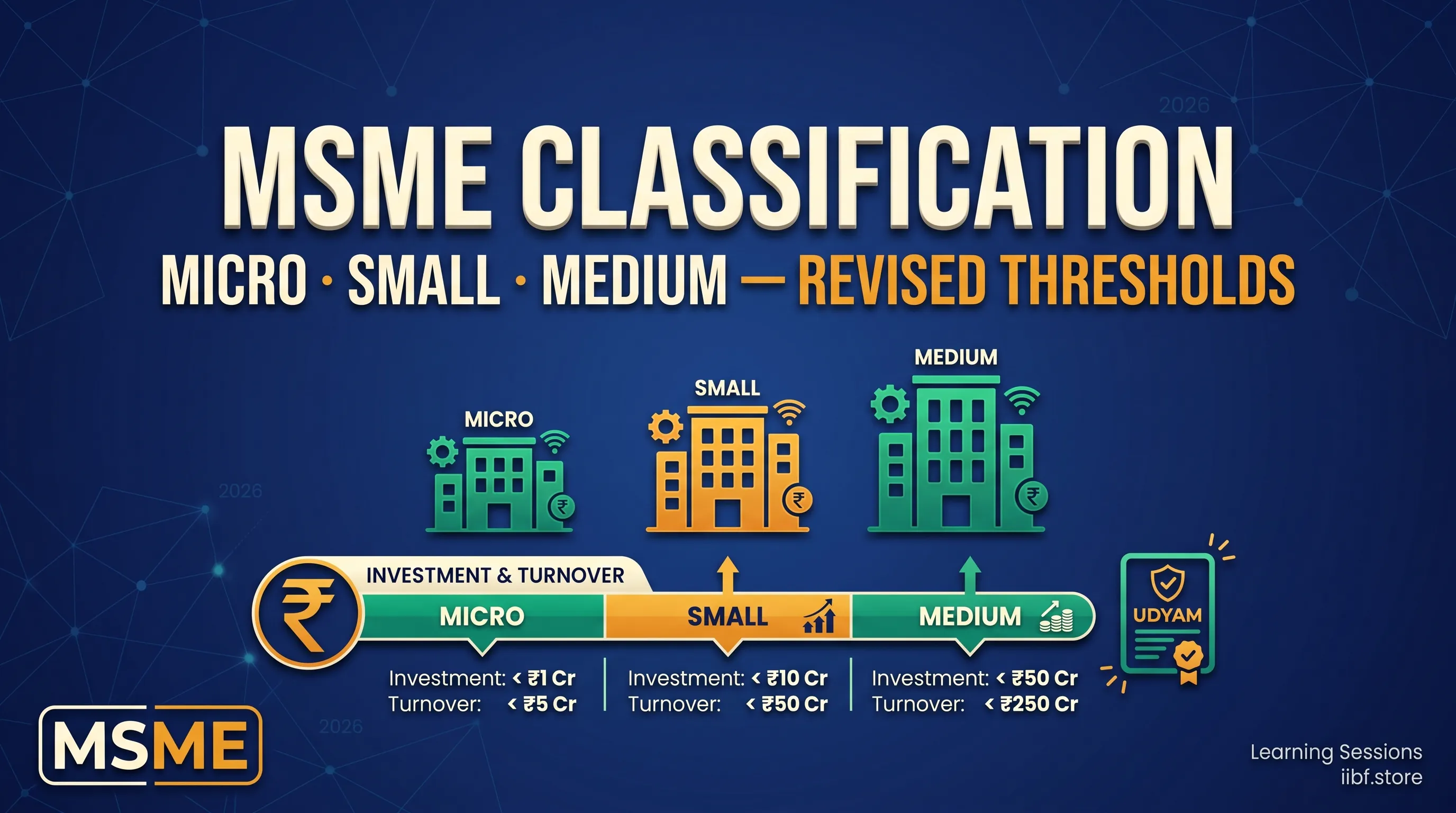
अगर आप 2018-19 वाली MSME definition के हिसाब से आज भी सोच रहे हैं, तो बहुत बड़ी ग़लती कर रहे हैं। 1 जुलाई 2020 से Government of India ने MSME classification को पूरी तरह से overhaul कर दिया है — और यह बदलाव सिर्फ़ नंबरों का नहीं, पूरे logic का है। पुरानी definition में manufacturing और services के अलग-अलग limits थे, और सिर्फ़ investment in plant & machinery देखा जाता था। नई definition में दोनों चीज़ें — investment और turnover — एक साथ apply होती हैं, और manufacturing-services का फ़र्क़ ही मिटा दिया गया है।
नया Dual Criterion — Investment AND Turnover दोनों
सबसे ज़रूरी बात यह समझ लीजिए — किसी unit को Micro, Small या Medium कहलाने के लिए दोनों conditions एक साथ पूरी होनी चाहिए। यदि एक भी threshold cross हुई, तो unit अगली category में चली जाएगी। इसे "AND" criterion कहते हैं, "OR" नहीं।
- Micro Enterprise — Investment in Plant & Machinery / Equipment ≤ ₹1 crore AND Turnover ≤ ₹5 crore
- Small Enterprise — Investment ≤ ₹10 crore AND Turnover ≤ ₹50 crore
- Medium Enterprise — Investment ≤ ₹50 crore AND Turnover ≤ ₹250 crore
Practical example से समझिए — एक unit जिसकी investment ₹8 crore है (Small range में) लेकिन turnover ₹60 crore है (Medium range में), वो automatically Medium मानी जाएगी। ब्रांच में यह confusion सबसे ज़्यादा होती है, इसलिए हमेशा higher slab वाला criterion ही final classification तय करता है।
Manufacturing vs Services का फ़र्क़ खत्म
यह नई definition का सबसे बड़ा simplification है। पहले manufacturing unit के लिए investment limit अलग होती थी और service unit के लिए अलग — और यह सब हमेशा confusing रहता था। अब दोनों के लिए same thresholds हैं। एक textile factory हो या एक IT services company — classification का formula एक ही है।
इससे documentation भी आसान हो गया है। RM को अब यह decide करने में दिमाग़ नहीं लगाना पड़ता कि unit किस bucket में आती है — investment और turnover के दो नंबर देखो, और matrix में जगह fix कर दो।
Udyam Registration — Single Window, बिल्कुल Free
Udyam Registration इस नए framework का backbone है। पुराने Udyog Aadhaar Memorandum (UAM) को replace कर दिया गया है। यह registration पूरी तरह से मुफ़्त है — कोई भी agent अगर fees माँगे तो वो fraud है। Process इस तरह है:
- Portal — udyamregistration.gov.in पर खुद entrepreneur जाकर apply करता है
- सिर्फ़ Aadhaar number और PAN चाहिए
- Investment और turnover के नंबर portal खुद PAN/GST/ITR database से auto-fetch कर लेता है — manual declaration नहीं
- Registration के बाद एक permanent Udyam Registration Number (URN) मिलता है, जो lifetime valid रहता है
- हर साल classification automatically PAN-linked data के आधार पर review होती है
Branch के लिए practical implication यह है कि अब किसी borrower का MSME status verify करने के लिए सिर्फ़ Udyam certificate की validity portal पर check करनी होती है। Self-declaration वाले दिन गए।
Trader Inclusion — 2021 का बड़ा बदलाव
शुरू में wholesale और retail traders को Udyam registration से बाहर रखा गया था। लेकिन July 2021 से traders को भी MSME category में शामिल कर लिया गया है, हालाँकि यह सिर्फ़ Priority Sector Lending purposes के लिए limited है। यानी एक kirana store मालिक भी अब Udyam registration करा सकता है और MSME loan benefits ले सकता है। ब्रांच में traders के case में यह update बहुत relevant है।
Export Turnover — Important Exclusion
एक बहुत important technical point — export turnover को total turnover में count नहीं किया जाता। यदि किसी unit का domestic turnover ₹40 crore है और export ₹30 crore है, तो classification के लिए सिर्फ़ ₹40 crore देखा जाएगा (Small range में आएगा), न कि ₹70 crore। यह exporters को encourage करने के लिए जानबूझ कर रखा गया provision है। Exam में और ब्रांच में, दोनों जगह यह point अक्सर पूछा जाता है।
PSL Implications — असली खेल यहाँ है
RBI के नियमों के तहत हर बैंक को Adjusted Net Bank Credit (ANBC) का 40% Priority Sector को देना ज़रूरी है। MSME इसी PSL का एक बड़ा हिस्सा है। उसमें भी कुछ sub-targets हैं:
- Micro Enterprises sub-target — ANBC का 7.5% सिर्फ़ Micro units को जाना चाहिए
- Small और Medium units पर कोई sub-target नहीं, पर overall MSME advances PSL में count होते हैं
- Shortfall होने पर बैंक को RIDF या equivalent funds में deposit करनी पड़ती है, जो कम rate of interest देती है — यानी direct loss
इसी वजह से ब्रांच level पर हर MSME case में Udyam certificate और सही classification का होना critical है। ग़लत classification मतलब ग़लत PSL reporting, और audit में बड़ी problem।
Composite Criterion — एक quick scenario
मान लीजिए एक textile unit है: Investment ₹0.8 crore, Turnover ₹6 crore। Investment Micro है, पर turnover Micro की limit ₹5 crore से ऊपर निकल गया। तो unit Small Enterprise कहलाएगी, Micro नहीं। यह छोटी सी समझ branch में हर हफ़्ते काम आती है। Practice के लिए ऐसे scenarios iibf.store/tests की MSME mock series में मिलते हैं।
Exam के लिए Quick Recall
- Effective Date — 1 July 2020
- Criterion — Investment AND Turnover (both)
- Micro — ₹1cr / ₹5cr | Small — ₹10cr / ₹50cr | Medium — ₹50cr / ₹250cr
- Manufacturing और Services के लिए same limits
- Registration — Udyam, free, Aadhaar+PAN, auto-fetch
- Traders included since July 2021 (PSL purpose)
- Export turnover excluded
- PSL — 40% ANBC, Micro sub-target 7.5%
Related topics के लिए हमारा MSME Certificate course देखें, और MSME schemes का overview चाहिए तो MUDRA loan scheme guide पढ़ें — दोनों एक साथ समझ में आ जाएँगे।
Q1. यदि unit का investment Small range में है पर turnover Medium range में, तो classification क्या होगी?
Q2. Udyam Registration के लिए कोई fees देनी होती है क्या?
Q3. Export turnover को क्यों exclude किया जाता है?
Q4. यदि unit अगले साल threshold cross कर ले, तो क्या तुरंत classification बदल जाती है?
Prefer revising from a printed book?
Chapter-wise books with MCQs after every chapter — minimal pages, complete coverage, delivered anywhere in India. Every book has a free sample to read first.
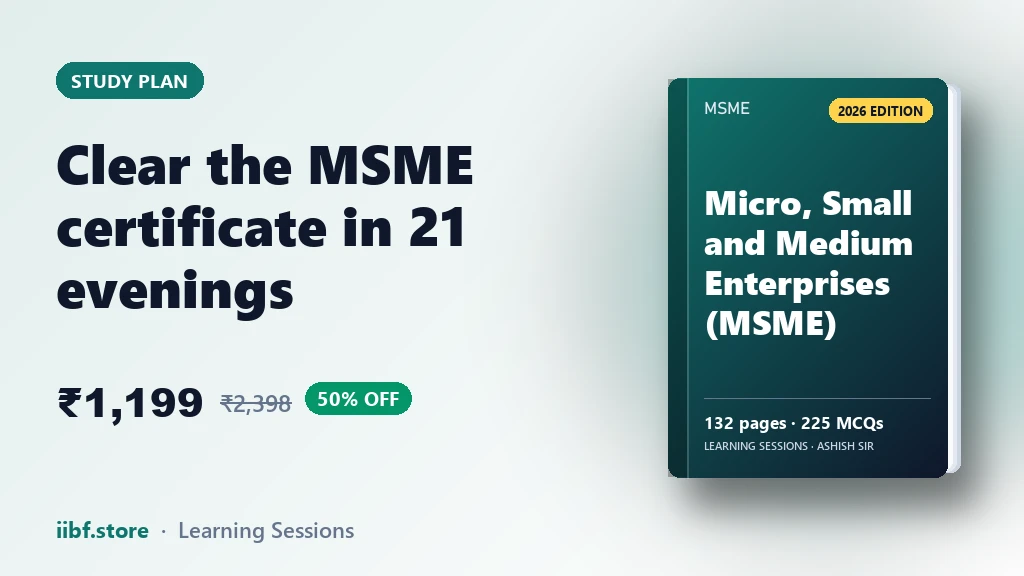
132 pages · 225 MCQs
Learning Sessions · Ashish Sir
188 pages · 435 MCQs
Learning Sessions · Ashish Sir
117 pages · 236 MCQs
Learning Sessions · Ashish Sir
Learning Sessions · Ashish Sir
118 pages · 299 MCQs
Learning Sessions · Ashish Sir
Learning Sessions · Ashish Sir
Learning Sessions · Ashish Sir
Learning Sessions · Ashish Sir
115 pages · 255 MCQs
Learning Sessions · Ashish Sir
Learning Sessions · Ashish Sir
334 pages · 936 MCQs
Learning Sessions · Ashish Sir
Learning Sessions · Ashish Sir
115 pages · 344 MCQs
Learning Sessions · Ashish Sir
107 pages · 240 MCQs
Learning Sessions · Ashish Sir
90 pages · 150 MCQs
Learning Sessions · Ashish Sir
Learning Sessions · Ashish Sir
131 pages · 672 MCQs
Learning Sessions · Ashish Sir
221 pages · 831 MCQs
Learning Sessions · Ashish Sir
128 pages · 524 MCQs
Learning Sessions · Ashish Sir
107 pages · 445 MCQs
Learning Sessions · Ashish Sir
148 pages · 478 MCQs
Learning Sessions · Ashish Sir
151 pages · 465 MCQs
Learning Sessions · Ashish Sir
148 pages · 375 MCQs
Learning Sessions · Ashish Sir
216 pages · 895 MCQs
Learning Sessions · Ashish Sir
109 pages · 300 MCQs
Learning Sessions · Ashish Sir
104 pages · 360 MCQs
Learning Sessions · Ashish Sir
82 pages · 297 MCQs
Learning Sessions · Ashish Sir
151 pages · 600 MCQs
Learning Sessions · Ashish Sir
98 pages · 282 MCQs
Learning Sessions · Ashish Sir
Practice this topic
मुफ़्त मॉक टेस्ट दें, चैप्टर PDF डाउनलोड करें या वीडियो क्लास देखें — सब iibf.store पर मुफ़्त है।