NDS-OM and Government Securities Trading in India (IIBF TIRM)
NDS-OM and government securities trading sit at the centre of a bank treasury's working day, and the IIBF Treasury Investment and Risk Management paper tests the topic from two angles at once: market microstructure and settlement operations. Examiners rarely ask you to define the platform. They ask who owns it, who operates it, who guarantees the trade, which segment a ₹25 lakh order lands in, and what happens on the settlement date. This guide walks you through the architecture, the access routes, the segments and the audit trail, in the sequence a dealer actually experiences them.
If you are preparing for TIRM, treat this as the structural backbone on which valuation, duration and risk-limit topics rest. You cannot mark a portfolio correctly if you do not know how the trade reached your books in the first place.
📜 From Telephone Deals to an Anonymous Order Book
Before 2002, the rupee bond market ran on telephones. A dealer called a broker or a counterparty bank, negotiated a price bilaterally, and the deal was documented on paper and settled by physical or SGL transfer instructions. Price discovery was poor, the same security could trade at materially different levels on the same morning, and smaller participants had no way of knowing where the market really was.
The Reserve Bank launched the Negotiated Dealing System in February 2002. NDS moved negotiation and reporting to a screen, but it remained a negotiated system — you still knew your counterparty and still had to agree the trade bilaterally before capturing it. Reporting discipline improved, spreads narrowed, but anonymity and continuous price discovery were still missing.
The decisive step came in August 2005 with the launch of NDS-OM, the anonymous order matching module. Orders are entered into a central limit order book and matched by the system on strict price and time priority. Neither side knows the identity of the other before or after the match. That single design choice removed the relationship premium that smaller banks used to pay and made the traded yield curve genuinely observable.
This is why the syllabus treats NDS-OM and government securities trading as a case study in market reform: the same instruments, the same participants, but a completely different information environment. The financial markets chapter places this evolution alongside the parallel development of the money and forex markets.
🏛️ Who Owns the Platform and Who Can Trade On It
The ownership question is a favourite one-mark trap. The Reserve Bank of India owns NDS-OM. The Clearing Corporation of India Limited (CCIL) operates it on the Reserve Bank's behalf and, separately, acts as the central counterparty that clears and guarantees the resulting trades. Two distinct roles, one entity — and candidates routinely credit CCIL with ownership. CCIL functions as an authorised payment system operator under the Payment and Settlement Systems Act, 2007.
Access comes in layers. Primary (direct) members are entities that maintain a Subsidiary General Ledger account with the Reserve Bank's Public Debt Office — commercial banks, primary dealers, insurance companies and large mutual funds. They log in, place orders and settle in their own name.
Entities without an SGL account participate through the Constituent Subsidiary General Ledger route. Their holdings sit in a CSGL account maintained by a custodian bank or primary dealer, and they are known as gilt account holders. Co-operative banks, NBFCs, provident funds, trusts and corporates typically use this channel. A web-based module introduced in 2012 lets these gilt account holders place orders on the same order book through their sponsoring member, rather than telephoning the custodian's dealer.
The RBI Retail Direct Scheme, launched in November 2021, extended the chain to individuals. A resident retail investor opens a Retail Direct Gilt account directly with the Reserve Bank, free of charge, and gets both non-competitive bidding in primary auctions and secondary trading access to NDS-OM. Understanding NDS-OM and government securities trading therefore now means understanding a single order book serving a State Bank dealer and a salaried investor buying ₹10,000 of a ten-year bond.
💡 Exam Tip: Remember the pairing — RBI owns, CCIL operates and guarantees. If a question says "the platform owned and operated by CCIL", it is wrong.
| Access route | Typical user | Own SGL with RBI | Places orders on the order book | Usual lot |
|---|---|---|---|---|
| Primary (direct) member | Banks, primary dealers, insurers, large mutual funds | ✅ | Directly, in own name | Standard market lot (₹5 crore face value) |
| NDS-OM Web (gilt account holder) | Co-operative banks, NBFCs, provident funds, corporates | ❌ — CSGL with a custodian | Through a sponsoring member | Market lot or odd lot |
| RBI Retail Direct | Resident individual investors | ❌ — RDG account with RBI | Directly, via the RDG portal | Odd lot, ₹10,000 face value and multiples |
| Bilateral OTC deal | Any two eligible counterparties | Depends on entity | Not matched — negotiated, then reported | Negotiated size |
Access routes and lot sizes in NDS-OM and government securities trading.
📊 Segments, Order Types and Quotation Conventions
The outright segment is where most volume sits, and it is split by size. The standard market lot for dated Government of India securities is ₹5 crore face value; anything smaller is routed to the odd lot segment, where quantities go down to ₹10,000 face value and multiples thereof. Odd lot liquidity is thinner and the bid-ask spread is wider — a point worth remembering before you assume a retail investor gets the same price as a treasury dealer.
Alongside these sits the When Issued segment, permitted by the Reserve Bank from 2006. A WI trade is struck in a security after the auction is notified but before it is actually issued, and all WI trades settle on the issue date. It lets primary dealers hedge and distribute auction risk in advance, which is why WI activity is a useful signal of expected auction demand. Short-side WI positions carry specific eligibility and position limits, and the related discipline is covered in our note on short selling in government securities.
Beyond outright trading, the same infrastructure carries the funding segments: market repo, where the two legs are settled through CCIL as CCP, and triparty repo (TREPS), operational since November 2018, in which CCIL additionally acts as the triparty agent handling collateral selection and substitution.
On quotation, dated securities and State Development Loans are quoted on a price basis per ₹100 of face value, with the yield displayed alongside; Treasury Bills, being zero-coupon discount instruments, are conventionally dealt on a discount price with the implied yield derived from it. Orders are limit orders with defined price and quantity, matched on price-time priority, and can be modified or cancelled while unmatched. Because market yields drive these prices continuously, keep the current policy corridor in view using the live RBI rates reference.
🔁 Settlement: CCP Novation, DvP-III and the SGL Legs
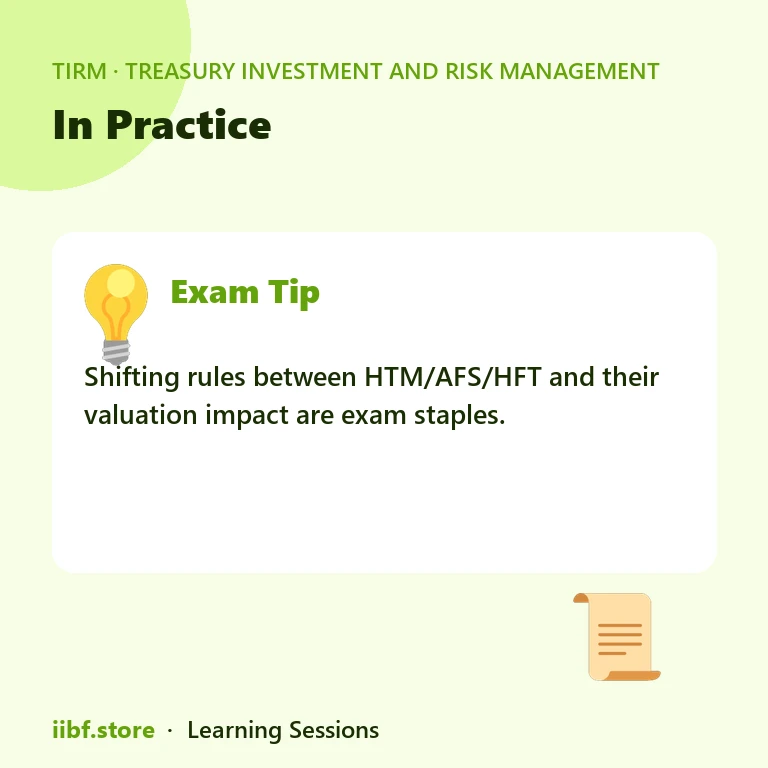
The moment an order matches, CCIL steps in as central counterparty by novation — becoming the buyer to every seller and the seller to every buyer. Neither original party carries counterparty credit exposure to the other; both face CCIL, which manages the risk through margins, a settlement guarantee fund and a defined default waterfall.
Outright secondary market trades in government securities settle on a T+1 basis. Settlement is delivery versus payment on the DvP-III convention, under which both the securities leg and the funds leg are netted multilaterally across all of a member's trades for the settlement date. That is the efficiency argument for the whole architecture: a treasury that has bought and sold the same paper several times during the day moves one net figure, not fifty gross ones.
The securities leg moves across SGL and CSGL accounts maintained with the Reserve Bank under the Government Securities Act, 2006 and the Government Securities Regulations, 2007. The funds leg settles across the members' current accounts with the Reserve Bank. Because both legs are book entries at the same institution, delivery and payment genuinely happen together — the principal risk that dogged the old physical market is eliminated, not merely reduced.
The regulatory framework for all of this, including CCIL's obligations as a financial market infrastructure, is published on the Reserve Bank's own site at rbi.org.in, which is the primary source you should quote in descriptive answers.
⚠️ Common Mistake: DvP-III does not mean "net funds, gross securities". That is DvP-II. In DvP-III both legs are netted — the standard applied to NDS-OM and government securities trading in India.
🏦 How a Bank Treasury Places, Monitors and Audits an Order
In a bank, an NDS-OM order is not one person's decision. The front office dealer works within a mandate set by the investment policy: instrument eligibility, portfolio category (HTM, AFS or FVTPL), tenor buckets and counterparty-free but market-risk-bound limits. The dealer enters the limit order, sees the depth of the book, and either lifts an offer or rests a bid.
The mid office monitors in near real time — utilisation against duration and sensitivity limits, stop-loss triggers, and intra-day exposure. Sensitivity control is quantified through measures explained in our guide to PV01 and DV01 in treasury. The back office then confirms the matched trade against the CCIL file, verifies the SGL movement and the funds leg, and passes the accounting entries. This three-way split is examined in detail in the chapter on front, mid and back office operations, with the control philosophy set out in risk analysis and control.
Two operational points recur in exams. First, bilaterally negotiated OTC deals in government securities must still be reported on the NDS reported segment promptly after execution — anonymity on the order book does not exempt the off-market trade from reporting. Second, the audit trail is machine-generated: order entry time, modification, cancellation and match are all time-stamped, so internal audit can reconstruct the dealer's day without relying on a deal slip.
Day-end, the matched positions flow into valuation. What you paid on NDS-OM becomes the acquisition cost that drives the periodic revaluation described in mark to market valuation of investments. Automating that handoff from trade capture to accounting is exactly the problem addressed by straight through processing in treasury, and the supporting systems architecture appears in the chapter on the role of information technology in treasury management.
🧠 Practice MCQs: NDS-OM and Government Securities Trading
Q1. NDS-OM is owned and operated by which combination? (a) Owned and operated by CCIL (b) Owned by RBI, operated by CCIL (c) Owned by SEBI, operated by NSE (d) Owned by RBI, operated by the Indian Banks' Association
Answer: (b) — The Reserve Bank owns the platform; CCIL operates it and separately acts as the central counterparty.
Q2. Outright secondary market trades in government securities on NDS-OM settle on which basis? (a) T+0, DvP-I (b) T+2, DvP-II (c) T+1, DvP-III (d) T+3, with both legs settled gross
Answer: (c) — Settlement is T+1 on DvP-III, where both the securities leg and the funds leg are netted multilaterally.
Q3. An entity without an SGL account with the Reserve Bank participates in the government securities market mainly through which route? (a) A demat account with a depository participant only (b) Direct membership of the clearing house (c) A trading account with a stock broker on the equity segment (d) A Constituent SGL account with a custodian bank or primary dealer
Answer: (d) — Such gilt account holders hold securities in a CSGL account maintained by a custodian, and may access the order book through the web-based module.
Q4. A "When Issued" trade in a government security is one that is (a) executed between the auction notification and the issue date, settling on the issue date (b) executed after the security has been listed for one month (c) executed only in the odd lot segment (d) executed only by retail investors under Retail Direct
Answer: (a) — WI trading spans the window between auction announcement and issuance, with settlement on the date of issue.
Q5. On NDS-OM, an order for ₹40 lakh face value of a dated Government of India security would ordinarily be routed to (a) the standard market lot segment (b) the When Issued segment (c) the odd lot segment (d) the triparty repo segment
Answer: (c) — The standard market lot is ₹5 crore face value, so smaller quantities trade in the odd lot segment.
Want chapter-wise mock tests with 100+ MCQs? Start practising free →
Frequently Asked Questions
Is NDS-OM the same thing as NDS?
No. NDS, launched in 2002, is the screen-based negotiated dealing and reporting system where counterparties are known to each other. NDS-OM, launched in 2005, is the anonymous order matching module where orders are matched by the system on price-time priority.
Can an individual investor really trade on the same platform as a bank treasury?
Yes. Through the RBI Retail Direct Scheme, a resident individual can open a Retail Direct Gilt account with the Reserve Bank and access both primary auctions and secondary trading on NDS-OM, generally in the odd lot segment.
Who bears the counterparty risk on a matched NDS-OM trade?
CCIL. On matching, it novates the trade and becomes the counterparty to both sides, backing the obligation with margins and a settlement guarantee fund. Neither original party carries credit exposure to the other.
Do bilateral OTC deals in government securities still need to be reported?
Yes. Negotiated deals executed outside the anonymous order book must still be reported on the NDS reported segment promptly after execution, so that the trade enters the same clearing and settlement stream.
🎯 Conclusion and Next Step
NDS-OM and government securities trading is one of those TIRM topics where a clear mental map beats memorisation. Fix four things: RBI owns and CCIL operates, CCIL novates and guarantees, settlement is T+1 on DvP-III with both legs netted, and access runs in three tiers — primary members on SGL, gilt account holders on CSGL, and individuals through Retail Direct. Layer the segments on top: standard lot, odd lot, When Issued, market repo and triparty repo.
Once that structure is fixed, the compliance overlay is easier to absorb — start with the chapter on regulations, supervision and compliance, then read the rest of our Treasury Investment and Risk Management article series for the valuation and risk-measurement companions to this piece.
Ready to test yourself under exam conditions? Take a free TIRM chapter test now → and see how well the architecture of NDS-OM and government securities trading has actually stuck.
Practice this topic
Take a free mock test, download chapter PDFs, or watch a video class — all included on iibf.store.