Sovereign Risk in Banking: G-Sec Exposure, the Nexus and Capital (IIBF Risk Management)
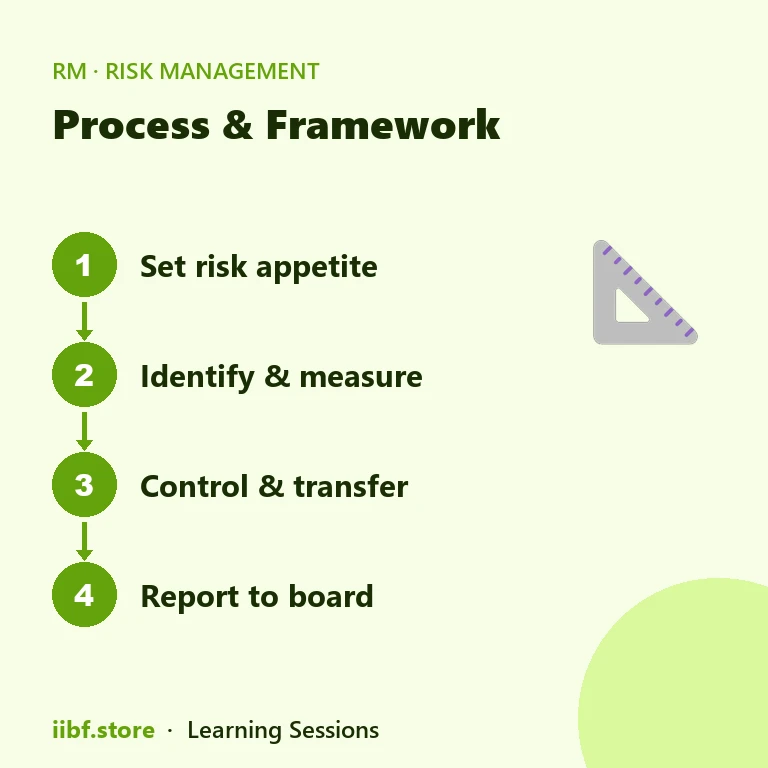
Sovereign risk in banking sits at the centre of every bank's balance sheet, whether the desk realises it or not. Every rupee a bank parks in government securities carries a regulatory label of "zero risk weight," yet that label hides real interest rate exposure and a deeper structural question. This article explains the mechanism behind zero risk weight on domestic sovereign exposure, why the sovereign-bank nexus worries regulators, how large G-Sec books create interest rate risk, and how foreign sovereign exposure and rating actions are treated differently. For CAIIB Risk Management candidates, this topic connects capital adequacy, ALM, and country risk into one exam-ready story.
📊 Zero Risk Weight on Domestic Sovereign Exposure
Under the standardised approach to credit risk, every exposure gets a risk weight before it enters risk-weighted assets (RWA). Risk weight decides how much capital a bank must hold against that exposure. Domestic sovereign exposure denominated in rupees — central government securities, state development loans, and direct RBI exposure — carries a zero risk weight under RBI's capital adequacy rules.
The logic is monetary, not credit-based. A sovereign borrowing in its own currency can always meet that obligation by directing its central bank, so local-currency default risk is treated as effectively nil for capital purposes. This is not unique to India; most Basel-aligned regulators apply the same carve-out to domestic-currency sovereign debt.
The practical effect is powerful. A bank can build an enormous G-Sec book without consuming a single rupee of credit-risk capital. That is exactly why the statutory liquidity ratio (SLR) and zero risk weight work together to make government securities the most capital-efficient asset on a bank's book, and why every CAIIB candidate must know this mechanism cold. For the underlying capital adequacy framework itself, see RBI's published guidelines.
🔗 The Sovereign-Bank Nexus, Explained
Zero risk weight plus SLR-driven demand pushes banks toward heavy sovereign holdings. This concentration creates what analysts call the sovereign-bank nexus, sometimes described globally as a "doom loop." Banks fund government borrowing by buying G-Secs, and government policy, in turn, shapes the banking sector through ownership, regulation, and implicit support.
The nexus becomes a concern when the two sides of that relationship move together under stress. If sovereign creditworthiness weakens, banks holding large G-Sec stocks face mark-to-market pressure, even though the regulatory risk weight stays at zero. Conversely, if banks face systemic stress, the sovereign's own fiscal capacity to support them is stretched thinner because of that same balance-sheet linkage.
This is precisely why the zero-risk-weight treatment is debated at the Basel Committee level worldwide. Proposals have included capital add-ons for large sovereign concentrations, large-exposure limits on sovereign debt, and mandatory marking-to-market disclosures. As of August 2026, India continues to apply zero risk weight on rupee-denominated domestic sovereign exposure, consistent with the majority of Basel-aligned jurisdictions, while the structural debate on sovereign concentration remains open globally.
💡 Exam Tip: Zero risk weight is a capital-adequacy rule, not a risk-free guarantee. Never equate the two in your answer.
📉 Interest Rate Risk from Large G-Sec Holdings
Zero risk weight makes G-Secs cheap from a capital perspective, but it says nothing about price risk. Bond prices move inversely to yields, and a bank sitting on a large G-Sec book is directly exposed to interest rate movements through its investment portfolio.
RBI's investment classification norms split the book into Held to Maturity (HTM) and Available for Sale (AFS), among other categories. Securities in AFS are marked to market regularly, so rising yields translate into immediate depreciation that hits reported profit or reserves. Securities in HTM are carried at amortised cost, so unrealised losses stay off the profit and loss account unless the bank sells or reclassifies the holding — but the economic loss is just as real.
This is interest rate risk in the banking book (IRRBB), assessed separately from credit risk through a bank's ICAAP process. A rate-hiking cycle can quietly erode a bank's economic value even while its capital adequacy ratio looks untouched, because the credit-risk RWA calculation never priced in interest rate movement in the first place.
⚠️ Common Mistake: Students often assume a zero risk weight means a G-Sec holding cannot hurt the bank. It cannot hurt CRAR through credit RWA, but it can still hurt earnings and economic value through rate moves.
🌍 Foreign Sovereign Exposure and Country Risk Provisioning
The zero-risk-weight carve-out is specific to domestic-currency sovereign exposure. Foreign sovereign exposure — lending to or holding securities of another country, or foreign-currency exposure linked to a sovereign — is treated very differently and falls under RBI's country risk framework.
Banks classify countries into risk categories based on published country-risk classifications, and they hold provisioning against net funded exposure once it crosses a materiality threshold set by RBI. The exact provisioning percentages and thresholds are reviewed periodically, so candidates should learn the classification logic rather than memorising a figure that regulators can revise.
A downgrade in a foreign sovereign's external rating, or a deterioration in a country's risk classification, can shift exposures into a higher-risk category. That shift raises the required provisioning and tightens internal exposure limits, even before any actual default occurs. This is the country-risk channel through which global sovereign stress reaches an Indian bank's books.
⭐ Rating Actions and Their Transmission to Bank Capital
External Credit Assessment Institutions (ECAIs) rate sovereigns, corporates, and banks. For domestic rupee sovereign exposure, India's own sovereign rating does not change the risk weight — it stays zero regardless of rating action, because the carve-out is currency-based, not rating-based.
Foreign sovereign and foreign-currency exposures work differently. Their risk weight is typically anchored to the relevant ECAI rating, so a rating downgrade raises the risk weight, which raises RWA, which raises the capital a bank must hold against that exposure. This is the direct regulatory transmission channel.
A second, indirect channel runs through markets. A sovereign rating action moves bond yields and funding costs across the system, even for exposures whose regulatory risk weight is unaffected. A bank with a large G-Sec book feels this indirect channel through IRRBB, discussed above, well before any RWA number moves.
📌 Remember: Domestic rupee sovereign risk weight is currency-based and rating-independent. Foreign sovereign risk weight is rating-dependent. Keep the two mechanisms separate in exam answers.
| Feature | Domestic Sovereign (INR) | Foreign Sovereign Exposure |
|---|---|---|
| Risk weight basis | Currency of denomination (own currency) | ECAI rating / country risk category |
| Standard credit risk weight | 0% | Varies with rating/category |
| Affected by India's own sovereign rating | No | Not applicable |
| Requires country-risk provisioning | ❌ No | ✅ Yes, above materiality threshold |
| Main residual risk | Interest rate risk (IRRBB) | Credit/country risk plus rating transmission |
| Key RBI framework | Capital adequacy / investment classification (HTM-AFS) | Country risk management framework |
These distinctions matter for the regulatory capital and capital adequacy chapter, since RWA calculation is the mechanical link between risk weight rules and CRAR. They also connect back to the foundational question of why banks need regulation in the first place — sovereign exposure rules exist precisely because unmonitored concentration can transmit stress across the system.
Sovereign risk in banking is also a credit risk topic at heart, so it pairs naturally with credit risk models pd lgd ead — the same PD/LGD logic underlies why sovereign default probability is treated as near-zero domestically but assessed rigorously abroad. G-Secs also function as prime collateral in the interbank repo market, which is worth revisiting alongside collateral management and haircuts. And because the nexus debate is ultimately a governance and oversight question, it echoes themes from risk culture in banks, where tone from the top shapes how concentration risk gets escalated internally.
Sovereign exposure decisions do not sit only in Risk Management. Sovereign stress also shows up as a driver in strategic risk in financial services, where boards must weigh concentration in government paper against broader strategic positioning.
🧠 Practice MCQs: Sovereign Risk in Banking
Q1. Under RBI's capital adequacy rules, what standard risk weight applies to rupee-denominated domestic sovereign exposure? (a) 100% (b) 50% (c) 20% (d) 0%
Answer: (d) — Domestic sovereign exposure in local currency carries a zero risk weight because a sovereign borrowing in its own currency is treated as free of local-currency default risk for capital purposes.
Q2. The "sovereign-bank nexus" describes which relationship? (a) Banks lending only to foreign governments (b) The circular link between bank health and sovereign creditworthiness through large G-Sec holdings (c) A rule that bans banks from holding G-Secs (d) A tax on government securities
Answer: (b) — Heavy bank holdings of sovereign debt mean bank and sovereign stress can reinforce each other, which is the core of the nexus debate.
Q3. Which investment category is more likely to show an immediate profit-and-loss impact when G-Sec yields rise sharply? (a) Held to Maturity (b) Available for Sale (c) Both are equally unaffected (d) Neither, since risk weight is zero
Answer: (b) — AFS securities are marked to market, so rising yields cause immediate depreciation in reported figures, unlike HTM holdings carried at amortised cost.
Q4. Risk weight on foreign sovereign exposure is typically anchored to what? (a) India's own sovereign rating (b) The relevant external credit rating agency (ECAI) assessment (c) A permanent zero weight (d) The bank's internal profit target
Answer: (b) — Unlike the currency-based domestic carve-out, foreign sovereign exposure risk weight generally follows the applicable ECAI rating and country risk classification.
Q5. A rating downgrade on a foreign sovereign exposure primarily transmits to a bank through which channel? (a) Automatic write-off of the exposure (b) Higher risk weight, raising RWA and the capital requirement (c) No impact, since all sovereign exposure is zero-weighted (d) A mandatory SLR increase
Answer: (b) — The downgrade raises the applicable risk weight, which increases risk-weighted assets and the capital a bank must hold against that exposure.
Want chapter-wise mock tests with 100+ MCQs? Start practising free →
Does a zero risk weight mean domestic G-Secs carry no risk at all?
No. Zero risk weight only means no credit-risk capital charge under the standardised approach. Interest rate risk on the same holdings is real and is assessed separately through ICAAP and IRRBB.
Why do banks hold such large government securities portfolios?
SLR requirements create a mandatory floor, and the zero risk weight makes additional holdings capital-efficient, so banks often hold more G-Secs than the regulatory minimum for liquidity and yield reasons.
What is the practical difference between AFS and HTM treatment?
AFS securities are marked to market, so price moves show up in reported figures quickly. HTM securities are held at amortised cost, so unrealised losses stay hidden unless the bank sells or reclassifies them.
Does India's own sovereign rating change the risk weight on rupee G-Secs?
No. The zero risk weight on domestic-currency sovereign exposure is based on currency of denomination, not on India's external credit rating, so a rating action does not alter this specific treatment.
Conclusion: Master Sovereign Risk for Your Next Attempt
Sovereign risk in banking looks simple on paper — one line, zero risk weight — but the exam expects you to explain the mechanism, the nexus debate, the interest rate risk consequence, and the foreign-exposure contrast in the same breath. Keep the domestic-currency carve-out separate from the rating-driven foreign treatment, and always tie G-Sec concentration back to IRRBB.
Test this understanding now with a full CAIIB Risk Management mock, or browse more topics on the risk management tag hub to keep building your score.
Practice this topic
Take a free mock test, download chapter PDFs, or watch a video class — all included on iibf.store.
Keep reading