Special Purpose Acquisition Company (SPAC): CAIIB ABFM Guide 2026
A special purpose acquisition company is one of the most-tested "emerging business solutions" topics in the CAIIB ABFM syllabus, yet candidates routinely confuse it with a normal IPO. In simple terms, a special purpose acquisition company is a listed shell entity that raises money from public investors first and finds a target business to acquire later. Because it has no operations of its own at the time of listing, it is often called a "blank-cheque company". This guide breaks down how a SPAC is structured, its life cycle, the Indian regulatory position under IFSCA, and the exact facts examiners like to test, followed by five practice MCQs and an FAQ.
SPACs sit inside Module D of Advanced Business and Financial Management, where they are studied alongside valuation and modern deal structures. If you are still building the foundations, revise the basics of management and planning before you tackle this deal-structuring content.
🚀 What Is a Special Purpose Acquisition Company?
A special purpose acquisition company (SPAC) is a company formed with no commercial operations, whose sole purpose is to raise capital through an Initial Public Offering (IPO) and then use that money to acquire or merge with an existing, usually private, operating company. Investors buy into the SPAC without knowing the eventual target, which is why it is nicknamed a "blank-cheque" or "shell" company. The reputation and track record of the sponsors — the founders who set up the SPAC — become the main basis on which the public subscribes.
When a SPAC lists, the money raised is placed in an interest-bearing escrow or trust account and cannot be touched for anything other than completing the acquisition (the "business combination") or returning funds to investors. Typically the SPAC issues "units" that each contain one common share plus a fraction of a warrant, giving investors upside if the eventual merged company performs well. Sponsors usually receive founder shares — commonly around 20% of the post-IPO equity — known as the "promote", which is their reward for sourcing and closing a deal.
The attraction is speed and certainty: a private company can go public by merging into an already-listed SPAC rather than running a full IPO roadshow. This route — sometimes compared with the later stages of venture capital funding — gives founders a quicker exit and price certainty negotiated privately with the sponsor.
🏗️ How a SPAC Works: Life Cycle and Key Players
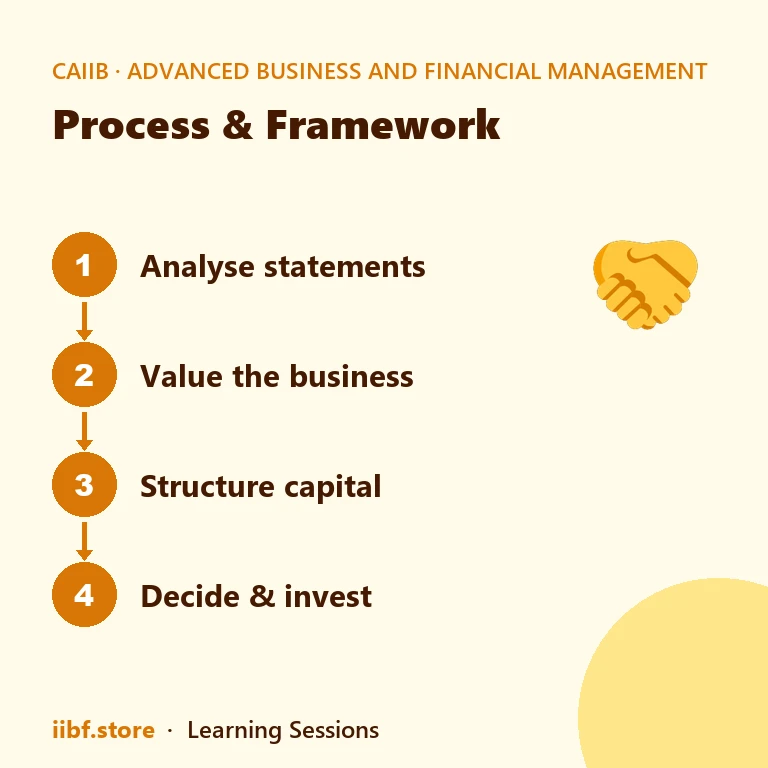
The SPAC life cycle runs through four clear stages, and examiners love to test the sequence and the timelines. First, formation and IPO: sponsors incorporate the shell, file a prospectus, and raise cash from public investors, parking the proceeds in trust. Second, the search phase: the management team hunts for a suitable target, generally within a fixed window of 18 to 24 months. Third, the business combination (de-SPAC): once a target is identified, shareholders vote to approve the merger, and dissenting investors can redeem their shares for their pro-rata share of the trust. Fourth, the post-merger listed entity: the target company effectively becomes public under the SPAC's listing.
💡 Exam Tip: If a SPAC fails to complete a qualifying acquisition within its permitted window (usually 24 months), it must liquidate and return the trust money — with accrued interest — to public shareholders. This "return of capital" feature is a favourite MCQ point.
The key players are the sponsors (who provide "at-risk" seed capital and expertise), the public investors (who get redemption rights and warrants), the target company, and the underwriters. Because valuation of the target is negotiated privately rather than discovered through a public book-build, the deal economics resemble a private acquisition. Candidates who have mastered special cases of valuation will find the pricing logic far easier to grasp.
📊 SPAC vs Traditional IPO vs Reverse Merger
The single most examinable comparison is how a SPAC differs from a conventional IPO and from an ordinary reverse merger. All three are routes to public listing, but they differ in speed, cost, price certainty, and regulatory scrutiny. The table below summarises the distinctions you should memorise.
| Feature | Traditional IPO | SPAC (de-SPAC) | Ordinary Reverse Merger |
|---|---|---|---|
| Time to list | 12–18 months | 3–6 months after target found | Variable |
| Cash raised upfront | Yes ✔ | Yes, held in trust ✔ | Not necessarily ✘ |
| Price certainty for target | Low (market-driven) ✘ | High (negotiated) ✔ | Moderate |
| Investor redemption rights | No ✘ | Yes ✔ | No ✘ |
| Sponsor "promote" (~20%) | No ✘ | Yes ✔ | No ✘ |
| Dilution risk from warrants | Low | High ✔ | Low |
Notice that the SPAC's biggest advantages — speed and price certainty — come at the cost of heavy dilution from sponsor promote and warrants, plus the risk that too many investors redeem, leaving the merged company short of cash. This trade-off between certainty and dilution echoes the financing decisions covered when banks appraise project finance structures, where funding certainty is weighed against cost.
⚠️ Common Mistake: Do not treat a SPAC as "the same as an IPO with extra steps". In an IPO the operating company itself files and prices its own shares; in a de-SPAC the operating company merges into an already-listed shell, so the pricing is negotiated privately, not book-built.
🇮🇳 SPACs in India: The IFSCA Framework and Regulatory Gaps
For the CAIIB exam, the Indian angle is crucial. Under the Companies Act, 2013, a plain-vanilla SPAC is difficult because a company that does not commence business or has no operations for a prolonged period risks being struck off the register as a shell company (Section 248). SEBI has historically been cautious about pure blank-cheque listings on domestic exchanges. This regulatory gap is why several Indian-origin companies — most famously ReNew Power — chose to list overseas on the Nasdaq via a US SPAC rather than at home.
The breakthrough came through the International Financial Services Centres Authority (IFSCA) at GIFT City. The IFSCA (Issuance and Listing of Securities) Regulations, 2021 explicitly permit SPACs to raise capital and list on IFSC exchanges, subject to a minimum offer size, minimum sponsor holding, and a fixed period (with a permitted extension) to complete the business combination. If no acquisition is completed in time, the SPAC must be wound up and money returned. This makes GIFT City India's designated onshore-offshore home for SPAC activity.
📝 Remember: Domestic exchanges (BSE/NSE) do not yet host pure SPACs; the IFSCA framework at GIFT City is the enabling window. This distinction — SEBI cautious, IFSCA permissive — is high-yield for MCQs.
Understanding why capital flows offshore also connects to capital account convertibility, and to how banks deploy surplus funds, a theme explored in treasury operations in banks. For the wider syllabus map, browse the Advanced Business and Financial Management topic hub.
📉 Risks, Redemptions and Why SPACs Cooled Off
The 2020–2021 global SPAC boom was followed by a sharp cooling, and knowing why demonstrates exam maturity. The core risks are: excessive dilution from the sponsor promote and warrants; misaligned incentives, because sponsors profit from completing almost any deal within the deadline even if the target is weak; high redemptions, where many investors pull their money at the vote, leaving the merged firm undercapitalised; and weaker due diligence compared with a traditional IPO, since projections used in de-SPAC marketing were often optimistic.
Regulators worldwide responded by tightening disclosure — particularly around forward-looking projections and sponsor conflicts. For a banker, the lesson mirrors sound credit and accounting discipline: optimistic projections must be tested against realistic assumptions, and intangibles must be carried at defensible values, a principle you will recognise from Ind AS 36 impairment of assets. Banks financing or advising on such deals apply the same scepticism they use in ordinary valuation of special cases.
For the exam, frame the SPAC as a legitimate but high-risk capital-raising innovation: fast and flexible for founders, but demanding strong investor protection, robust valuation, and clear regulation. Ready to test yourself with full-length mocks? Head to the CAIIB course page for structured practice.
🧠 Practice MCQs: Special Purpose Acquisition Company
Q1. A SPAC is best described as a company that (a) manufactures goods for export (b) has no commercial operations and raises money to acquire an existing business (c) provides microfinance to rural borrowers (d) manages a mutual fund scheme
Answer: (b) — A SPAC is a "blank-cheque" shell company that lists first and acquires an operating target later.
Q2. Where is money raised in a SPAC IPO typically held until the acquisition is completed? (a) In the sponsor's personal account (b) In an escrow or trust account (c) Invested in equity shares of the target (d) Distributed immediately as dividend
Answer: (b) — Proceeds are ring-fenced in an interest-bearing escrow/trust account until the business combination or return of capital.
Q3. What generally happens if a SPAC fails to complete a qualifying acquisition within its permitted window? (a) It converts into an NBFC (b) It must liquidate and return the trust money to shareholders (c) The sponsors keep all the funds (d) It automatically merges with the underwriter
Answer: (b) — On failure to complete the combination in time (usually up to 24 months), the SPAC winds up and returns capital with accrued interest.
Q4. Which Indian regulator's framework explicitly permits SPAC listings at GIFT City? (a) SEBI on the BSE (b) RBI (c) IFSCA (d) PFRDA
Answer: (c) — The IFSCA (Issuance and Listing of Securities) Regulations, 2021 permit SPACs to list on IFSC exchanges at GIFT City.
Q5. The sponsor's founder shares in a SPAC, often around 20% of post-IPO equity, are commonly called the (a) promote (b) coupon (c) haircut (d) tranche
Answer: (a) — The sponsor's roughly 20% equity reward for closing a deal is known as the "promote".
Want chapter-wise mock tests with 100+ MCQs? Start practising free
❓ Frequently Asked Questions
Authoritative reference: see the latest guidelines on the Reserve Bank of India website and the IIBF syllabus portal.
Is a SPAC the same as a traditional IPO?
No. In a traditional IPO the operating company files and prices its own shares. In a de-SPAC, a private company merges into an already-listed shell, so the price is negotiated privately with the sponsor rather than discovered through a public book-build.
Can a pure SPAC list on the BSE or NSE today?
Not as a plain blank-cheque vehicle. SEBI has been cautious and the Companies Act, 2013 risks striking off dormant shells. The enabling window in India is the IFSCA framework at GIFT City, not the domestic exchanges.
What protects public investors in a SPAC?
Funds are held in escrow/trust, investors get redemption rights at the merger vote, and if no deal closes within the deadline the money is returned with interest. Warrants also offer upside if the merged company succeeds.
Why did SPAC activity slow down after 2021?
Heavy dilution from sponsor promote and warrants, misaligned incentives, high redemptions leaving firms undercapitalised, and weaker due diligence led to poor post-merger performance and tighter regulatory scrutiny worldwide.
SPACs are a compact, high-yield ABFM topic: master the life cycle, the IFSCA-versus-SEBI position, and the dilution risks, and you can bank easy marks. Put it into practice now with the free CAIIB mock tests and lock in your score.
Prefer revising from a printed book?
Chapter-wise books with MCQs after every chapter — minimal pages, complete coverage, delivered anywhere in India. Every book has a free sample to read first.



Quick quiz on this topic
5 exam-style questions from our free test bank — check yourself before you move on.
Practice this topic
Take a free mock test, download chapter PDFs, or watch a video class — all included on iibf.store.