Trade-Based Money Laundering: A Banker's Guide for the IIBF KYC/AML Exam
Trade-based money laundering is one of the hardest laundering channels for banks to detect, and it is a high-yield topic for the IIBF KYC, AML and CFT examination. In simple terms, trade-based money laundering (TBML) is the process of disguising the proceeds of crime and moving value through legitimate-looking trade transactions — chiefly by mis-declaring the price, quantity or quality of goods on an invoice. Because the paperwork looks like ordinary import-export business, illicit value crosses borders under the cover of genuine commerce. The Financial Action Task Force (FATF) has identified it as one of the three principal methods of moving criminal proceeds, alongside the financial system and physical cash smuggling. For a banker, mastering TBML means understanding the red flags in a Letter of Credit, the mechanics of over- and under-invoicing, and the reporting obligations that follow when a transaction does not add up.
What Trade-Based Money Laundering Is
At its core, TBML exploits the complexity and volume of international trade. A single container may cross several jurisdictions, change ownership on paper multiple times, and be financed through instruments such as a Letter of Credit (LC), documentary collection or open-account terms. Launderers use this opacity to inject, layer or integrate criminal proceeds. The four classic techniques a KYC/AML candidate must know are: over-invoicing (the exporter states a price above the true value, transferring extra value to the exporter), under-invoicing (a price below true value, transferring value to the importer), multiple invoicing (issuing several invoices for the same shipment to justify multiple payments), and over- or under-shipment (mis-stating quantity, or shipping "phantom" goods that do not exist at all).
The essential trick is that value and goods move in opposite or mismatched directions, letting the parties settle a debt that has nothing to do with the underlying trade. A related danger is the mis-classification of goods — declaring cheap plastic as high-value electronics — to inflate the invoice. Because both a buyer and a seller are complicit, and because customs and banks look at different slices of the transaction, no single institution sees the whole picture. This is precisely why TBML sits at the intersection of correspondent banking, country risk and documentary credit, and why it is examined so heavily.
How Banks Detect TBML: Red Flags and Due Diligence
Detection rests on enhanced due diligence and alert trade-finance staff who question anything that does not match commercial logic. Key red flags include an invoice value that is significantly higher or lower than the prevailing market price for the goods; a shipment route that makes no economic sense (goods routed through a high-risk jurisdiction with no business reason); a mismatch between the description of goods on the LC and the bill of lading; payment terms inconsistent with the stated relationship between buyer and seller; and third parties settling on behalf of the trade counterparties. Dual-use goods — items with both civilian and military applications — deserve extra scrutiny because of sanctions and proliferation-financing risk.
Robust Customer Due Diligence (CDD) is the first line of defence: knowing the customer's genuine line of business tells you whether a transaction is consistent with their profile. Where risk is elevated — a Politically Exposed Person, a shell company, or a counterparty in a country on the FATF grey or black list — Enhanced Due Diligence (EDD) applies, with senior-management sign-off and closer monitoring. Trade-finance systems increasingly cross-check declared prices against public price databases and screen vessels, ports and counterparties against sanctions lists. When suspicion crystallises, the banker's duty is not to tip off the customer but to escalate internally to the Principal Officer. This topic connects directly to the study chapters on correspondent banking and country risk and money laundering, both of which shape how a bank prices and monitors cross-border trade.
The Regulatory Framework: PMLA, RBI and FATF
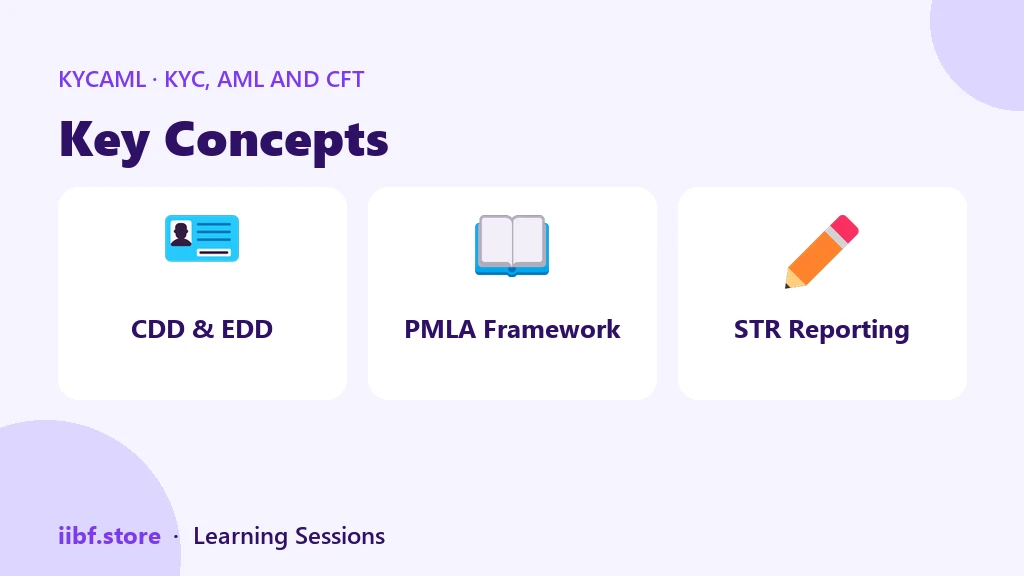
In India, the anchor law is the Prevention of Money-Laundering Act, 2002 (PMLA), which criminalises money laundering, provides for attachment and confiscation of proceeds of crime, and casts reporting obligations on banks as reporting entities. Under the PMLA and the RBI's Know Your Customer (Master) Directions, banks must maintain records, verify customer identity, monitor transactions, and file prescribed reports with the Financial Intelligence Unit-India (FIU-IND). The two core reports are the Suspicious Transaction Report (STR), filed whenever a transaction is suspected of involving proceeds of crime regardless of amount, and the Cash Transaction Report (CTR) for cash transactions above the prescribed threshold.
Globally, the standard-setter is FATF, whose Recommendations require countries to criminalise laundering, apply risk-based CDD, and enable international cooperation. FATF's mutual-evaluation and grey-listing process pressures jurisdictions to close gaps that TBML exploits. Indian banks must also observe RBI guidance on trade transactions, including caution lists and the requirement to establish the bona fides of trade before releasing finance or foreign exchange. For the international dimension, the KYC/AML syllabus draws on the study chapters covering international guidelines and standards and legislation at the national level. You can review current policy rates and RBI updates on the RBI rates page, and always confirm specifics against the primary source at rbi.org.in. More background is grouped under the KYC, AML and CFT tag hub.
Reporting, Records and the Banker's Duties
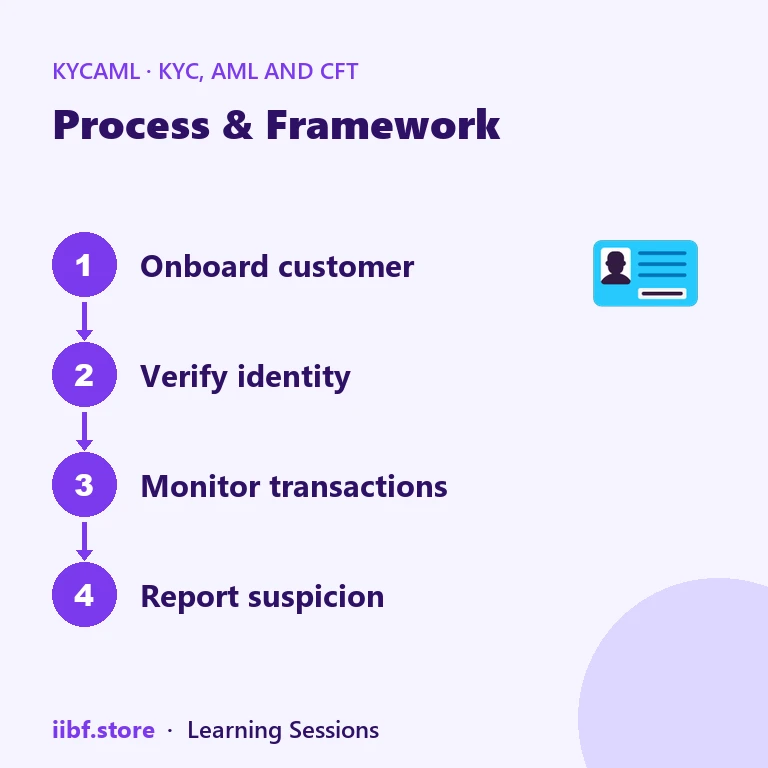
Once a red flag survives scrutiny, process discipline takes over. The alert is escalated to the bank's Principal Officer, who decides whether to file an STR with FIU-IND. Tipping off the customer that a report has been or may be filed is prohibited. Records supporting identity and transactions must be preserved for the period prescribed under the PMLA rules so that they are available to investigators. Banks are expected to run ongoing, risk-based monitoring rather than one-time verification, and to keep customer risk categorisation current — low, medium or high — reflecting the customer's business, geography and transaction pattern.
The table below summarises the principal India reporting instruments a candidate should be able to distinguish in the exam. Note that exact monetary thresholds and filing timelines are set by the FIU-IND rules and are updated from time to time; always verify the current figure before quoting it, and in an exam answer state the qualitative rule if unsure of the latest number.
| Report | Trigger | Amount linked? | Filed with |
|---|---|---|---|
| STR (Suspicious Transaction Report) | Suspicion of proceeds of crime / no economic rationale | No — any amount | FIU-IND |
| CTR (Cash Transaction Report) | Cash transactions above the prescribed threshold | Yes — threshold based | FIU-IND |
| CCR (Counterfeit Currency Report) | Detection of forged / counterfeit notes | Yes — value of notes | FIU-IND |
| NTR / Cross-border wire report | Non-profit receipts / cross-border wire transfers above threshold | Yes — threshold based | FIU-IND |
To see how these obligations sit within India's institutional set-up, study the chapter on the organization structure in India, which maps the roles of the RBI, FIU-IND and the Enforcement Directorate.
Frequently Asked Questions
What is trade-based money laundering in simple terms?
It is disguising illicit proceeds by moving value through international trade — typically by over-invoicing, under-invoicing, multiple invoicing or mis-shipping goods so that value and goods move in a mismatched way. The trade paperwork looks genuine, which is what makes it hard to detect.
How is over-invoicing different from under-invoicing?
In over-invoicing the stated price is above the true value, so extra value flows to the exporter. In under-invoicing the price is below true value, so value effectively transfers to the importer. Both let complicit parties settle an obligation unconnected to the real trade.
Which report is filed for a suspicious trade transaction in India?
A Suspicious Transaction Report (STR) is filed with FIU-IND whenever proceeds of crime are suspected, irrespective of the amount. The bank's Principal Officer decides on filing, and the customer must not be tipped off.
Which laws and bodies govern TBML in India?
The Prevention of Money-Laundering Act, 2002 (PMLA) and RBI's KYC Master Directions govern obligations; FIU-IND receives reports and FATF sets global standards. Verify current sections, thresholds and timelines against primary sources such as rbi.org.in before quoting exact figures.

Conclusion and Next Step
Trade-based money laundering rewards bankers who combine commercial common sense with disciplined due diligence: question invoices that defy market logic, escalate genuine suspicion, and never tip off the customer. Anchor your revision on the four techniques, the STR/CTR distinction, and the PMLA-RBI-FATF triangle, and you will handle most exam questions on this topic with confidence. Ready to test yourself? Take a timed mock on the IIBF practice tests, sharpen recall with the term-match game, and browse more revision notes on the iibf.store blog.
Quick quiz on this topic
5 exam-style questions from our free test bank — check yourself before you move on.
Practice this topic
Take a free mock test, download chapter PDFs, or watch a video class — all included on iibf.store.
Keep reading