Unified Lending Interface in India: ULI Explained for Bankers
The Unified Lending Interface in India is the Reserve Bank's answer to a very old problem: a lender can sanction a small crop loan in minutes, but only after spending days chasing land records from one department, a satisfaction-of-charge entry from another, GST returns from a third and account statements from a fourth. ULI collapses that scavenger hunt into a consent-driven set of standardised API calls. If you are preparing for JAIIB, CAIIB or the IIBF Certificate in Digital Banking, this is now core examinable material rather than optional reading.
This guide walks you through the credit gap that motivated ULI, the Reserve Bank Innovation Hub pilot it grew out of, its architecture and consent design, the data providers plugged in, the flagship use cases, and the risks supervisors are watching. Work through it alongside the Overview of Digital Banking chapter and you will have the topic covered end to end.
🧩 The Credit Gap That Motivated ULI
Think about how a branch actually underwrites a ₹1.5 lakh dairy loan or a small unsecured MSME facility. The applicant's repayment capacity is genuinely visible somewhere — in milk pouring records at the cooperative, in sowing patterns on a satellite image, in monthly GST returns, in bank statements. The problem is that every one of those signals sits with a different custodian, in a different format, behind a different process.
So the lender does what lenders have always done. It asks the borrower to produce paper. Land records are fetched manually from a tehsil office. An encumbrance certificate is chased at the sub-registrar. Income proof is self-declared and then verified by a field visit. Each step adds days, adds cost to serve, and adds the risk that a genuine borrower simply walks away.
The economics are unforgiving. For a ticket size of a lakh or two, the cost of manual verification can swallow the entire margin. That is precisely why formal credit thins out at the bottom of the pyramid: not because the borrowers are unbankable, but because the underwriting is unaffordable. The credit gap for small farmers and micro-enterprises has always been a data-plumbing problem dressed up as a risk problem.
The Unified Lending Interface in India attacks the plumbing. If the data already exists in digital form somewhere, the argument runs, a lender should be able to pull it — with the borrower's permission — in seconds rather than weeks. Nothing about the credit policy changes; only the friction does.
🔌 From the RBIH Frictionless Credit Pilot to ULI
The Reserve Bank Innovation Hub, the RBI's Bengaluru-based subsidiary, built a pilot called the Public Tech Platform for Frictionless Credit. It went live in August 2023 with a narrow scope — a handful of lenders, a handful of data providers, small-ticket agricultural and MSME products. In August 2024 the Governor renamed and repositioned the platform as the Unified Lending Interface, describing a new trinity of JAM–UPI–ULI for India's digital public infrastructure.
The naming matters, and examiners like it. "Interface" signals what ULI actually is: not a lender, not a credit bureau, not a scoring engine, but a common technical layer sitting between lenders and data custodians. It does not take the credit decision. The regulated entity does, using its own board-approved policy.
The central design idea is integrate once, consume many. Before ULI, a bank wanting land-record verification in five states negotiated five bespoke connections, each with its own contract, schema, authentication and support desk. Multiply that by satellite data, dairy data, GST and property registries and the integration burden becomes the reason digital lending stalls at pilot stage.
The Unified Lending Interface in India replaces that with common, standardised APIs designed for plug-and-play consumption. A lender builds to one specification. Each new data provider onboarded to the platform becomes available without fresh development work. This is exactly the abstraction logic you meet elsewhere in IT — worth reading with our cross-subject piece on operating systems in banking IT infrastructure, where a common interface hides messy underlying hardware in precisely the same way.
💡 Exam Tip: If a question asks who takes the lending decision on ULI, the answer is always the lender. ULI supplies verified data; it never underwrites.
🔐 Consent, Account Aggregators and the India Stack
Open plumbing without consent would be a surveillance system, not a lending rail. So the Unified Lending Interface in India is built on the same consent philosophy as the rest of the India Stack: the borrower decides what is shared, with whom, for what purpose and for how long, and can withdraw that permission.
This is the Data Empowerment and Protection Architecture idea in practice. The borrower is not signing a blanket authority buried in a loan application. Consent is specific, time-bound, purpose-bound and auditable, and the lender must be able to demonstrate it after the fact.
The account aggregator framework remains the designated route for financial information — bank statements, deposits, insurance, securities — carried by RBI-regulated NBFC-AAs that see only encrypted data they cannot read. ULI is complementary, not a replacement. Where AA moves financial data, ULI reaches the non-financial and government-held records that AA was never designed to carry: land titles, charge and encumbrance entries, satellite and agronomic data, registry extracts, dairy pouring records, plus credit information company reports and GST Network returns.
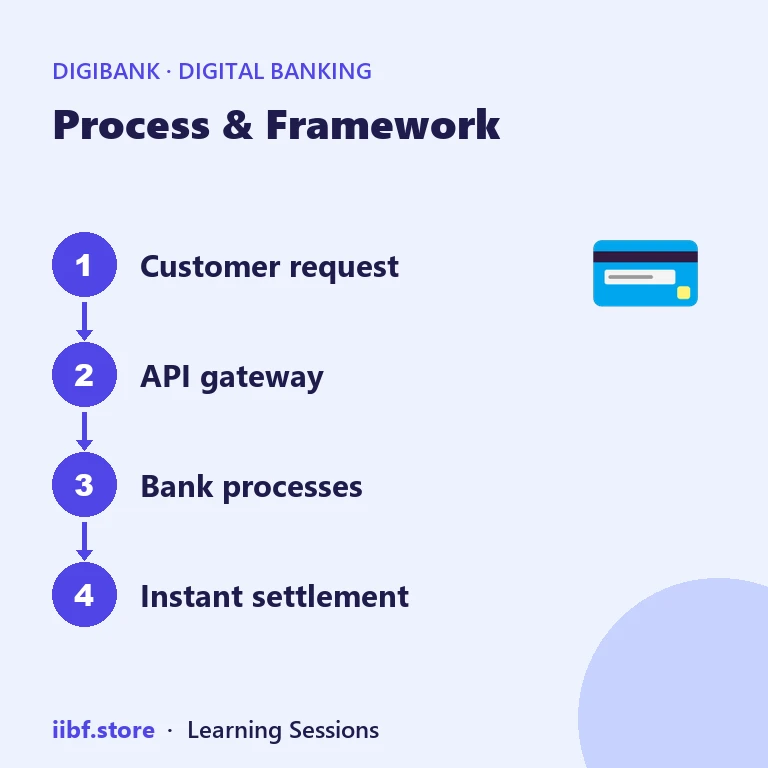
Put together, a lender can assemble an evidence pack for a small loan without the applicant physically fetching a single document. Aadhaar-based e-KYC establishes identity, AA supplies cash-flow evidence, ULI supplies collateral and activity evidence, and e-signature closes the documentation loop.
For the wider architecture and the consent artefact itself, revise the Financial Inclusion chapter and our explainer on the Open Credit Enablement Network OCEN, which standardises the loan application flow that ULI's data layer feeds.
⚠️ Common Mistake: Candidates write that ULI replaces the account aggregator framework. It does not. AA carries financial information under the NBFC-AA licence; ULI carries the wider digitised record set. They sit side by side.
🚜 Use Cases, Turnaround Gains and What Supervisors Watch
The flagship use cases were chosen deliberately: products where the missing data is the binding constraint. Kisan Credit Card loans, where land records and sowing data decide eligibility. Dairy loans, where milk pouring history at the cooperative is a better cash-flow proxy than any income certificate. Unsecured MSME loans, where GST returns and bank statements substitute for collateral. And loans against property, where digitised registry and charge data compress the title search.
| Step | Traditional route | Via ULI | Borrower consent needed |
|---|---|---|---|
| Identity and KYC | Branch visit, physical documents | Aadhaar-based e-KYC ❌ no branch visit | ✅ |
| Land record / title | Tehsil or registry visit, days | State land-record API, near real time | ✅ |
| Charge and encumbrance | Manual sub-registrar search | Digitised registry lookup | ✅ |
| Cash-flow evidence | Paper statements, self-declaration | Account aggregator pull ✅ | ✅ |
| Business turnover | Audited accounts, often unavailable | GSTN returns and CIC report | ✅ |
| Activity proof (agri / dairy) | Field visit by officer | Satellite data, milk pouring records | ✅ |
| Credit decision | Lender's board-approved policy | Lender's board-approved policy ❌ not ULI | — |
The payoff is turnaround time and cost to serve. When verification collapses from days to minutes, a lender can profitably write tickets it previously declined, and can serve a borrower at a doorstep rather than a counter. That is the financial-inclusion argument for the Unified Lending Interface in India in one line.
Supervisors, however, are watching three things. First, data quality — a stale or mis-keyed land record now propagates instantly into an approval instead of being caught by a human. Second, consent fatigue, where borrowers tap "approve" reflexively and the consent artefact becomes a formality. Third, model reliance: if many lenders underwrite off the same feeds using similar models, correlated errors and herd behaviour become systemic. The Reserve Bank's digital lending directions already put accountability for outsourced technology and for the customer relationship squarely on the regulated entity — read the primary material on the Reserve Bank of India website rather than relying on secondary summaries.
📌 Remember: ULI improves the inputs to underwriting. It does not transfer any part of the credit risk, the KYC obligation or the fair-practices duty away from the lender.
For the retail delivery side of the same story, see the Retail Banking – Digital Banking Class 12 chapter, and compare with how neo banks in India depend on exactly this kind of shared rail. Assurance controls on the payments side, such as the Positive Pay System in India, follow the same regulatory instinct: verify before you commit funds.
🧠 Practice MCQs: Unified Lending Interface
Q1. The Unified Lending Interface evolved from which Reserve Bank Innovation Hub initiative? (a) Public Tech Platform for Frictionless Credit (b) Trade Receivables Discounting System (c) Open Network for Digital Commerce (d) Central Payments Fraud Information Registry
Answer: (a) — RBIH ran the Public Tech Platform for Frictionless Credit pilot from August 2023; it was repositioned as ULI in August 2024.
Q2. Which statement best describes ULI's core architectural idea? (a) A central registry that scores every borrower (b) A common standardised API layer so a lender integrates once instead of building bespoke links to each data provider (c) A payment switch for loan disbursement (d) A government guarantee fund for small loans
Answer: (b) — "Integrate once, consume many" plug-and-play APIs are the defining design choice; ULI neither scores nor guarantees.
Q3. Under ULI, who controls what data is shared and for how long? (a) The lending bank (b) The Reserve Bank Innovation Hub (c) The borrower, through a purpose-bound and time-bound consent (d) The data provider that holds the record
Answer: (c) — Consent sits with the borrower, is specific and revocable, and must be auditable by the lender.
Q4. Which of the following is NOT among ULI's flagship use cases? (a) Kisan Credit Card loans (b) Dairy loans based on milk pouring data (c) Unsecured MSME loans (d) Cross-border trade finance under letters of credit
Answer: (d) — The flagship set is KCC, dairy, unsecured MSME and loans against property; trade finance is not a ULI use case.
Q5. Which risk is a supervisor MOST likely to flag in a ULI-based lending programme? (a) Settlement risk in the payment leg (b) Poor data quality propagating straight into automated approvals (c) Loss of physical branch footprint (d) Foreign exchange translation risk
Answer: (b) — Data quality, consent fatigue and correlated model reliance are the three named supervisory concerns.
Want chapter-wise mock tests with 100+ MCQs? Start practising free →
❓ Frequently Asked Questions
Is ULI a lender or a loan marketplace?
Neither. It is a technology interface that delivers verified, consented data to lenders. The loan is originated, priced, sanctioned and recovered by the regulated entity under its own board-approved credit policy.
How is ULI different from the account aggregator framework?
Account aggregators move financial information through RBI-licensed NBFC-AAs. ULI reaches wider digitised records — land titles, encumbrance entries, satellite and agronomic data, dairy pouring records, GSTN returns and credit information reports. The two are complementary layers of the same consent-first stack.
Does ULI weaken KYC or fair-practices obligations?
No. Digitised identity verification still has to satisfy the KYC Master Direction, and the lender remains fully responsible for grievance redress, disclosure of the annual percentage rate, cooling-off and recovery conduct.
How much of this appears in IIBF exams?
Expect one or two objective questions on ULI's origin, its "integrate once" design, the consent principle and the data providers involved. Browse the full digital banking tag hub for the surrounding topics that examiners pair it with.
🎯 Conclusion: Learn the Architecture, Not Just the Acronym
The Unified Lending Interface in India is best understood as plumbing with a permission slip. It does not invent new credit products or new risk appetite. It removes the document-collection tax that made small-ticket lending uneconomic, and it does so through a single standardised API layer with the borrower holding the consent switch.
For your exam, hold on to four anchors: the RBIH frictionless-credit pilot as the origin, "integrate once, consume many" as the design, borrower-controlled consent as the safeguard, and KCC, dairy, unsecured MSME and loans against property as the flagship use cases. Then add the three supervisory risks — data quality, consent fatigue and model reliance — and you can answer almost any framing of the question.
Ready to test yourself? Take a timed chapter test on the CAIIB course, or start with the Mobile Banking chapter to see how the delivery channel and the data rail fit together.
Quick quiz on this topic
5 exam-style questions from our free test bank — check yourself before you move on.
Practice this topic
Take a free mock test, download chapter PDFs, or watch a video class — all included on iibf.store.
Keep reading