Ways and Means Advances (WMA): CAIIB Central Banking Guide
For the CAIIB Central Banking elective, few topics reward careful study like the concept of Ways and Means Advances, the short-term, temporary credit the Reserve Bank of India extends to the Union and State Governments to smooth out mismatches between their receipts and expenditure. Candidates often confuse this facility with regular market borrowing or with liquidity operations aimed at banks, but it sits in a distinct legal and operational box. Understanding Ways and Means Advances means understanding one of the oldest and most examinable functions of a central bank acting as banker and debt manager to the government. This article walks through the legal basis, the mechanics for the Centre and States, the interest structure, the overdraft rules, and the exam angles you must lock down before test day.
What Are Ways and Means Advances (WMA)?
Ways and Means Advances are temporary advances that the RBI grants to the government to bridge the interval between when money is spent and when revenue actually flows in. Government receipts, such as tax collections, arrive in lumps at particular dates, while expenditure on salaries, subsidies, and interest is continuous. This timing gap creates a short-term cash-flow shortfall that must be plugged without resorting to fresh market borrowing every few days. The legal authority for this facility flows from Section 17(5) of the Reserve Bank of India Act, 1934, which empowers the RBI to make advances to the Central and State Governments repayable within a specified short period.
The scheme in its current form dates from an agreement between the RBI and the Government of India, replacing the older system of ad hoc treasury bills that had allowed near-automatic monetisation of deficits. By capping the facility and pricing it, the RBI introduced discipline: the government can lean on the central bank temporarily, but not indefinitely and not for free. This is why Ways and Means Advances is treated in the syllabus as a case study in how a central bank balances its role as government banker against its duty to protect monetary stability. To see where this function fits alongside currency issue, banker to banks, and lender of last resort, review the chapter on the functions of central banks in your CAIIB study material.
WMA for the Central Government vs State Governments
The RBI operates two parallel WMA arrangements, and the CAIIB exam frequently tests the distinction. For the Central Government, the RBI fixes WMA limits for each half of the financial year (April to September and October to March) in consultation with the government, and it retains the flexibility to revise a limit mid-period if conditions warrant. Historically, once the Centre draws down about 75 per cent of its WMA limit, the RBI may trigger fresh market borrowing through auctions of dated securities or treasury bills to bring the account back within bounds.
For State Governments and Union Territories with legislatures, the structure is layered. States first draw on a Special Drawing Facility (SDF), which is secured against their holdings of government securities and auction treasury bills and is therefore the cheapest tier. Only after exhausting the SDF does a State move to Normal WMA, which is clean (unsecured) accommodation within a state-specific limit periodically reviewed by the RBI. Beyond WMA lies overdraft, which is meant to be exceptional and time-bound. This tiered design nudges States to manage their cash prudently and to hold adequate securities. The mechanics of how the central bank keeps system liquidity balanced are explored further in the chapter on liquidity management in the system, which pairs naturally with WMA in revision.
Interest, Limits and Overdraft Rules
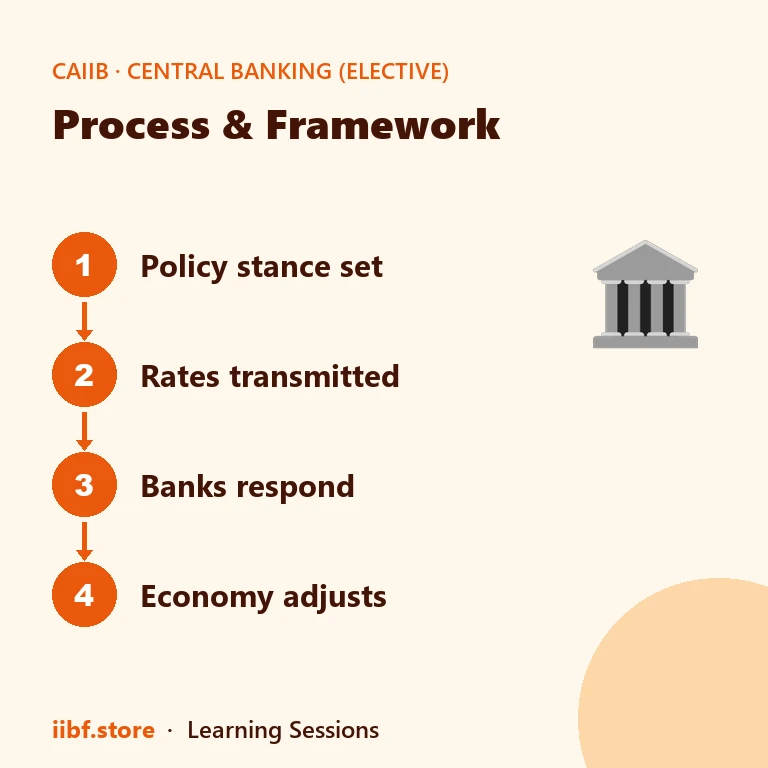
Pricing is where Ways and Means Advances becomes a favourite of examiners, because the numbers are rule-linked rather than fixed. Interest on WMA is charged at the prevailing repo rate, so as the Monetary Policy Committee moves the repo rate, the cost of WMA moves with it automatically. When the government's drawings spill over the sanctioned WMA limit into overdraft, the penal cost rises: overdraft typically carries the repo rate plus two percentage points. This escalating price is deliberate, discouraging prolonged reliance on the central bank. The table below summarises the tiers as they generally apply; treat any specific rupee limits as periodically revised figures to be checked against the latest RBI press release.
| Facility tier | Applies to | Security | Indicative interest cost |
|---|---|---|---|
| Special Drawing Facility (SDF) | States / UTs | Secured (against G-Secs, auction T-Bills) | Below the repo rate (concessional) |
| Normal WMA | Centre and States | Unsecured (clean) | At the repo rate |
| Overdraft (OD) | Centre and States | Beyond WMA limit | Repo rate + 2 percentage points |
For States, overdraft is further disciplined by rules on how many consecutive days and how many days in a quarter a State may remain in overdraft, and the RBI can stop honouring payments if a State breaches these thresholds. You can track the current repo rate and related policy rates on the RBI rates resource page before an exam, and always confirm the live figure at the official Reserve Bank of India website, since these numbers change with each policy review.
Why WMA Matters for the Central Banking Exam
WMA is not merely an accounting convenience; it embodies a core tension in central banking between accommodating the sovereign and safeguarding price stability. Because the facility is capped, priced at the repo rate, and repayable within ninety days, it prevents the automatic monetisation of fiscal deficits that plagued the earlier ad hoc treasury bill regime. This is exactly the kind of institutional evolution the CAIIB syllabus wants you to appreciate, and it connects to broader debates covered in the chapter on contemporary issues in central banking, where fiscal-monetary coordination is a recurring theme.
In extraordinary situations, such as a pandemic or a sharp revenue shortfall, the RBI can and has raised WMA limits temporarily to give governments breathing room, and questions may probe your understanding of this flexibility. For the exam, anchor your answers on four points: the legal basis in Section 17(5) of the RBI Act, the tiered SDF-WMA-OD structure, the repo-linked pricing, and the discipline mechanisms that cap reliance on the central bank. Reinforce these with active practice rather than passive reading. Attempt topic-wise questions on the practice tests, browse more revision notes under the Central Banking elective tag hub, and quiz yourself on rate-linked terms using the match game to make the numbers stick.
Frequently Asked Questions
What is the legal basis for Ways and Means Advances in India?
Ways and Means Advances are granted under Section 17(5) of the Reserve Bank of India Act, 1934, which empowers the RBI to make short-term advances to the Central and State Governments, repayable within a specified short period, generally not exceeding ninety days.
What interest rate does the RBI charge on WMA?
Interest on Normal WMA is charged at the prevailing repo rate, so the cost moves automatically whenever the Monetary Policy Committee changes the repo rate. Drawings beyond the WMA limit become overdraft, which typically carries the repo rate plus two percentage points.
How does WMA for States differ from WMA for the Centre?
States first draw on the Special Drawing Facility (SDF), which is secured against their holdings of government securities and treasury bills, before moving to unsecured Normal WMA and then overdraft. The Centre has a single WMA limit set half-yearly, without the SDF tier that States use.
Are WMA limits fixed or do they change?
WMA limits are reviewed periodically, typically half-yearly for the Centre and at intervals for States, and the RBI can revise them in consultation with the government, including temporary increases during crises. Because the specific rupee figures change, always verify the current limit against the latest RBI press release.
Conclusion
Ways and Means Advances is a compact but high-yield topic: master the legal basis, the SDF-WMA-Overdraft tiers, and the repo-linked pricing, and you can answer almost any variation the CAIIB Central Banking paper throws at you. It rewards conceptual clarity over rote memorisation, precisely because the numbers are rule-driven. Ready to test your grip on it? Take a focused mock on the iibf.store practice tests or enrol in the full CAIIB course to cover the entire Central Banking elective with structured chapters, quizzes, and rate-tracking resources.
Quick quiz on this topic
5 exam-style questions from our free test bank — check yourself before you move on.
Practice this topic
Take a free mock test, download chapter PDFs, or watch a video class — all included on iibf.store.
Keep reading