बैंकों के लिए Accounting Standards: Ind AS गाइड (JAIIB AFM)
हर JAIIB AFM उम्मीदवार depreciation के फॉर्मूले और ratio की ट्रिक्स रट लेता है, लेकिन कई exam questions syllabus के एक शांत कोने से आते हैं: बैंकों के लिए accounting standards। किसी बैंक के financial statements किस framework से गवर्न होते हैं — पुराने Accounting Standards (AS) से या converged Ind AS से? भारत के banking regulator ने बैंकों को Ind AS से बाहर क्यों रखा है, जबकि बाकी सभी listed companies वर्षों पहले ही आगे बढ़ चुकी हैं? यह article उस framework, Ind AS 109 के provisioning model, और exam में पूछे जाने वाले बिंदुओं को विस्तार से समझाता है।
📖 बैंक के Financial Statements के लिए Accounting Standards क्यों मायने रखते हैं
Accounting standards इसलिए बनाए जाते हैं ताकि मुंबई के किसी बैंक की balance sheet और चेन्नई के किसी बैंक की balance sheet, income को पहचानने, assets की वैल्यू तय करने और risk को disclose करने के लिए एक जैसे नियम इस्तेमाल करें। भारत में Accounting Standards (AS) को Institute of Chartered Accountants of India (ICAI) द्वारा तैयार drafts के आधार पर Ministry of Corporate Affairs (MCA) notify करता है, जबकि Indian Accounting Standards (Ind AS), International Financial Reporting Standards (IFRS) का भारत-विशिष्ट, काफी हद तक converged वर्जन है। ज्यादातर listed companies के लिए Ind AS FY 2016-17 से phases में mandatory हुआ। बैंकों को भी शुरू में इसी roadmap का पालन करना था, लेकिन मामला बिल्कुल अलग मोड़ ले गया — और यही अंतर है जिसे examiners टटोलना पसंद करते हैं।
किसी बैंक के लिए, accounting framework ही तय करता है कि advances को कैसे classify किया जाए, bad loans के लिए provisions कैसे calculate हों, investments को कैसे mark किया जाए, और derivatives की fair value कैसे निकाली जाए। अगर आपके दिमाग में framework ही गलत बैठा है, तो आगे की हर calculation — provisioning, capital adequacy, disclosure — भी गलत हो जाएगी। यही वजह है कि यह टॉपिक JAIIB AFM के चैप्टर Definition, Scope and Accounting Standards including Ind AS में शुरुआत में ही आता है, ठीक depreciation और ratios वाले numeric चैप्टर्स से पहले।
💡 Exam Tip: अगर किसी question में "expected credit loss" या "ECL model" का जिक्र हो, तो जवाब लगभग हमेशा Ind AS 109 की तरफ इशारा करता है — न कि उस पुराने AS 30/31/32 framework की तरफ, जिसे भारतीय बैंक अभी भी व्यवहार में इस्तेमाल करते हैं।
🏦 AS vs Ind AS: किसी बैंक के लिए असल में क्या बदलता है
AS से Ind AS की तरफ शिफ्ट सिर्फ ऊपरी बदलाव नहीं है — यह measurement के आधार को ही बदल देता है। मौजूदा AS ज्यादातर rule-based और historical-cost पर आधारित है; loan losses तभी recognise होते हैं जब कोई default event वाकई हो चुका हो ("incurred loss" approach)। Ind AS principle-based और fair-value पर आधारित है, और यह बैंकों से कहता है कि किसी default के होने से पहले ही, केवल expected losses के लिए provision करें। नीचे दी गई table इस चैप्टर में सबसे ज्यादा पूछी जाने वाली comparison है।
| पहलू | मौजूदा AS Framework | Ind AS Framework | आज भारतीय बैंकों के लिए अनिवार्य |
|---|---|---|---|
| Measurement का आधार | Historical cost, rule-based | Fair value, principle-based | ❌ अभी भी AS लागू |
| Loan loss की पहचान | Incurred loss model | Expected Credit Loss (ECL) model — Ind AS 109 | ❌ ECL अभी अनिवार्य नहीं |
| Financial instruments | AS 30/31/32 (बैंकों के लिए ज्यादातर non-mandatory) | Ind AS 109, 107, 32 | ❌ RBI द्वारा Deferred |
| वैश्विक convergence का लक्ष्य | भारत-विशिष्ट नियम | IFRS के साथ Converged | ✅ Long-term regulatory उद्देश्य |
| NBFCs पर लागू | लागू नहीं | Ind AS phases में अनिवार्य | ✅ NBFCs पहले से ही Ind AS के तहत report करते हैं |
आखिरी row पर ध्यान दें — भारत में NBFCs पहले से ही Ind AS के तहत report करते हैं, और यही वजह है कि किसी बैंक और किसी NBFC के financial statements, दोनों के lender होने के बावजूद, लाइन-दर-लाइन सीधे comparable नहीं होते। यह अंतर अकेले ही पिछले papers में एक standalone MCQ के रूप में आ चुका है।
⏳ RBI ने बैंकों के लिए Ind AS Implementation क्यों टाला
Scheduled commercial banks को शुरू में FY 2018-19 से Ind AS लागू करने का निर्देश दिया गया था। Reserve Bank of India ने इस implementation को टाल दिया, और यह deferral इसलिए जारी है क्योंकि Ind AS अपनाने के लिए Banking Regulation Act, 1949 में संबंधित संशोधन चाहिए — खासकर इस बारे में कि ECL model के तहत provisioning, बैंकों के लिए तय balance sheet और profit and loss account के statutory formats से कैसे तालमेल बिठाएगी। जब तक Parliament संबंधित प्रावधानों में संशोधन नहीं करती और RBI एक revised roadmap जारी नहीं करता, बैंक अपने statutory financial statements मौजूदा AS framework के तहत ही तैयार करते रहेंगे, जबकि regulatory तैयारी के लिए अंदरूनी तौर पर Ind AS-based proforma reporting भी चलाते रहेंगे।
AFM के लिए यह वाकई एक महत्वपूर्ण अंतर है: Ind AS बैंकों के लिए "बैन" नहीं है — यह legislative alignment होने तक deferred है। जो उम्मीदवार यह जवाब देते हैं कि "बैंक कभी Ind AS इस्तेमाल नहीं कर सकते", वे question गलत कर बैठते हैं; सही बारीकी यह है कि "enabling amendments notify होने तक deferred है।"
⚠️ Common Mistake: "deferred" को "not applicable" समझने की गलती न करें। RBI का रुख हमेशा से यही रहा है कि Ind AS आखिरकार बैंकों पर लागू होगा — सिर्फ implementation का समय पेंडिंग है, standard खुद नहीं।
📊 Ind AS 109 और Expected Credit Loss Model
भले ही Ind AS 109 अभी statutory reporting के लिए mandatory नहीं है, फिर भी यह वह standard है जिसे ज्यादातर examiners विस्तार से टेस्ट करते हैं, क्योंकि यह भारतीय बैंक accounting की आगे की दिशा दिखाता है। ECL model के तहत, कोई बैंक financial assets को तीन stages में classify करता है: Stage 1 (performing, 12-महीने का expected loss), Stage 2 (credit risk में significant वृद्धि, lifetime expected loss), और Stage 3 (credit-impaired, specific provisioning के साथ lifetime expected loss)। यह एक forward-looking framework है — यह सिर्फ पिछले default history को नहीं बल्कि macroeconomic forecasts को भी ध्यान में रखता है, और यही वजह है कि regulators इसे मौजूदा AS के तहत इस्तेमाल होने वाले incurred loss model से ज्यादा prudent मानते हैं।
जिन उम्मीदवारों ने syllabus में कहीं और depreciation और cash-flow classification पहले ही कवर कर लिया है, उनके लिए accounting standards को उस "संविधान" की तरह देखना मददगार होता है, जो तय करता है कि वे numeric चैप्टर्स किसी बैंक के अंदर कैसे लागू होते हैं। अगर आपने अभी तक इस subject का numeric हिस्सा revise नहीं किया है, तो Depreciation वाला चैप्टर और Bank Audit & Inspection वाला चैप्टर, दोनों यह मान लेते हैं कि आपको पहले से पता है कि बैंक कानूनी रूप से किस accounting framework का पालन कर रहा है।
📌 Remember: Ind AS 109 का ECL model, incurred-loss trigger की जगह forward-looking, three-stage classification — Stage 1, Stage 2, Stage 3 — लाता है, भले ही भारतीय बैंकों ने अभी तक इसे statutory books के लिए औपचारिक रूप से नहीं अपनाया है।
🧾 यह चैप्टर बाकी AFM से कैसे जुड़ता है
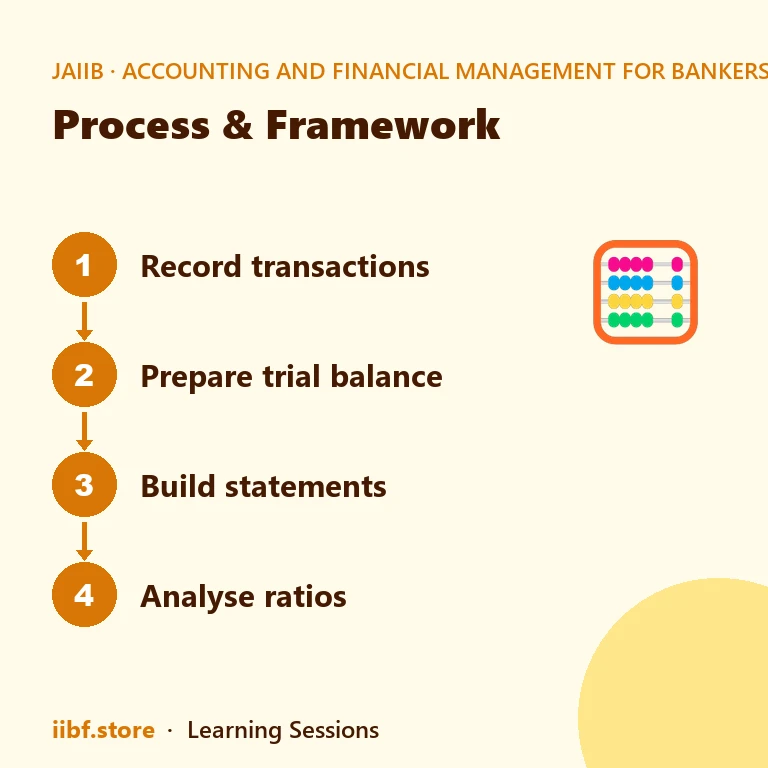
Accounting standards ही framework हैं; AFM में बाकी सब कुछ उसका application है। Bank audit and inspection procedures यह verify करती हैं कि बैंक ने जिस standard के तहत काम करना है, उसे सही तरीके से लागू किया है या नहीं। Basic accountancy procedures और cash व subsidiary books का maintenance वे raw entries बनाते हैं, जिन्हें आखिरकार जो भी standard लागू हो, उसके अनुसार measure किया जाता है। अगर आप इस subject के लिए revision sequence बना रहे हैं, तो पहले यह चैप्टर पढ़ें, फिर Basic Accountancy Procedures में बताई गई मैकेनिक्स पर जाएं, और उसके बाद ही numeric-heavy टॉपिक्स को हाथ में लें।
इसे JAIIB के बड़े capital markets syllabus से जोड़कर देखना भी फायदेमंद है। अगर कोई बैंक equity के जरिए capital जुटाता है, तो Ind AS द्वारा मांगी गई disclosure की quality सीधे इस बात से जुड़ जाती है कि investors उस issue का आकलन कैसे करते हैं — यही थीम JAIIB IE&IFS के तहत primary market vs secondary market instruments पर हमारी guide में markets की तरफ से explore की गई है।
इस subject की तैयारी करने वाले उम्मीदवार अक्सर standards और ratios को अलग-अलग revise करते हैं, और यह मिस कर जाते हैं कि एक दूसरे को कैसे संभव बनाता है। हमारे companion articles profitability ratios और cash flow statement पर, दोनों यह मान लेते हैं कि पाठक पहले से समझता है कि underlying figures किस accounting framework से आई हैं — यह चैप्टर वही missing prerequisite है। अगर आपकी list में अगला नंबर बैंकों के लिए GST और TDS treatment का है, तो हमारा dedicated लेख GST accounting for banks entries, ITC और returns को पूरी तरह कवर करता है।
इस subject पर AFM के सभी articles, chapter notes और past-paper स्टाइल के questions के लिए, iibf.store पर Accounting and Financial Management for Bankers tag hub देखें। regulatory पक्ष पर, बैंकों के लिए Ind AS implementation पर RBI का official communication ही primary source है — deferral status पर latest circulars और press releases के लिए rbi.org.in देखें।
🧠 Practice MCQs: बैंकों के लिए Accounting Standards
Q1. loans and advances जैसे financial instruments के classification, measurement और impairment (ECL) को कौन-सा Ind AS गवर्न करता है? (a) Ind AS 116 (b) Ind AS 21 (c) Ind AS 109 (d) Ind AS 12
Answer: (c) — Ind AS 109 "Financial Instruments" classification, measurement और Expected Credit Loss impairment model को कवर करता है।
Q2. Ind AS 109 के तहत loan losses को recognise करने के लिए incurred loss model की जगह किसने ली? (a) Net realisable value method (b) Fair value hedge method (c) Historical cost method (d) Expected Credit Loss (ECL) model
Answer: (d) — ECL model forward-looking होता है और किसी वास्तविक default event के होने से पहले ही losses के लिए provision करता है।
Q3. भारत के AS से Ind AS की तरफ बढ़ने का मुख्य उद्देश्य किस global framework के साथ convergence था? (a) IFRS (b) US GAAP (c) UK GAAP (d) Japanese GAAP
Answer: (a) — Ind AS, International Financial Reporting Standards (IFRS) का भारत का converged वर्जन है।
Q4. Banking Regulation Act, 1949 में संशोधन होने तक scheduled commercial banks के लिए mandatory Ind AS implementation किस authority ने टाला है? (a) SEBI (b) ICAI (c) IIBF (d) RBI
Answer: (d) — RBI ने बैंकों के लिए Ind AS implementation को तब तक टाल दिया है जब तक enabling legislative संशोधन नहीं हो जाते।
Q5. भारत में Ind AS, ICAI के drafts के आधार पर Companies (Indian Accounting Standards) Rules के तहत किस body द्वारा notify किए जाते हैं? (a) Ministry of Finance (b) Ministry of Corporate Affairs (MCA) (c) Ministry of Law (d) NITI Aayog
Answer: (b) — MCA, ICAI के drafts के आधार पर Companies (Indian Accounting Standards) Rules के जरिए Ind AS notify करता है।
चैप्टर-वाइज़ mock tests चाहिए, 100+ MCQs के साथ? मुफ्त practice शुरू करें →
❓ अक्सर पूछे जाने वाले सवाल
क्या भारतीय बैंक फिलहाल Ind AS फॉलो करते हैं या मौजूदा AS?
भारतीय scheduled commercial banks फिलहाल statutory reporting के लिए मौजूदा Accounting Standards (AS) framework फॉलो करते हैं। RBI ने Banking Regulation Act, 1949 में संशोधन होने तक mandatory Ind AS implementation को टाल दिया है।
Expected Credit Loss (ECL) model क्या है?
ECL, Ind AS 109 के तहत एक forward-looking impairment approach है, जो financial assets को तीन stages में classify करता है और पुराने incurred loss model की तरह किसी वास्तविक default event का इंतजार करने के बजाय, expected future losses के लिए provisioning की मांग करता है।
क्या NBFCs को भी बैंकों की तरह Ind AS से छूट है?
नहीं। भारत में NBFCs को पहले से ही phases में Ind AS के तहत report करना अनिवार्य है, जबकि scheduled commercial banks के लिए यह implementation अभी भी RBI द्वारा deferred है।
JAIIB AFM exam के लिए यह टॉपिक क्यों महत्वपूर्ण है?
यह वह accounting framework तय करता है, जो AFM के बाकी हर numeric टॉपिक — depreciation, ratios, और financial statement की तैयारी — को गवर्न करता है, इसलिए यह conceptual (non-numeric) exam questions का एक आम source बन जाता है।
✅ निष्कर्ष
बैंकों के लिए accounting standards ही वह framework वाला सवाल है, जो AFM के हर numeric चैप्टर के पीछे खड़ा है — AS-vs-Ind-AS का अंतर और ECL model एक बार क्लियर हो जाए, तो इस subject के आधे "concept" MCQs आसान marks बन जाते हैं। exam से पहले इसे पक्का करने के लिए structured chapter notes और timed practice से revise करते रहें।
खुद को टेस्ट करने के लिए तैयार हैं? पूरा JAIIB course explore करें या सीधे iibf.store पर चैप्टर-वाइज़ mock tests पर जाएं।
Prefer revising from a printed book?
Chapter-wise books with MCQs after every chapter — minimal pages, complete coverage, delivered anywhere in India. Every book has a free sample to read first.
128 pages · 524 MCQs
Learning Sessions · Ashish Sir
131 pages · 672 MCQs
Learning Sessions · Ashish Sir
221 pages · 831 MCQs
Learning Sessions · Ashish Sir
107 pages · 445 MCQs
Learning Sessions · Ashish Sir
148 pages · 478 MCQs
Learning Sessions · Ashish Sir
151 pages · 465 MCQs
Learning Sessions · Ashish Sir
148 pages · 375 MCQs
Learning Sessions · Ashish Sir
216 pages · 895 MCQs
Learning Sessions · Ashish Sir
109 pages · 300 MCQs
Learning Sessions · Ashish Sir
104 pages · 360 MCQs
Learning Sessions · Ashish Sir
82 pages · 297 MCQs
Learning Sessions · Ashish Sir
151 pages · 600 MCQs
Learning Sessions · Ashish Sir
98 pages · 282 MCQs
Learning Sessions · Ashish Sir
132 pages · 225 MCQs
Learning Sessions · Ashish Sir
188 pages · 435 MCQs
Learning Sessions · Ashish Sir
117 pages · 236 MCQs
Learning Sessions · Ashish Sir
Learning Sessions · Ashish Sir
118 pages · 299 MCQs
Learning Sessions · Ashish Sir
Learning Sessions · Ashish Sir
Learning Sessions · Ashish Sir
Learning Sessions · Ashish Sir
115 pages · 255 MCQs
Learning Sessions · Ashish Sir
Learning Sessions · Ashish Sir
334 pages · 936 MCQs
Learning Sessions · Ashish Sir
Learning Sessions · Ashish Sir
115 pages · 344 MCQs
Learning Sessions · Ashish Sir
107 pages · 240 MCQs
Learning Sessions · Ashish Sir
90 pages · 150 MCQs
Learning Sessions · Ashish Sir
Learning Sessions · Ashish Sir
Quick quiz on this topic
5 exam-style questions from our free test bank — check yourself before you move on.
Practice this topic
मुफ़्त मॉक टेस्ट दें, चैप्टर PDF डाउनलोड करें या वीडियो क्लास देखें — सब iibf.store पर मुफ़्त है।