Market Risk Limits in Banks: Types, Setting & Monitoring 2026
Every treasury desk that runs a trading book operates inside a wall of numbers it cannot cross. Market risk limits in banks are that wall — board-approved caps on how much a dealer, a desk or the whole bank can lose before someone senior has to answer for it. For IIBF Risk Management candidates, this topic sits at the intersection of governance, trading operations and capital adequacy, and examiners love testing the difference between the various limit types and who owns the breach.
This article walks through the full limit-setting chain — types of limits, how they cascade from the board down to a single trader, what happens when a limit is breached, and where India's regulatory framework fits in. Along the way we link out to the fuller regulatory capital and capital adequacy chapter and related material so you can go deeper on any sub-topic before your exam.
🎯 What Are Market Risk Limits and Why Banks Need Them
Market risk is the possibility of loss from adverse movements in interest rates, exchange rates, equity prices or commodity prices affecting positions a bank holds, mainly in its trading book. Left unchecked, a single aggressive trader chasing yield can put the entire balance sheet at risk within hours — this is exactly what happened in several well-documented rogue-trading blowups worldwide.
Limits exist to translate the board's risk appetite into numbers a dealer sees on their screen every morning. A risk appetite statement that says "we will not risk more than X% of capital on trading activity" is meaningless to a bond trader unless it is broken down into a duration limit, a VaR number, or a maximum position size they can actually manage against.
Limits also protect the bank from itself in a behavioural sense. Traders are compensated on profit, not on prudence, so a hard limit — enforced by systems, not goodwill — is the control that keeps profit-seeking from turning into balance-sheet-threatening risk-taking.
📏 Types of Market Risk Limits
Banks typically run several layers of limits together, because no single metric captures every kind of market risk on its own.
- VaR limits — a cap on the Value-at-Risk number for a desk or the whole trading book, usually expressed at 99% confidence over a 1-day or 10-day horizon.
- Position/notional limits — a simple cap on the face value or quantity of a security, currency pair or derivative a desk can hold.
- Sensitivity limits — caps on Greeks and duration measures such as PV01 (price value of a basis point), delta, gamma and vega, which control exposure to small moves in the underlying rate or price.
- Stop-loss limits — a trigger that forces a position to be cut once cumulative losses on it hit a set amount, regardless of the trader's view on where the market goes next.
- Concentration limits — caps on exposure to a single issuer, sector, currency or tenor bucket so that one bad call cannot dominate the book.
Most banks combine at least three of these for any single desk, because VaR alone can understate tail risk while position limits alone ignore how sensitive a position is to market moves. The table below summarises each type, its typical metric, and whether it needs real-time (intraday) monitoring or can be checked at end of day.
| Limit Type | What It Controls | Typical Metric | Needs Real-Time Monitoring |
|---|---|---|---|
| VaR limit | Overall potential loss at a confidence level | 1-day/10-day VaR | ✅ Yes |
| Position/notional limit | Size of exposure to one instrument | Face value / quantity | ✅ Yes |
| Sensitivity limit | Impact of small rate/price moves | PV01, delta, duration | ✅ Yes |
| Stop-loss limit | Cumulative loss on a position | Rupee/USD loss amount | ✅ Yes |
| Concentration limit | Exposure to one issuer/sector | % of portfolio or capital | ❌ No (end-of-day is usual) |
🏛️ How Limits Are Set: From Risk Appetite to Desk Level
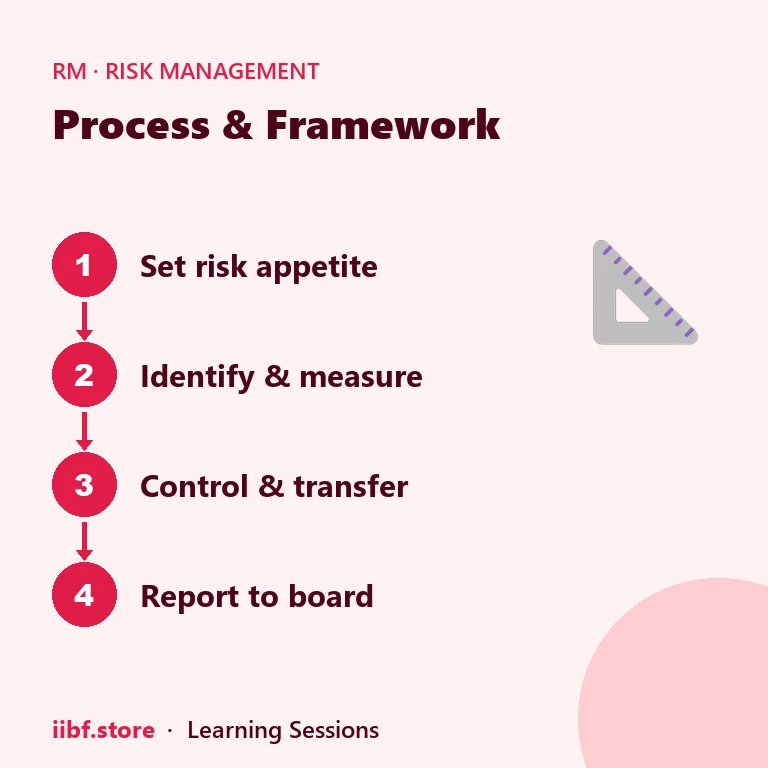
Limit-setting is a top-down cascade. The board sets an overall risk appetite for market risk as a percentage of capital or earnings. The Asset-Liability Committee (ALCO) or a dedicated market risk committee then translates that into a bank-level VaR or PV01 ceiling.
That bank-level number is sub-allocated to business lines — say, treasury, forex desk and equities desk — and then further down to individual trading desks or even single traders for the most active books. Each level's limit must sum to no more than the level above it, so the chain stays internally consistent.
Limits are reviewed at least annually, and more often if market volatility, business strategy or the bank's capital position changes materially. A limit that made sense in a low-volatility year can become dangerously large once volatility spikes, because the same position size now carries a much bigger VaR.
💡 Exam Tip: If a question asks who is accountable for setting the overall market risk limit structure, the answer is the Board, acting through ALCO/the risk management committee — not the CRO alone and not individual desk heads.
🚨 Limit Breaches: Monitoring and Escalation
A limit is only as good as the monitoring behind it. Modern banks run intraday limit-monitoring systems that flag utilisation the moment a desk crosses 80-90% of its cap, well before an actual breach occurs — this early-warning threshold is sometimes called a "soft limit" or trigger level.
When a hard limit is breached, policy typically requires immediate escalation to the desk head and the independent market risk function, a written explanation from the trader, and — depending on severity — an instruction to reduce the position within a set time window. Breaches and their resolution are logged and reported to ALCO and the risk committee.
Repeated or unresolved breaches are a red flag for supervisors and internal auditors alike, since they suggest either the limit was set unrealistically or the control environment around it is weak.
⚠️ Common Mistake: Students often assume a limit breach automatically means the position is closed immediately. In practice, policy usually allows a defined cure period unless the breach is severe, provided it is escalated and documented properly.
🧮 Regulatory Context for Market Risk Limits in India
In India, banks hold capital against market risk in the trading book under the RBI's capital adequacy framework, which sits alongside credit and operational risk capital in the overall CRAR computation — covered in detail in the regulatory capital and capital adequacy chapter. Supervisors expect the limit structure to be documented in board-approved policy, not left to desk-level discretion.
RBI's supervisory expectations, discussed under why do banks need regulation, require that limit breaches and large exposures be reportable events, not internal footnotes. Independent market risk management, reporting to the CRO rather than to the trading desk, is a governance non-negotiable under RBI's guidelines on risk management systems in banks.
Legal and counterparty enforceability also matters once a position turns sour — a defaulting cross-border counterparty, for instance, can drag a bank into proceedings covered under cross-border insolvency under IBC, which is why limit frameworks are usually paired with strong documentation and netting agreements. Robust technology is equally essential for real-time limit tracking, a point developed further in the technology risk chapter.
Market risk limits do not exist in isolation. They are set using the same risk-appetite cascade discussed in economic capital allocation in banks, since capital allocated to a desk is what its limit is ultimately sized against. Limits are also stress-tested: severe-but-plausible scenarios described under stress testing in banks are routinely run against current positions to check whether existing limits would still hold the bank's losses to an acceptable level in a crisis.
📌 Remember: Market risk limits are a governance tool first and a trading tool second — the numbers only work if they are independently monitored and consistently enforced.
Hedging decisions taken to stay within a sensitivity limit can themselves introduce new exposure, a subtlety covered under basis risk in banking — a hedge that moves imperfectly relative to the underlying position can leave a desk technically within its VaR limit but still carrying real economic risk. For the operational side of running any risk control framework, see our Risk Management tag hub for the full library of related articles, and browse the operational risk and management framework chapter for how limit-monitoring failures are themselves classified as an operational risk event.
🧠 Practice MCQs: Market Risk Limits in Banks
Q1. Which of the following is primarily responsible for approving the overall market risk limit structure of a bank? (a) The trading desk head (b) The Board, acting through ALCO/risk committee (c) The external auditor (d) The branch manager
Answer: (b) — The Board sets overall risk appetite and approves the limit cascade through ALCO or the risk management committee.
Q2. A limit that caps the price value of a basis point (PV01) on a bond desk is an example of a: (a) Concentration limit (b) Sensitivity limit (c) Stop-loss limit (d) Notional limit
Answer: (b) — PV01, delta and duration caps are sensitivity limits, controlling exposure to small rate or price moves.
Q3. What is the purpose of a "soft limit" or early-warning trigger set at 80-90% of a hard limit? (a) To replace the hard limit entirely (b) To flag rising utilisation before an actual breach occurs (c) To increase the trader's bonus (d) To close all positions automatically
Answer: (b) — Soft limits give desks and risk managers advance notice so action can be taken before the hard limit is actually breached.
Q4. A stop-loss limit is triggered based on: (a) The notional size of the position (b) The issuer's credit rating (c) Cumulative loss on the position reaching a set amount (d) The desk's annual budget
Answer: (c) — Stop-loss limits force a position to be cut once cumulative losses hit a predefined threshold, independent of the trader's market view.
Q5. Independent market risk monitoring in a bank should report to: (a) The Chief Risk Officer (b) The head of the trading desk (c) The dealer directly (d) The branch operations manager
Answer: (a) — Market risk monitoring must be independent of the trading function and report to the CRO, a core governance principle.
Want chapter-wise mock tests with 100+ MCQs? Start practising free
❓ Frequently Asked Questions
What is the difference between a VaR limit and a stop-loss limit?
A VaR limit caps the statistically estimated potential loss at a given confidence level before any loss has actually occurred, while a stop-loss limit is triggered only after a position has already accumulated a defined amount of real loss.
Who sets market risk limits in a bank?
The Board sets the overall risk appetite, which ALCO or the market risk committee translates into a bank-level limit that is then cascaded down to business lines, desks and individual traders.
Why do banks use multiple types of market risk limits instead of just one?
No single metric captures every risk dimension — VaR can understate tail risk, position limits ignore sensitivity, and concentration limits ignore direction — so combining limit types gives more complete coverage.
What happens when a trader breaches a market risk limit?
The breach is escalated to the desk head and independent risk function, documented with an explanation, and the position is typically required to be reduced within a defined cure period unless the breach is severe.
✅ Conclusion: Master Market Risk Limits Before Exam Day
Market risk limits in banks are the practical, enforceable expression of a board's risk appetite — VaR caps, position limits, sensitivity limits, stop-loss triggers and concentration caps, cascaded from the board down to a single desk and monitored independently of the traders who work against them. For your IIBF Risk Management paper, know the limit types cold, know who sets and monitors them, and know what "escalation" actually means in practice.
Ready to test yourself? Take a full-length CAIIB Risk Management mock and see how you score on market risk limits and the rest of the syllabus today.
Practice this topic
Take a free mock test, download chapter PDFs, or watch a video class — all included on iibf.store.
Keep reading