Nostro Vostro and Loro Accounts: Forex Correspondent Banking (CAIIB BFM)
Every cross-border payment your bank settles rides on a correspondent relationship built around nostro vostro and loro accounts. A CAIIB BFM question paper rarely skips this topic because it sits at the heart of how Indian banks hold foreign currency abroad, how foreign banks hold rupee balances here, and how both sides keep their books in agreement. Get the definitions, the mirror-account logic, the reconciliation discipline and the reporting returns straight, and this becomes one of the easiest scoring areas in the exam.
This article works through the three account types, the internal mirror account your bank maintains, the daily and periodic reconciliation drill, the XOS/BAL/R-Return reporting chain, and how cover deals square off the exchange position that a merchant transaction creates.
🏦 What Are Nostro, Vostro and Loro Accounts
A nostro account ("our account with you") is a foreign-currency account that an Indian bank maintains with a correspondent bank abroad — for example, an Indian bank's US-dollar account with a New York correspondent. It lets the Indian bank receive and pay dollars without needing a US banking licence.
A vostro account ("your account with us") is the mirror image seen from the correspondent's side: the same account, but described from the perspective of the bank that holds the deposit. When a foreign bank opens a rupee account with an Indian bank to settle rupee-denominated business, that rupee account is a vostro account for the Indian bank and a nostro account for the foreign bank.
A loro account ("their account with them") describes a third-party angle — Bank A refers to the rupee account that Bank B (a foreign bank) holds with Bank C (another Indian bank) as a loro account, purely for its own record-keeping when routing a payment through Bank C. The underlying account is identical; only the reference point changes. This three-way naming convention is exactly why exam-setters test it — candidates confuse whose books the label is describing. Correspondent arrangements of this kind are covered in depth in the Correspondent Banking and NRI Accounts chapter, which is worth revising alongside this topic.
🔄 Mirror Accounts and Daily Reconciliation
Every nostro account maintained abroad is shadowed by a mirror account in the bank's own books, kept in the foreign currency but recorded on the domestic core banking system. The mirror account should, in theory, always equal the actual balance confirmed by the correspondent. In practice, timing differences — a debit posted by the correspondent before the Indian bank's branch has processed the matching entry, or vice versa — create temporary mismatches.
Reconciliation is the process of matching every entry in the mirror account against the correspondent's statement (the nostro statement) and identifying open items — entries appearing on one side but not yet on the other. Banks are expected to reconcile nostro accounts on a continuous basis, with unmatched entries reviewed and aged, because an old outstanding entry can signal anything from a genuine timing lag to a fraud, a duplicate payment, or an unauthorised debit by the correspondent.
Ageing of open items matters for audit and inspection: entries outstanding beyond internal threshold periods must be escalated, investigated and provisioned for if a loss is probable. Weak nostro reconciliation has historically been flagged in RBI inspections as a governance red flag, since it can mask both operational errors and misappropriation. A disciplined reconciliation desk, daily statement download, and prompt query resolution with the correspondent bank are the operating controls examiners expect to see described in a BFM answer on this topic.
💡 Exam Tip: If a question asks "whose books is this account referred to on," identify the party doing the describing first — nostro is always "our" account abroad, vostro is always "your" account with us.
📑 XOS, BAL and the Regulatory Reporting Chain
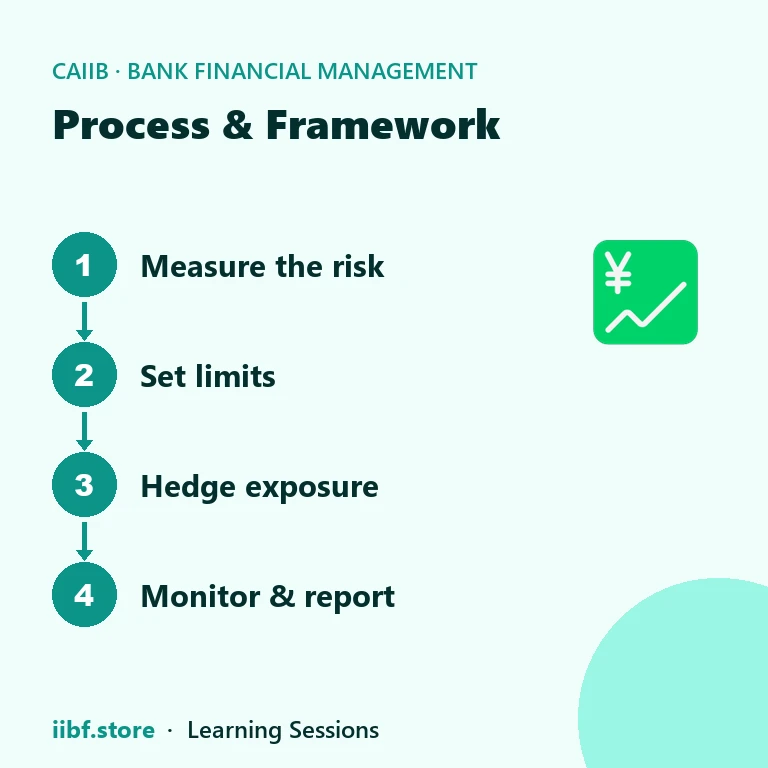
Banks dealing in foreign exchange must periodically report their forex positions and nostro balances to RBI under the reporting framework built around the FEMA regime. Three returns recur in CAIIB BFM material. The R-Return captures purchase and sale transactions in foreign exchange on a fortnightly basis and feeds India's balance-of-payments compilation. The BAL statement reports the month-end balances held in nostro accounts abroad, giving RBI visibility into how much foreign currency Indian banks are holding overseas at any point. The XOS statement reports outstanding forward exchange contracts booked against genuine underlying trade and other permissible transactions, so that the regulator can track the aggregate forward cover Indian banks have committed to.
These returns are submitted through the authorised dealer reporting channel and are cross-checked against a bank's own treasury and forex-operations records. Errors or delays in nostro-linked reporting typically trace back to unreconciled mirror accounts, which is why reconciliation quality and regulatory-reporting accuracy are taught together rather than as separate topics. A bank's forex back office is judged as much on the cleanliness of its nostro reconciliation as on its dealing-room profitability. For the wider correspondent-banking and documentation ecosystem this reporting sits inside, see the Exchange Rates and Forex Business chapter, and the trade-settlement angle in Documentry Letters of Credit.
⚠️ Common Mistake: Candidates often mix up BAL (balances held abroad) with XOS (outstanding forward contracts) — one is a balance-sheet snapshot, the other is a position/exposure statement.
🤝 Cover Deals and Managing the Exchange Position
When an authorised dealer branch buys or sells foreign currency from a customer — say, an exporter surrendering dollar proceeds — the bank's own foreign-currency position moves. Left unmanaged across many such deals, the bank would carry an open exchange position exposed to rate movement. To neutralise this, the dealing room enters an offsetting interbank transaction known as a cover deal, buying or selling the equivalent amount with another bank so the net position returns to (or stays within) the bank's board-approved limits.
A bank's overall exchange position at any time is described as square (bought equals sold), overbought (net long) or oversold (net short). Treasury monitors this continuously against the Net Overnight Open Position Limit fixed for the bank, since carrying an open position beyond the approved limit is an unauthorised market risk. Cover deals executed through the interbank forex market — often routed through the correspondent whose nostro account will ultimately settle the trade — are what keep the merchant-driven forex business risk-neutral for the bank itself, converting customer-facing exchange risk into a matched, hedged book.
Settlement of both the original customer deal and its cover deal ultimately flows through the nostro/vostro network, which is why cover-deal volumes and nostro reconciliation quality are discussed in the same breath in BFM. A bank that runs a large forex book but reconciles its nostro accounts poorly is effectively flying blind on its true open position.
| Term | Whose books describe it | Currency held | Typical use | Reconciled daily? |
|---|---|---|---|---|
| Nostro | Our account, held abroad | Foreign currency | Settling the bank's own forex payments/receipts | ✅ |
| Vostro | Your account, held with us | Domestic currency (rupee) | Correspondent bank's rupee settlement | ✅ |
| Loro | Their account, held elsewhere | Either, per context | Third-party reference while routing a payment | ❌ (not the reporting bank's own account) |
| Cover deal | Interbank offsetting trade | Foreign currency | Squaring the exchange position after a customer deal | ✅ (settles via nostro) |
The Reserve Bank of India's framework for authorised dealers governs how these accounts, positions and returns are to be maintained and reported; see rbi.org.in for the current master directions on risk management and inter-bank dealings.
🎯 Exam Takeaways and Next Steps
For CAIIB BFM, keep three anchors clear: who the account belongs to (nostro/vostro/loro is a perspective label, not three different account types), why mirror-account reconciliation is a control function rather than a clerical one, and how cover deals convert customer-driven forex risk into a managed, reported position. Numerical questions on this topic are rare; conceptual and scenario-based questions — "identify which account is the nostro account in this transaction chain" — are common.
Revise this topic alongside the broader forex correspondent framework, including recent shifts covered in CAIIB BFM latest updates, and cross-check your understanding of related external-financing routes in external commercial borrowings in India and offshore banking structures in IFSC and IFSCA. If you want to connect this to credit-side decision-making covered elsewhere in CAIIB, the ABM module's decision tree analysis for credit decisions is a useful parallel read. Browse every article on this subject at the Bank Financial Management tag hub.
🧠 Practice MCQs: Nostro, Vostro and Loro Accounts
Q1. An Indian bank's US-dollar account maintained with a correspondent bank in New York is called, from the Indian bank's perspective, a (a) Vostro account (b) Loro account (c) Nostro account (d) Escrow account
Answer: (c) — It is "our account with you (abroad)," which is the definition of a nostro account.
Q2. A foreign bank's rupee account maintained with an Indian bank is, from the Indian bank's point of view, called a (a) Nostro account (b) Vostro account (c) Loro account (d) NRE account
Answer: (b) — "Your account with us" describes the correspondent's rupee balance from the Indian bank's books, i.e. a vostro account.
Q3. When Bank A refers to a rupee account that Bank B (foreign) holds with Bank C (another Indian bank), Bank A calls that account a (a) Nostro account (b) Vostro account (c) Loro account (d) Sundry account
Answer: (c) — This is a loro account: "their account with them," used only as a third-party reference.
Q4. The statement reporting month-end balances held by an Indian bank in its nostro accounts abroad is known as the (a) R-Return (b) XOS statement (c) BAL statement (d) FCNR statement
Answer: (c) — The BAL statement specifically reports nostro balances held abroad; XOS covers outstanding forward contracts.
Q5. A bank enters an interbank transaction to offset the exchange rate exposure created by a customer forex deal. This offsetting transaction is called a (a) Swap deal (b) Cover deal (c) Spot deal (d) Arbitrage deal
Answer: (b) — A cover deal squares the bank's own open exchange position generated by a merchant transaction.
Want chapter-wise mock tests with 100+ MCQs? Start practising free →
❓ Frequently Asked Questions
What is the difference between a nostro and a vostro account?
A nostro account is a foreign-currency account an Indian bank holds abroad with a correspondent bank ("our account with you"), while a vostro account is a domestic-currency account a foreign bank holds with the Indian bank ("your account with us"). The underlying accounts differ; the label depends on which bank's books are describing it.
Why does nostro account reconciliation matter so much in bank audits?
Unreconciled entries can hide timing errors, duplicate payments, unauthorised debits by the correspondent, or outright fraud. Regulators and internal auditors treat prompt, disciplined nostro reconciliation as a core operational-risk control in forex operations.
What is a cover deal in forex banking?
A cover deal is an interbank foreign exchange transaction a bank enters to offset the exchange-rate exposure created when it buys or sells foreign currency from a customer, keeping its overall exchange position within board-approved limits.
What do the XOS and BAL returns report to RBI?
The BAL statement reports month-end nostro account balances held abroad, while the XOS statement reports outstanding forward exchange contracts booked against permissible underlying transactions. Both feed into RBI's oversight of authorised dealers' forex operations.
Quick quiz on this topic
5 exam-style questions from our free test bank — check yourself before you move on.
Practice this topic
Take a free mock test, download chapter PDFs, or watch a video class — all included on iibf.store.
Keep reading