Public Announcement Under CIRP: What Section 15 Requires
The moment the NCLT admits a company into insolvency, the clock starts on one of the most procedural — but frequently mishandled — steps in the whole process: the public announcement under CIRP. Under Section 15 of the Insolvency and Bankruptcy Code, 2016, the interim resolution professional (IRP) must tell the world that a corporate debtor is now under corporate insolvency resolution, invite creditors to file their claims, and set the ground rules for who gets a seat at the table. Get this step wrong — a missed deadline, a rejected publication, an incomplete Form A — and the committee of creditors can end up built on shaky claims data. This piece walks through what Section 15 actually requires, the timelines candidates most often mix up, and how the announcement connects to everything that follows in the initiation of the Corporate Insolvency Resolution Process.
📢 What Section 15 Requires in a Public Announcement
Section 15 of the IBC lists what a public announcement must contain, and IBBI's CIRP Regulations flesh out the format through the prescribed Form A. At a minimum, the announcement must carry the name and address of the corporate debtor, the date on which the insolvency commencement date (ICD) falls, the name, registration number and contact details of the IRP handling the case, and the last date by which creditors can submit their claims.
It must also state the penalty for submitting a false or misleading claim, and it must reference the commencement of CIRP so that anyone reading the notice understands exactly what stage the corporate debtor has reached. The idea behind all this detail is simple: nobody with a legitimate claim should later be able to argue they never had a fair chance to find out the company was insolvent.
Exam questions on this topic often test whether a candidate can distinguish the mandatory contents of the announcement from optional details the IRP might add — Section 15 is a closed list, not a template the IRP can shorten.
⏱️ The Public Announcement Timeline: Three Days From Appointment
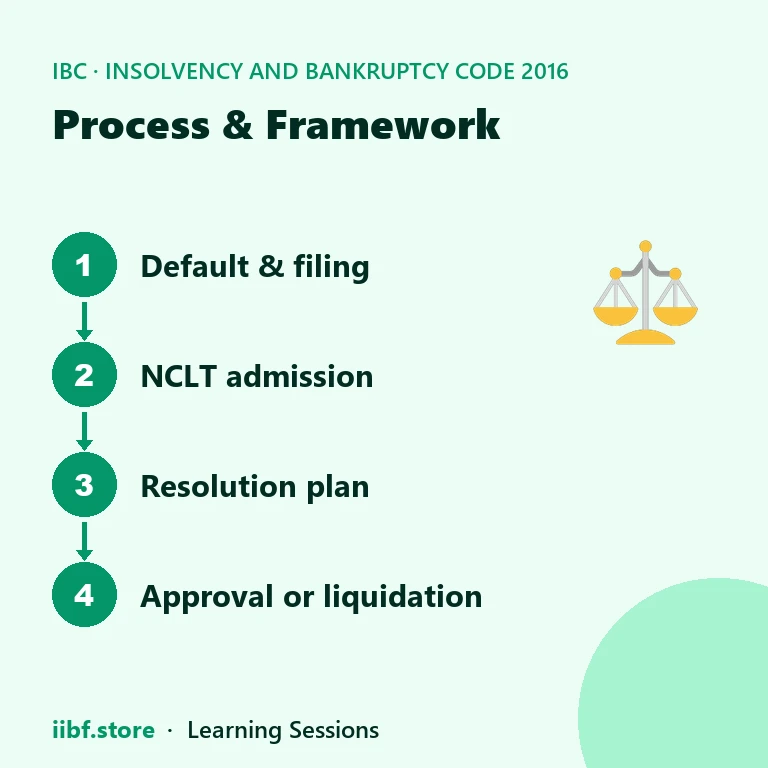
Once the NCLT admits an application and appoints an IRP, that IRP has three days to make the public announcement. This is a short window by design — the whole point of CIRP is speed, and creditors need to know as early as possible that the moratorium under Section 14 of IBC is now in force and that recovery suits, enforcement actions, and asset transfers against the corporate debtor are frozen.
The three-day clock runs from the date of the IRP's appointment, which in most admission orders coincides with the insolvency commencement date itself. Candidates frequently confuse this three-day announcement deadline with the fourteen-day window creditors get to file claims — they are two separate clocks that start on roughly the same day but measure different things.
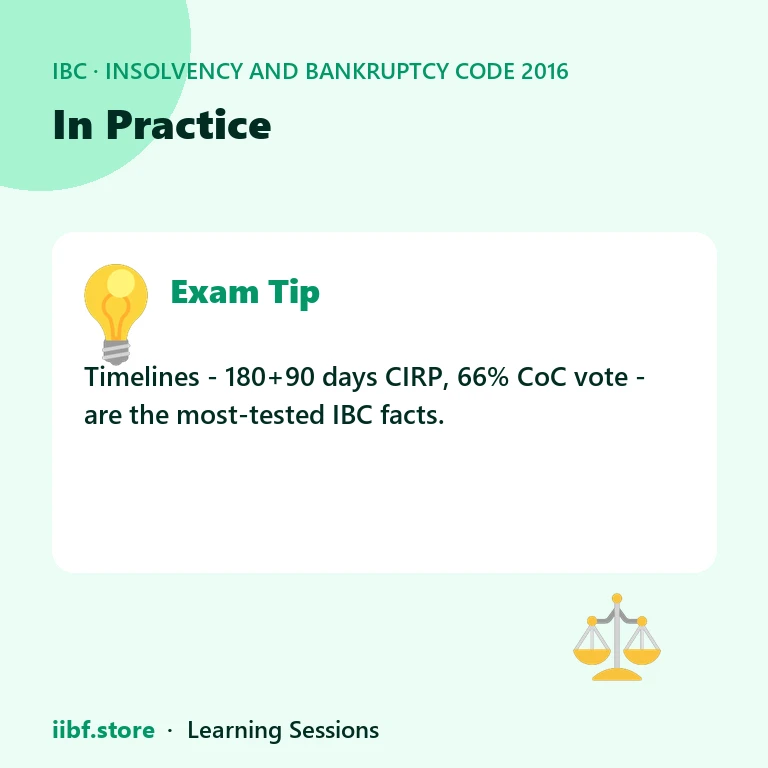
💡 Exam Tip: Memorise it as "3 and 14" — three days for the IRP to announce, fourteen days for creditors to respond with claims. Questions love to swap these two numbers.
📰 Where and How the Announcement Is Published
A public announcement is only as good as its reach, so the CIRP Regulations are specific about publication. The IRP must publish it in one English-language newspaper and one regional-language newspaper, both with wide circulation at the location of the corporate debtor's registered office and principal office. It must also be uploaded on the corporate debtor's own website, if one exists, and made available on the electronic platform maintained for this purpose.
The regulator's own site carries the underlying regulations and the prescribed Form A template, and it is worth bookmarking for reference: see the IBBI (CIRP) Regulations, 2016 for the exact publication requirements. A defective publication — the wrong newspaper, an incomplete Form A, a missed website upload — can be challenged later, so this is not a box-ticking exercise for the IRP.
⚠️ Common Mistake: Students often assume publishing on the IBBI platform alone is sufficient. It is not — newspaper publication and, where applicable, the corporate debtor's website are equally mandatory.
📝 Filing Claims After the Public Announcement
Once the announcement goes out, every category of creditor — financial creditors, operational creditors, workmen, employees, and other stakeholders — gets a defined window to file a claim with proof, using the form prescribed for that creditor class. This is a different exercise from the operational creditor demand notice that an operational creditor might have sent before CIRP even began; that notice is a pre-admission recovery step, while claim submission after the public announcement is how a creditor gets formally counted inside the resolution process.
The IRP collates these claims, verifies them, and uses the verified list to determine the composition of the committee of creditors. A creditor who never files, or files late without a satisfactory explanation, risks being left out of that committee — and therefore out of every vote that follows, including on the eventual resolution plan.
The table below summarises the key requirements at a glance for quick revision before an exam.
| Requirement | Timeline / Detail | Mandatory? |
|---|---|---|
| Public announcement issued by IRP | Within 3 days of appointment | ✅ Yes |
| Published in newspapers | 1 English + 1 regional daily, wide circulation | Yes |
| Posted on corporate debtor's website | If the corporate debtor operates one | Yes, where applicable |
| Last date for submission of claims | Roughly 14 days from the announcement | Yes |
| Claims filed directly with NCLT | Not the correct route | ❌ No — claims go to the IRP |
⚖️ Consequences of a Defective or Delayed Announcement
A late or incomplete public announcement is not a technicality that quietly disappears. Creditors who never learned about the CIRP because of a botched announcement can approach the NCLT to challenge later stages of the process, and an IRP who repeatedly cuts corners can face scrutiny from the regulator. This is one of the reasons the duties spelled out for the resolution professional under IBC place such heavy emphasis on procedural discipline in the opening days of a case.
Downstream, a defective announcement can also taint the claims list, which in turn affects the voting share of the committee of creditors and, ultimately, the legitimacy of the resolution plan that gets approved. A resolution applicant or dissenting creditor looking for grounds to delay or challenge a plan will often start by auditing whether the original public announcement was compliant.
📌 Remember: The public announcement is the first formal record of the CIRP. Every later claim, vote, and approval traces back to whether this one step was done correctly.
🔍 How the Announcement Fits Into the Bigger Picture
The public announcement does not operate in isolation — it is issued on the same day the moratorium takes effect, and it sets the claims pipeline running that ultimately feeds the resolution or liquidation outcome. For bankers tracking an exposure once CIRP begins, this is also the point at which internal classification questions arise, which is why understanding income recognition and asset classification alongside the insolvency timeline matters for credit teams, not just for the resolution professional.
The roles and duties of the IRP and RP extend well beyond the announcement itself, but this first step is what most other duties depend on — a resolution professional cannot verify claims that were never invited correctly. For structured revision on this and related IBC topics, browse more articles on the IIBF exam-prep blog, and see the full set of chapters under the Insolvency and Bankruptcy Code 2016 tag.
🧠 Practice MCQs: Public Announcement Under CIRP
Q1. Under Section 15 of the IBC, who is responsible for making the public announcement of CIRP? (a) NCLT (b) Interim Resolution Professional (c) Committee of Creditors (d) IBBI
Answer: (b) — The IRP appointed on admission of the CIRP application makes the public announcement.
Q2. Within how many days of the IRP's appointment must the public announcement be made? (a) 7 days (b) 3 days (c) 14 days (d) 30 days
Answer: (b) — The public announcement must be made within 3 days of the IRP's appointment.
Q3. What is the approximate last date for submission of claims after the public announcement? (a) 7 days (b) 14 days (c) 21 days (d) 30 days
Answer: (b) — Creditors typically get around 14 days from the announcement to submit their claims.
Q4. The public announcement must be published in: (a) Only the IBBI website (b) One English and one regional newspaper with wide circulation (c) Only the corporate debtor's annual report (d) A notice to the RBI
Answer: (b) — Newspaper publication in one English and one regional-language daily is mandatory, alongside the IBBI platform and the corporate debtor's website where applicable.
Q5. What form is prescribed for the public announcement under the CIRP Regulations? (a) Form A (b) Form B (c) Form C (d) Form G
Answer: (a) — Form A is the prescribed format for the public announcement.
Want chapter-wise mock tests with 100+ MCQs? Start practising free →
Frequently Asked Questions
Who issues the public announcement in CIRP?
The interim resolution professional issues it, within three days of being appointed, as required under Section 15 of the IBC.
What happens if a creditor misses the last date to submit a claim?
A late claim may still be considered at the resolution professional's discretion before the resolution plan is approved, but a creditor risks losing voting rights in the committee of creditors if the claim is not filed and verified in time.
Is the public announcement the same as the moratorium notice?
No. The moratorium under Section 14 freezes legal actions and asset transfers against the corporate debtor, while the public announcement under Section 15 invites creditors to file claims. Both typically begin on the insolvency commencement date but serve different purposes.
Is a fresh public announcement made if the company moves into liquidation?
Yes. When CIRP fails and liquidation begins, a fresh public announcement inviting stakeholders to submit or update claims is made, following similar disclosure principles as the CIRP stage.
The public announcement looks like a formality on paper, but it is the procedural spine of the entire CIRP — every claim, every vote, and every resolution plan traces back to whether it was done correctly and on time. If you are preparing for an IIBF certification exam, work through the structure of the IBC chapter alongside this topic, then test yourself with a full IBC mock test to make sure the timelines actually stick before exam day.
Quick quiz on this topic
5 exam-style questions from our free test bank — check yourself before you move on.
Practice this topic
Take a free mock test, download chapter PDFs, or watch a video class — all included on iibf.store.