AT1 Bonds and Tier 2 Capital Instruments: Basel III Features and Risks (CAIIB BFM)
For CAIIB BFM candidates, AT1 bonds and Tier 2 capital instruments are one of the highest-yield topics in the capital adequacy portion of the syllabus, and also one of the most commonly misunderstood. Both instruments sit inside a bank's regulatory capital stack under Basel III, but they behave very differently the moment a bank runs into trouble. Additional Tier 1 (AT1) bonds are perpetual, loss-absorbing hybrids with fully discretionary coupons, while Tier 2 instruments are dated subordinated debt with their own write-down rules. This article walks through the loss absorbency mechanism, the point of non-viability trigger, call options, coupon discretion, and the risks both investors and issuing banks carry under the RBI framework.
📊 Where AT1 Bonds and Tier 2 Sit in the Capital Stack
Basel III splits a bank's regulatory capital into three layers. Common Equity Tier 1 (CET1) — paid-up equity and reserves — is the highest-quality, permanently loss-absorbing layer. Additional Tier 1 (AT1) sits above CET1 and, together with it, forms Tier 1 capital, the "going concern" capital that must absorb losses while the bank keeps operating. Tier 2 is "gone concern" capital, meant to absorb losses only once a bank is deemed non-viable or is being wound down, and it ranks above AT1 and equity in a liquidation waterfall.
Banks issue AT1 bonds and Tier 2 capital instruments precisely because raising fresh equity is expensive and dilutes existing shareholders. A well-structured AT1 or Tier 2 issuance lets a bank shore up its Capital to Risk-weighted Assets Ratio (CRAR) and meet the capital conservation buffer without touching promoter or public shareholding. For CAIIB BFM, remember that both instruments count toward CRAR only if they meet strict Basel III eligibility clauses on loss absorbency, maturity, and subordination — an instrument missing even one clause gets excluded from regulatory capital regardless of what it is called commercially.
This distinction between going-concern and gone-concern capital is the single most tested concept in this chapter, and it explains almost every other feature — coupon discretion, perpetual tenor, and the point of non-viability trigger — that follows below.
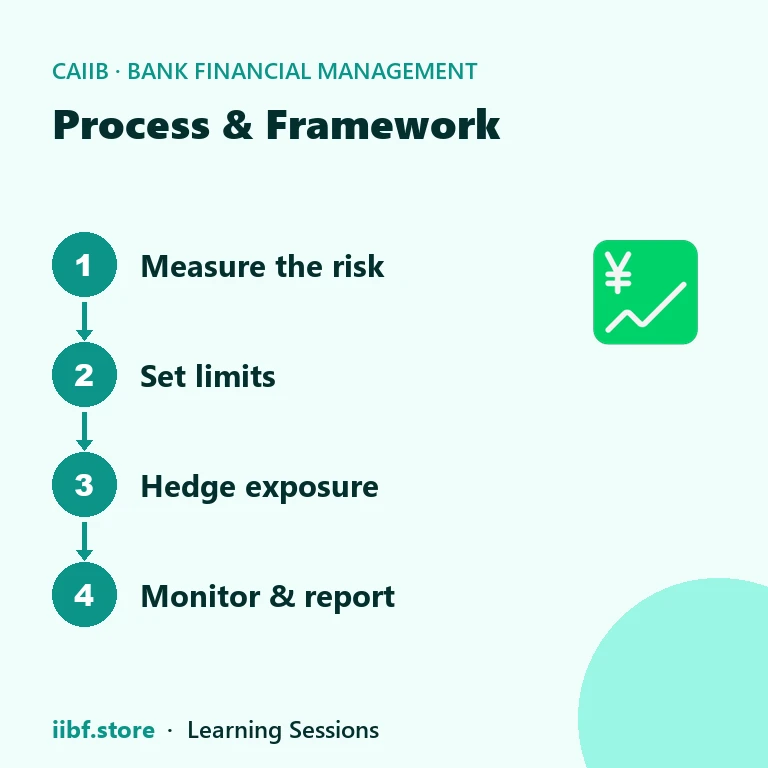
⚠️ Loss Absorbency and the Point of Non-Viability
Every AT1 bond and Tier 2 instrument recognised as regulatory capital must carry a Point of Non-Viability (PONV) clause. If the regulator determines a bank has reached the point of non-viability — or a bank would become non-viable without a public sector capital infusion — the instrument is either written down (permanently or temporarily) or converted into common equity, at the regulator's discretion. This trigger exists independently of any contractual default and can be invoked even if the bank has never missed a coupon payment.
AT1 bonds go further: because they are going-concern capital, they can also be written down or converted well before PONV, if the bank's CET1 ratio breaches the trigger level specified in the offer document. Coupons on AT1 are non-cumulative and fully discretionary — a bank can skip a coupon without that being treated as a default, and skipped coupons are gone forever, not carried forward. Tier 2 coupons, by contrast, are ordinarily contractual and cumulative; the bank cannot skip them at will, though the principal itself remains subject to the PONV write-down or conversion clause.
⚠️ Common Mistake: Candidates often assume AT1 bonds are "safer" than equity because they are called bonds. In a stress event they can be written down to zero ahead of equity dilution or even while equity still has residual value — India's 2020 AT1 write-down involving a private bank under an RBI-led reconstruction scheme is the standard real-world example examiners reference.
This is also why rating agencies notch AT1 several grades below a bank's senior debt rating — the coupon-skip risk and PONV write-down risk are priced in separately from ordinary credit risk.
🔔 Call Options and Coupon Discretion — What Investors Must Track
AT1 bonds are structured as perpetual instruments with no final maturity date, but issuers embed a call option, exercisable only after a minimum lock-in (typically five years from issuance) and only with the prior approval of the RBI. The bank must also demonstrate, before exercising the call, that its capital position remains comfortably above the regulatory minimum after the call, or that the called instrument is replaced with capital of the same or better quality. Basel III specifically bars any step-up in coupon or other feature that would create a market expectation that the call will be exercised — the instrument has to look and behave like a genuine perpetual security, not a disguised fixed-tenor bond.
Tier 2 instruments work differently. They carry a minimum original maturity of five years, and for capital-recognition purposes their eligible amount is amortised on a straight-line basis over the last five years to maturity — so a Tier 2 bond with three years left counts for a proportionately smaller share of Tier 2 capital than it did at issuance. Early redemption of Tier 2, like AT1 calls, needs supervisory approval and is subject to the same "replace or demonstrate capital adequacy" test.
💡 Exam Tip: If a question asks which instrument has "no stated maturity," the answer is AT1. If it asks which instrument amortises out of capital recognition in its last five years, the answer is Tier 2. Examiners frequently swap these two features between the options to test whether you actually know which layer they belong to.
Investors evaluating AT1 bonds and Tier 2 capital instruments in the secondary market need to separately price call risk, extension risk (if the call is skipped), coupon-discretion risk, and PONV risk — treating either instrument as a plain vanilla bond materially understates the risk being taken.
🏦 RBI Master Direction and Issuer-Investor Risk Considerations
The eligibility criteria, loss-absorption clauses, and disclosure requirements for both instruments are laid down in the RBI's Master Direction on Basel III Capital Regulations, which every issuing bank's offer document must comply with before an instrument can be recognised as regulatory capital. Following the stress seen in the banking sector around AT1 write-downs, RBI and SEBI also tightened distribution norms — AT1 bonds are now steered predominantly toward institutional and high-net-worth investors, with minimum investment thresholds and enhanced risk disclosures, specifically to curb their sale to retail investors who may not appreciate the going-concern loss-absorption risk.
From the issuer's side, AT1 and Tier 2 raises are a cost-versus-dilution trade-off: the coupon on AT1 is materially higher than senior bonds precisely because of the discretionary-coupon and PONV features, but it avoids diluting existing shareholders the way a fresh equity issue would. A bank with a thin CET1 cushion, however, can find itself paying elevated coupons on AT1 while still being unable to call it, since a call is only permitted if capital adequacy is not impaired — a scenario CAIIB candidates should be able to reason through rather than memorise.
Treasury and investment desks studying capital instruments alongside forex and trade finance chapters — such as External Commercial Borrowings and Foreign Investments in India and Correspondent Banking and NRI Accounts — will notice the same theme repeating: every cross-border or hybrid capital instrument in the BFM syllabus is governed by an RBI framework that balances flexibility for the bank against protection for the counterparty or investor.
📌 Remember: AT1 = going concern, perpetual, discretionary coupon, PONV plus pre-PONV trigger. Tier 2 = gone concern, dated, amortising, PONV trigger only.
| Feature | AT1 Bonds | Tier 2 Instruments |
|---|---|---|
| Maturity | Perpetual, no stated date | Minimum 5-year original tenor |
| Coupon nature | Fully discretionary, non-cumulative | Contractual, ordinarily cumulative |
| Pre-PONV trigger | ✅ Yes, at a specified CET1 level | ❌ No separate pre-PONV trigger |
| PONV write-down/conversion | ✅ Applicable | ✅ Applicable |
| Call needs RBI approval | ✅ Yes, after minimum lock-in | ✅ Yes, after minimum lock-in |
| Counted as going-concern capital | ✅ Yes (with CET1) | ❌ No (gone-concern only) |
| Amortised out near maturity | ❌ No (perpetual) | ✅ Yes, straight-line, last 5 years |
🧠 Practice MCQs: AT1 Bonds and Tier 2 Capital Instruments
Q1. AT1 bonds are classified as which type of regulatory capital under Basel III? (a) Gone-concern capital only (b) Going-concern capital, along with CET1 (c) Risk-weighted assets (d) Tier 3 capital
Answer: (b) — AT1, together with CET1, forms Tier 1 or going-concern capital, meant to absorb losses while the bank continues to operate.
Q2. What is the minimum original maturity prescribed for a Tier 2 capital instrument to be capital-eligible? (a) 3 years (b) 5 years (c) 7 years (d) No minimum maturity
Answer: (b) — Tier 2 instruments must have a minimum original maturity of five years, after which their capital-eligible amount is amortised on a straight-line basis.
Q3. Skipping a coupon payment on an AT1 bond is treated as: (a) An event of default (b) A permitted discretionary act, non-cumulative (c) Grounds for automatic PONV trigger (d) A breach requiring RBI penalty on the investor
Answer: (b) — AT1 coupons are fully discretionary and non-cumulative; a skipped coupon is not an event of default and is not carried forward.
Q4. A bank wishes to call its AT1 bonds after the minimum lock-in period. This requires: (a) No approval, only board resolution (b) Prior RBI approval, with capital adequacy demonstrated post-call or replacement capital (c) SEBI approval only (d) Automatic right after five years
Answer: (b) — Calls on AT1 (and Tier 2) need prior RBI approval, and the bank must show its capital position remains adequate after the call or that the instrument is replaced with equal or better-quality capital.
Q5. The Point of Non-Viability (PONV) clause in AT1 and Tier 2 instruments primarily enables: (a) Early redemption at investor's option (b) Write-down or conversion to equity at regulatory discretion when the bank is non-viable (c) A guaranteed coupon step-up (d) Automatic listing on stock exchanges
Answer: (b) — The PONV clause lets the regulator trigger write-down or equity conversion of the instrument when it determines the bank has reached, or would otherwise reach, the point of non-viability.
Want chapter-wise mock tests with 100+ MCQs? Start practising free →
Are AT1 bonds and Tier 2 capital instruments the same thing?
No. AT1 bonds are perpetual, going-concern capital with discretionary coupons and a pre-PONV trigger, while Tier 2 instruments are dated, gone-concern capital with contractual coupons and only a PONV trigger.
Can AT1 bonds be written down even if the bank has not defaulted?
Yes. AT1 write-down or conversion can be triggered by a CET1 ratio breach or a regulatory PONV determination, independent of any missed payment or contractual default.
Why do banks prefer issuing AT1 bonds over raising fresh equity?
AT1 lets a bank strengthen its CRAR without diluting existing shareholders, though it costs a higher coupon than senior debt because of the coupon-discretion and loss-absorption risk built into the instrument.
Who regulates the issuance of AT1 bonds and Tier 2 instruments in India?
The Reserve Bank of India governs eligibility, loss-absorption clauses, and disclosure norms for both instruments through its Master Direction on Basel III Capital Regulations, applicable to all scheduled commercial banks.
✅ Key Takeaways for CAIIB BFM
AT1 bonds and Tier 2 capital instruments test your understanding of the Basel III capital hierarchy more than they test rote memorisation — once you fix going-concern versus gone-concern capital in your head, coupon discretion, call conditions, and PONV triggers all follow logically. Revise this chapter alongside related BFM topics such as operational risk capital and bond portfolio immunization to see how capital, market, and interest-rate risk chapters connect, and check the IRRBB framework article for how banking-book risk feeds into the same capital planning picture. If your paper also covers credit exposures, the diversion of funds article is a useful cross-subject read on how capital gets eroded from the asset side.
For more chapter notes across this subject, browse the Bank Financial Management tag hub, and revise the full syllabus chapter on International Financial Service Centre (IFSC), GIFT City for how capital-raising rules extend to offshore banking units. Ready to test yourself? Explore the full CAIIB course and attempt a BFM mock test today.
Quick quiz on this topic
5 exam-style questions from our free test bank — check yourself before you move on.
Practice this topic
Take a free mock test, download chapter PDFs, or watch a video class — all included on iibf.store.
Keep reading