CAIIB Rural Banking: Priority Sector Lending Targets पूरी गाइड
हर CAIIB Rural Banking candidate की मुलाकात एक न एक दिन इस acronym-भरे topic से होती ही है — Priority Sector Lending targets। सुनने में यह सूखा compliance detail लगता है, लेकिन असल में यही वह rulebook है जो तय करता है कि banking system से कितना credit किसानों, छोटे व्यवसायों और weaker sections तक पहुँचता है। exam में — या नौकरी में — अगर आपने ये numbers गलत पकड़ लिए, तो या तो आप किसी बैंक के regulatory exposure का गलत अंदाज़ा लगाएंगे, या case study का सवाल ही पूरा गलत पढ़ लेंगे।
इस article में हम देखेंगे कि PSL targets क्या हैं, इनकी गणना कैसे होती है, Regional Rural Banks और Small Finance Banks मुख्यधारा के commercial banks से किस तरह अलग हैं, और जब कोई बैंक target से चूक जाता है तो क्या होता है। हम PSL को उस बड़ी rural economy से भी जोड़ेंगे जो आपने Agriculture Economy और Rural Development Policies में पढ़ी थी, क्योंकि PSL ही वह financing arm है जो उन policies को ज़मीन पर हकीकत बनाता है।
🌾 Priority Sector Lending क्या है और Rural Banking को इसकी फ़िक्र क्यों है
Priority Sector Lending, RBI का वह mechanism है जिससे bank credit का एक तय हिस्सा उन क्षेत्रों की ओर मोड़ा जाता है जो आर्थिक रूप से महत्वपूर्ण तो हैं, लेकिन सिर्फ commercial शर्तों पर पर्याप्त financing नहीं जुटा पाते — agriculture, micro and small enterprises, export credit, education, housing, social infrastructure, renewable energy और weaker sections। Rural Banking elective के candidate के लिए PSL इसलिए मायने रखता है क्योंकि agriculture और allied activities पूरे priority sector framework के बिल्कुल केंद्र में बैठे हैं।
ये categories सिर्फ static labels नहीं हैं — हर एक का अपना sub-target होता है, और हर साल बैंकों का आकलन इस बात पर होता है कि उन्होंने हर sub-target पूरा किया या नहीं, सिर्फ overall number नहीं। एक बैंक अपना overall 40% PSL target पूरा कर सकता है, फिर भी किसी specific sub-target पर non-compliant रह सकता है — जैसे small and marginal farmers या weaker sections को दिया गया lending। यही वह nuance है जिसे CAIIB examiners case-study twist के साथ टेस्ट करना पसंद करते हैं।
यह framework rural development policy से भी जुड़ा है। जब आपने rural India की Economic Features पढ़ीं, तो देखा होगा कि rural households formal credit access पर कितने निर्भर हैं। PSL targets इसीलिए बने हैं क्योंकि सिर्फ market forces के भरोसे यह segment under-served रह जाता; regulation बैंकों को वहाँ lend करने के लिए धकेलता है जहाँ social return ऊँचा है, भले ही कागज़ पर private return पतला दिखे।
💡 Exam Tip: अपने answer में हमेशा overall PSL target को उसके sub-targets से अलग रखें। Examiners अक्सर पूछते हैं "क्या बैंक overall PSL-compliant है?" बनाम "क्या बैंक agriculture sub-target पर compliant है?" — एक ही बैंक के लिए इनके जवाब अलग-अलग हो सकते हैं।
📊 PSL Targets और Sub-Targets की पूरी समझ
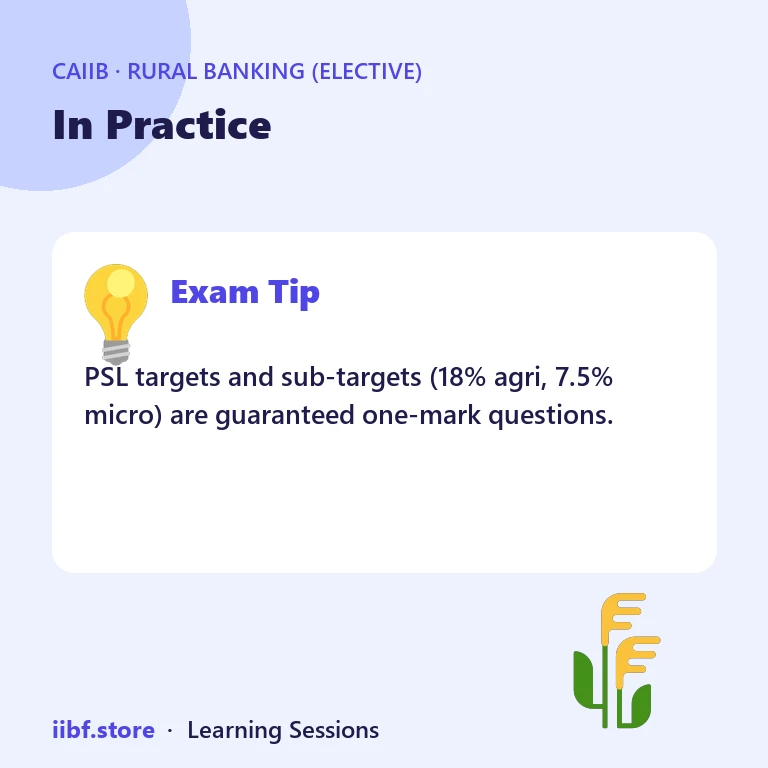
RBI के Master Direction on Priority Sector Lending के अनुसार, domestic scheduled commercial banks (और 20 या उससे अधिक branches वाले foreign banks) के लिए overall target है — Adjusted Net Bank Credit (ANBC) या Credit Equivalent of Off-Balance Sheet Exposure (CEOBE), दोनों में जो भी अधिक हो, उसका 40%। इस 40% के भीतर agriculture का 18% sub-target है, और agriculture के भीतर ही small and marginal farmers का अलग से 10% sub-target है। Weaker sections का sub-target 12% है, और micro enterprises का 7.5%।
Regional Rural Banks और cooperative banks इस framework के adapted version पर काम करते हैं, क्योंकि उनका loan book डिज़ाइन से ही agriculture-heavy होता है। Small Finance Banks का overall target ज़्यादा सख्त है, जो उनके financial-inclusion mandate को दर्शाता है। 20 से कम branches वाले foreign banks का overall target कम होता है और उन पर agriculture sub-target अनिवार्य नहीं है, बल्कि उसकी जगह export credit component रहता है।
| Bank category | Overall PSL target (ANBC/CEOBE का) | Agriculture sub-target | Agriculture sub-target अनिवार्य? |
|---|---|---|---|
| Domestic commercial banks | 40% | 18% | ✅ |
| RRBs / Small Finance Banks | 75% | Adapted, agriculture-heavy | ✅ |
| Foreign banks (20+ branches) | 40% | 18% | ✅ |
| Foreign banks (20 से कम branches) | 40% | Export credit substitute | ❌ |
Small and marginal farmers sub-target के भीतर, बैंक disbursement को outstanding से अलग-अलग track करते हैं, क्योंकि एक ही crop-season loan cycle तस्वीर को बिगाड़ सकता है। यहीं पर scale of finance and crop loan assessment वाली methodology काम आती है — district-level scale of finance सीधे यह तय करता है कि किसान के loan का कितना हिस्सा agriculture sub-target में गिना जाएगा।
🏦 RRBs और Small Finance Banks PSL norms कैसे पूरा करते हैं
Regional Rural Banks का गठन ही rural credit needs पूरी करने के लिए हुआ था, इसलिए 75% overall PSL target इनके लिए कोई stretch goal नहीं बल्कि mandate का स्वाभाविक विस्तार है। इनका ज़्यादातर loan portfolio पहले से agriculture और allied-activity lending, kisan credit facilities, और small-ticket rural enterprise finance से बना होता है। अकेला Kisan Credit Card scheme कई RRBs में PSL-eligible agriculture credit का बड़ा हिस्सा बनाता है।
Small Finance Banks पर भी वही 75% threshold लागू होता है, पर वे एक अलग starting point से यहाँ पहुँचे — इनमें से कई conversion से पहले microfinance institutions या NBFCs थे, इसलिए target पूरा करने का मतलब है agriculture और MSME books को सक्रिय रूप से बनाना, न कि किसी मौजूदा lending pattern को सिर्फ आगे बढ़ाना। यही एक वजह है कि SFBs PSL-eligible rural loans जल्दी originate करने के लिए co-lending और business correspondent partnerships पर काफ़ी निर्भर रहते हैं।
दोनों तरह के बैंक district-level credit planning machinery के साथ मिलकर काम करते हैं। Lead Bank Scheme and district credit plan के तहत तैयार होने वाला annual credit plan असल में उस district में काम कर रहे बैंकों के बीच PSL-eligible lending targets बाँट देता है, यानी PSL compliance सिर्फ head-office की कवायद नहीं है — यह block-दर-block, branch-दर-branch negotiate होती है।
किसी इलाके में priority-sector loans originate करना कितना आसान है, यह infrastructure की quality पर भी निर्भर करता है। Infrastructure के अंतर्गत जिन rural connectivity और कमज़ोर market linkage की बातें होती हैं, वे छोटे PSL loans को originate और service करने की लागत बढ़ा देती हैं — यही वजह है कि business correspondents और digital onboarding अब RRBs और SFBs दोनों के लिए ज़रूरी tools बन गए हैं।
⚠️ Common Mistake: Students अक्सर मान लेते हैं कि हर बैंक का PSL target एक जैसा 40% है। याद रखें कि RRBs और Small Finance Banks पर ऊँचा 75% target लागू होता है — यह अंतर CAIIB objective questions में बार-बार आता है।
📜 PSL Certificates, Shortfalls और RIDF Contribution
हर बैंक अपने आप पर्याप्त priority-sector loans originate नहीं कर पाता, और न ही हर बैंक अपने target से ज़्यादा overshoot करना चाहता है। RBI ने इसका हल Priority Sector Lending Certificates (PSLCs) से निकाला है — ये tradable instruments हैं जिनसे किसी category में PSL surplus वाला बैंक वह surplus, underlying loan या उसका risk transfer किए बिना, किसी shortfall वाले बैंक को बेच सकता है। बेचने वाले बैंक को fee income मिलती है; खरीदने वाला बैंक अपना compliance gap भरता है।
PSLCs चार categories में ट्रेड होते हैं — general, small and marginal farmers, micro enterprises, और agriculture — RBI के e-Kuber platform के ज़रिए। इससे बैंकों को sub-targets पूरा करने का एक market-based रास्ता मिल जाता है, बजाय इसके कि उन्हें किसी ऐसी category में loans originate करने पड़ें जहाँ उनकी natural presence या expertise ही नहीं है।
जब PSLCs इस्तेमाल करने के बाद भी बैंक शॉर्ट रह जाता है, तो उसे shortfall की रकम NABARD के पास रखे Rural Infrastructure Development Fund (RIDF) में, या shortfall की category के हिसाब से किसी और निर्धारित fund में जमा करनी होती है। RIDF deposits बैंक की सामान्य lending yield से कम return देती हैं, और यही इसका मकसद भी है — इससे एक असली financial incentive बनता है कि बैंक PSL targets असली lending से पूरे करें, न कि shortfall को कारोबार की एक routine लागत मानकर टाल दें।
यह shortfall mechanism Issues Concerning Rural Areas से भी जुड़ता है — RIDF funding, विडंबना यह है कि, आख़िरकार उन्हीं rural infrastructure gaps को फाइनेंस करती है जो PSL lending को originate करना मुश्किल बनाते हैं, यानी यह कोई तुरंत fix नहीं बल्कि एक धीमा feedback loop है।
PSLC trading में सिर्फ PSL classification का फ़ायदा transfer होता है, कभी loan asset, credit risk या borrower relationship नहीं — originating बैंक अपने books पर loan हमेशा रखता है।
🧠 Practice MCQs: Priority Sector Lending Targets
Q1. What is the overall PSL target for domestic scheduled commercial banks as a percentage of ANBC/CEOBE? (a) 30% (b) 40% (c) 50% (d) 18%
Answer: (b) — Domestic scheduled commercial banks must lend 40% of ANBC or CEOBE, whichever is higher, to the priority sector.
Q2. Within the overall PSL target for domestic commercial banks, what is the sub-target for agriculture? (a) 10% (b) 12% (c) 18% (d) 25%
Answer: (c) — Agriculture carries an 18% sub-target within the 40% overall PSL target.
Q3. What is the sub-target within agriculture earmarked specifically for small and marginal farmers? (a) 8% (b) 10% (c) 12% (d) 15%
Answer: (b) — Small and marginal farmers carry a 10% sub-target, nested within the wider 18% agriculture sub-target.
Q4. A Priority Sector Lending Certificate (PSLC) allows a bank with a PSL shortfall to: (a) merge with another bank (b) buy PSL classification from a bank with a surplus, without transferring the loan (c) get an automatic RBI penalty waiver (d) convert PSL loans into NPAs
Answer: (b) — PSLCs let a bank buy PSL achievement from a surplus bank while the underlying loan stays on the originating bank's books.
Q5. A bank that persistently misses its PSL targets is required to contribute the shortfall amount to a fund maintained with which institution? (a) SEBI (b) NABARD (via RIDF) (c) DICGC (d) IBBI
Answer: (b) — Shortfall contributions typically flow into the Rural Infrastructure Development Fund maintained with NABARD.
Chapter-wise mock tests चाहिए 100+ MCQs के साथ? मुफ़्त practice शुरू करें →
Frequently Asked Questions
What is ANBC and why does it matter for PSL?
Adjusted Net Bank Credit, net bank credit का वह आँकड़ा है जिसे RIDF और कुछ bonds जैसी specific eligible deductions के लिए adjust किया गया हो। यही, CEOBE के साथ, वह base figure है जिसके आधार पर हर PSL target और sub-target percentage निकाला जाता है, इसलिए ANBC की गणना में हुई एक गलती पूरी compliance picture बिगाड़ देती है।
Do Regional Rural Banks follow the same PSL target as commercial banks?
नहीं। RRBs और Small Finance Banks पर उनके rural और financial-inclusion mandate के चलते ऊँचा 75% overall PSL target लागू होता है, जबकि ज़्यादातर domestic commercial banks के लिए यह 40% है।
What happens if a bank exceeds its PSL target?
जिस बैंक के पास किसी category में PSL surplus होता है, वह उन बैंकों को Priority Sector Lending Certificates बेच सकता है जो शॉर्ट हैं — इससे उसे fee income मिलती है और खरीदने वाले बैंक का उस category का compliance gap भरने में मदद होती है।
Is export credit treated as priority sector lending for all banks?
Export credit मुख्यतः foreign banks के लिए PSL category है, खासकर 20 से कम branches वाले बैंकों के लिए, न कि domestic commercial banks के लिए एक standard component। किसी case study में लागू करने से पहले हमेशा category-wise treatment को मौजूदा RBI Master Direction से verify करें।
यह Topic CAIIB Case Studies में बार-बार क्यों आता है
PSL targets CAIIB case-study का पसंदीदा anchor इसलिए हैं क्योंकि इनमें एक ठोस number (percentage) और एक judgment call (loan किस category में गिरेगा, और उसकी गणना कैसे होगी) दोनों साथ मिलते हैं। कोई case study किसी बैंक के loan book का ब्योरा देकर पूछ सकती है कि क्या उसने अपना agriculture sub-target पूरा किया, या क्या किसी specific category का PSLC खरीदना RIDF deposit की तुलना में सस्ता compliance रास्ता है।
इन्हें भरोसे के साथ हल करने के लिए चार numbers याद रखें: ज़्यादातर बैंकों के लिए overall 40%, RRBs और Small Finance Banks के लिए 75%, agriculture के लिए 18%, और उसके भीतर small and marginal farmers के लिए 10%। इसके ऊपर weaker sections का 12% और micro enterprises का 7.5% भी जोड़ लें। बाकी सब कुछ — PSLC trading, RIDF shortfall contributions, foreign banks के लिए category-wise treatment — इसी base पर टिका है।
PSL compliance को बैंकों के internal talent management और specialised lending functions की oversight से जोड़कर देखना भी ज़रूरी है। जिस तरह specialised credit teams को leadership transitions के दौरान भी सक्षम बनाए रखने के लिए बैंक को मज़बूत succession planning in banks चाहिए, उसी तरह PSL compliance को भी institutional memory चाहिए — किसी rotating loan officer को हर posting cycle में sub-target rules फिर से सीखने की नौबत नहीं आनी चाहिए।
exam से पहले latest confirmed figures के लिए हमेशा RBI के official Master Direction on Priority Sector Lending से rbi.org.in पर मिलान करें, क्योंकि sub-target percentages और eligible activity lists समय-समय पर reviewed होती हैं, और कोई भी exam question मौजूदा regulatory position को ही मानकर चलेगा, पुरानी नहीं।
अगर आप देखना चाहते हैं कि PSL rural credit ecosystem में कैसे फिट बैठता है — repo-linked lending rates, refinance windows, और latest RBI notifications — तो अपने chapter notes के साथ-साथ RBI rates and resources भी देखें।
Conclusion: Exam Day से पहले PSL Numbers पक्के कर लें
Priority Sector Lending targets, CAIIB Rural Banking elective के सबसे ज़्यादा numbers-heavy हिस्सों में से एक है, लेकिन यह उन candidates को इनाम देता है जो अलग-अलग digits नहीं बल्कि पूरी structure याद रखते हैं: overall target, agriculture sub-target, small-and-marginal-farmers sub-target, weaker sections sub-target, और इनके इर्द-गिर्द बैठी PSLC/RIDF compliance mechanisms। एक बार यह structure साफ़ हो जाए, तो case-study variations डराने वाली नहीं बल्कि आसानी से हल होने वाली लगने लगती हैं।
Rural Banking elective का बाकी coverage देखने के लिए Rural Banking Elective article hub देखें, और जब exam conditions में खुद को परखने के लिए तैयार हों, तो पूरे chapter-wise mocks और structured practice sets के लिए CAIIB course page पर जाएँ।
Quick quiz on this topic
5 exam-style questions from our free test bank — check yourself before you move on.
Practice this topic
मुफ़्त मॉक टेस्ट दें, चैप्टर PDF डाउनलोड करें या वीडियो क्लास देखें — सब iibf.store पर मुफ़्त है।
पढ़ना जारी रखें