MSME Classification and Credit Schemes: IIBF 2026 Guide
MSME classification and government credit schemes sit at the heart of the Certificate Course on MSME and recur in almost every IIBF advances paper - and yet they are where most candidates lose easy marks because the limits keep changing. This guide pulls the entire topic together the way a working banker actually uses it: the composite investment-and-turnover definition, Udyam registration, and the four flagship schemes (CGTMSE, MUDRA, PMEGP and Stand-Up India) that put credit into the hands of India's smallest enterprises.
By the end, you will know not just what the schemes are, but when a branch reaches for each one, how working capital is sized for a small unit, and why every rupee of MSME credit matters for Priority Sector Lending. Treat the numbers below as a study skeleton - for any specific ceiling, fee or sub-target, always confirm against the latest released IIBF notification and RBI master directions, since these figures are revised from time to time.
Key takeaways
- An enterprise is classified Micro, Small or Medium using a composite criterion - both investment in plant, machinery or equipment AND annual turnover must stay within the slab.
- Udyam registration is free, fully online, PAN- and GST-linked, and produces the single Udyam Registration Number banks rely on.
- CGTMSE enables collateral-free credit to micro and small units; MUDRA, PMEGP and Stand-Up India target micro, first-generation and SC/ST/women entrepreneurs.
- Small-unit working capital is sized by the Nayak Committee turnover method (25% of projected turnover, 5% margin).
- All MSME credit qualifies for Priority Sector Lending, with a sub-target for the micro segment.
What MSME classification means and why it matters
MSME classification and credit schemes begin with a single definition that everything else hangs on. The classification was overhauled by a notification effective from July 2020, which retired the old plant-and-machinery-only definition and replaced it with a composite criterion: investment in plant, machinery or equipment and annual turnover are read together. The single biggest conceptual shift is that the same yardstick now applies to both manufacturing and service enterprises, ending the earlier split treatment that confused so many borrowers and bankers.
Two rules drive almost every exam question on this topic. First, a unit must satisfy both the investment limit and the turnover limit for a category - breaching either one pushes the unit up into the next slab. Second, export turnover is excluded while computing the turnover figure, a deliberate carve-out that protects export-oriented units from losing their MSME benefits simply because they sell abroad.
The revised investment and turnover slabs
Following the limits announced through the Union Budget 2025 cycle and applicable for 2026, the thresholds widely used are set out below. Confirm the exact figures against the latest IIBF notification before your exam, as these are periodically revised upward.
| Category | Investment in plant & machinery / equipment | Annual turnover (exports excluded) |
|---|---|---|
| Micro | Up to Rs 2.5 crore | Up to Rs 10 crore |
| Small | Up to Rs 25 crore | Up to Rs 100 crore |
| Medium | Up to Rs 125 crore | Up to Rs 500 crore |
Read the table as a pair of gates: a unit drops into the highest category for which it clears both gates. A firm with Rs 3 crore of investment but only Rs 8 crore turnover is Small, not Micro, because its investment has already crossed the micro limit.
Udyam registration - the gateway to MSME benefits
None of the credit schemes reach a borrower until the enterprise is formally recognised, and that recognition comes through Udyam registration. The process is fully online and free of cost, requires only the Aadhaar and PAN of the promoter, and is linked to PAN and GST so that investment and turnover figures are auto-fetched from income-tax and GST returns rather than self-declared.
The output is the Udyam Registration Number (URN), now the single document banks rely on to extend MSME-specific benefits - collateral-free cover, priority-sector treatment, interest concessions and protection under delayed-payment rules. Because the data is pulled from filed returns, a unit's category updates automatically as it grows, which is why bankers must re-check the URN status at each renewal rather than assuming last year's slab still holds.
CGTMSE - the collateral-free guarantee engine
The Credit Guarantee Fund Trust for Micro and Small Enterprises (CGTMSE) is the scheme that makes lending without security possible. Set up jointly by the Government of India and SIDBI, the trust gives a guarantee cover to the lending institution, so the bank is protected against default while the borrower obtains genuinely collateral-free and third-party-guarantee-free credit.
As enhanced for the current cycle, the maximum guarantee cover extends up to Rs 5 crore per borrower, with the cover meeting a high percentage of the amount in default depending on the borrower's category. The points that examiners return to again and again are these:
- Eligibility is restricted to micro and small enterprises only - medium units fall outside CGTMSE entirely.
- Both term loans and working capital are eligible, but any credit already backed by collateral or guaranteed under another scheme is excluded.
- The borrower pays an Annual Guarantee Fee (AGF), which is slab-linked to the loan amount and the risk profile.
- Cover is higher for women, SC/ST borrowers, units in aspirational districts and the North-Eastern region, deepening inclusion.
Because CGTMSE absorbs a large slice of the bank's credit risk, it is the natural first tool for first-generation entrepreneurs who have a viable project but no property to pledge. For a deeper walk-through of when banks reach for CGTMSE instead of MUDRA, study that scenario carefully - it is a favourite case-study setup.
MUDRA, PMEGP and Stand-Up India at a glance
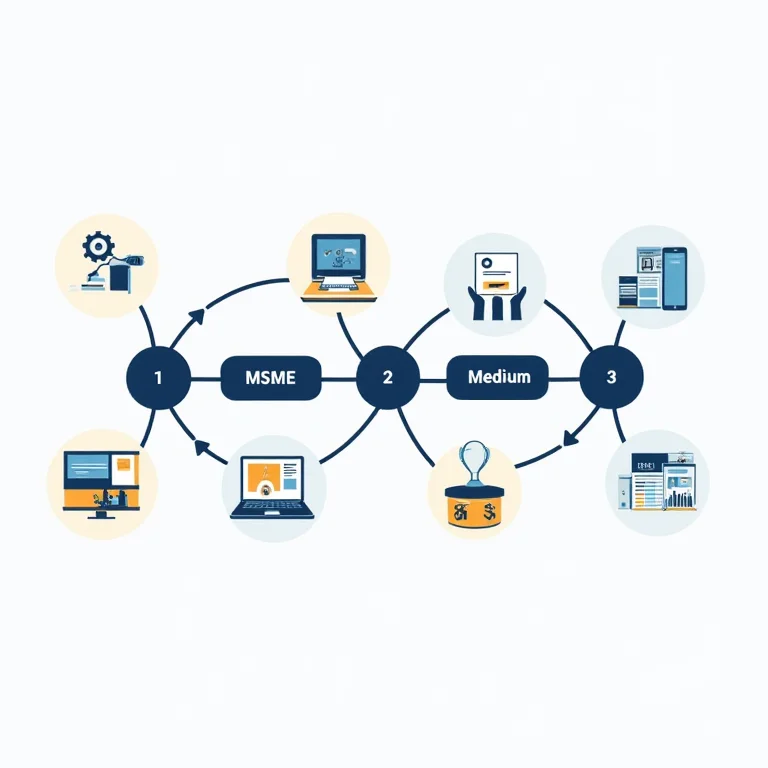
Beyond the guarantee mechanism, three flagship schemes actually channel funds to the smallest and newest borrowers. The comparison table below is the fastest way to fix their boundaries in memory before the exam.
| Scheme | Run by | Who it serves | Headline feature |
|---|---|---|---|
| MUDRA (PMMY) | Banks / MFIs, refinanced by MUDRA | Non-corporate, non-farm micro enterprises | Shishu / Kishore / Tarun, mostly collateral-free |
| PMEGP | KVIC (nodal) | New micro enterprises / job creators | Credit-linked margin-money subsidy |
| Stand-Up India | Scheduled commercial banks | SC/ST and women entrepreneurs | Rs 10 lakh-Rs 1 crore greenfield loan |
MUDRA under PMMY
Under the Pradhan Mantri MUDRA Yojana (PMMY), loans and refinance are extended to non-corporate, non-farm micro enterprises through the Micro Units Development and Refinance Agency. Loans are categorised by ticket size into Shishu, Kishore and Tarun, with a higher Tarun-plus bracket up to Rs 20 lakh now available to borrowers who have successfully repaid an earlier loan. These advances are typically collateral-free and frequently dovetail with CGTMSE-style cover. The granular split is worth memorising from our banker's working guide to Shishu, Kishore and Tarun.
PMEGP and Stand-Up India
The Prime Minister's Employment Generation Programme (PMEGP) is a credit-linked subsidy scheme run by KVIC that helps entrepreneurs set up new micro enterprises. Its defining feature is a margin-money subsidy that is higher for rural areas and special categories (women, SC/ST, ex-servicemen, North-East), with the bank funding the balance as a term loan. The eligibility and sanction mechanics are unpacked in our PMEGP eligibility and margin-money guide.
Stand-Up India facilitates bank loans between Rs 10 lakh and Rs 1 crore to at least one SC or ST borrower and at least one woman borrower per bank branch, for setting up a greenfield (first-time) enterprise in manufacturing, services or trading. For the social-inclusion angle that examiners love, see how Stand-Up India targets SC/ST and women entrepreneurs. Read together, MUDRA, PMEGP and Stand-Up India form a ladder of financial inclusion from the smallest informal unit up to a structured greenfield project.
Working capital assessment for MSME units
Knowing the schemes is only half the job - the exam (and the branch) also tests whether you can size a limit correctly. For MSME advances, banks generally assess working capital using the Nayak Committee (turnover) method for fund-based limits up to Rs 5 crore. Under this method:
- Working capital requirement is taken as 25% of projected annual turnover.
- The borrower contributes a 5% margin (one-fifth of the requirement) from own funds.
- The bank funds the balance - broadly 20% of projected turnover - as the assessed limit.
For limits above that threshold, banks switch to the Maximum Permissible Bank Finance (MPBF) or the cash-budget approach. A correctly assessed limit matters because it prevents both over-financing (which invites diversion of funds) and under-financing (which starves a viable unit) - the very tension at the centre of asset-quality questions. Drill these calculations under time pressure with our MSME mock tests, and reinforce the formulas with quick matching games.
The Priority Sector Lending connection
On the regulatory side, lending to MSMEs counts toward Priority Sector Lending (PSL). The whole of bank credit to micro, small and medium enterprises is eligible for PSL classification, and within that, banks must meet a sub-target for the micro-enterprise segment. This dual character - a development mandate and a compliance requirement - is why MSME finance gets board-level attention.
The interest-rate framework follows RBI norms, so the prevailing policy stance feeds directly into MSME pricing. Where a bank falls short of its PSL or micro sub-target, the shortfall is parked with development funds managed by institutions such as NABARD and SIDBI - an often-tested consequence point. You can browse the full set of MSME exam guides and the structured Certificate Course on MSME hub, including the dedicated module on Small and Medium Enterprises in India, to see how PSL ties the whole syllabus together.
Exam tip: When a question mixes a borrower profile with a scheme, anchor on eligibility first. A medium enterprise instantly rules out CGTMSE; an SC/ST woman setting up a greenfield unit for Rs 50 lakh points to Stand-Up India; a non-farm micro unit needing Rs 4 lakh collateral-free points to MUDRA-Kishore. Eligibility filters eliminate two distractors before you even read the numbers.
A practical study plan for this topic
This subject rewards structured revision far more than passive reading. Use a three-pass approach over about a week:
- Day 1-2 - Build the definitions. Memorise the classification table and the Udyam basics until you can reproduce both slabs and both rules (composite criterion, export exclusion) from blank paper.
- Day 3-4 - Map the schemes. Learn the four-scheme comparison table; for each scheme fix the run-by agency, the eligible borrower and the one headline feature. Then test recall, not recognition.
- Day 5 - Master the calculations. Work five Nayak-method sums and two MPBF problems so the 25%/5% logic becomes automatic.
- Day 6-7 - Integrate and attempt. Tie everything to PSL, then sit a full-length paper. Review every wrong answer back to the rule it tested.
Anchor your revision around official sources for the latest limits - bookmark the official IIBF website for current notifications, and cross-check scheme ceilings against the relevant scheme portals before exam day.
Common mistakes to avoid
- Treating either criterion alone as decisive. Both investment and turnover must be within the slab; a single breach lifts the unit to the next category.
- Forgetting the export exclusion. Export turnover is left out of the turnover computation - a small detail that flips many answers.
- Extending CGTMSE to medium units. CGTMSE covers micro and small only; this is the single most common trap in scheme questions.
- Confusing PMEGP's subsidy with a loan waiver. PMEGP gives a margin-money subsidy on a bank-financed term loan, not free money.
- Mis-stating the Stand-Up India eligibility. It needs at least one SC/ST and one woman borrower per branch, for a greenfield enterprise - not an existing one.
- Memorising stale figures. Ceilings and sub-targets are revised; always reconcile with the latest IIBF notification rather than an old PDF.
Frequently Asked Questions
What is the revised MSME classification for 2026?
An enterprise is Micro if investment is up to Rs 2.5 crore and turnover up to Rs 10 crore; Small if investment is up to Rs 25 crore and turnover up to Rs 100 crore; and Medium if investment is up to Rs 125 crore and turnover up to Rs 500 crore. Both the investment and turnover conditions must be satisfied for a category, and export turnover is excluded from the turnover figure. Always confirm the exact ceilings against the latest released notification.
Does CGTMSE cover medium enterprises?
No. CGTMSE provides its collateral-free guarantee cover only to micro and small enterprises - medium enterprises are outside its scope. The maximum guarantee cover has been enhanced up to Rs 5 crore per eligible borrower, and the borrower pays an Annual Guarantee Fee linked to the loan size and risk category.
What is the difference between MUDRA and Stand-Up India?
MUDRA under PMMY funds non-corporate, non-farm micro enterprises in the Shishu, Kishore and Tarun categories, generally on a collateral-free basis. Stand-Up India is broader-ticket: it facilitates loans of Rs 10 lakh to Rs 1 crore to at least one SC or ST borrower and one woman entrepreneur per bank branch, specifically for a new greenfield enterprise. The borrower profile and the loan size are the quickest ways to tell them apart.
How is working capital for small MSME units assessed?
For fund-based working-capital limits up to Rs 5 crore, banks use the Nayak Committee turnover method. The working-capital requirement is taken as 25% of projected annual turnover, the borrower brings a 5% margin from own funds, and the bank funds the balance of roughly 20% of turnover. For larger limits, banks move to the MPBF or cash-budget method.
Is Udyam registration mandatory and does it cost anything?
Udyam registration is the recognised way for an enterprise to claim MSME benefits, and it is completely free and online. It is PAN- and GST-linked, so investment and turnover data are auto-fetched from income-tax and GST returns rather than self-declared. The Udyam Registration Number it generates is the document banks use to extend collateral-free cover and priority-sector treatment.
How do MSME advances count toward Priority Sector Lending?
The whole of bank credit to micro, small and medium enterprises is eligible for PSL classification, and banks must additionally meet a sub-target for the micro-enterprise segment. If a bank falls short, the shortfall is contributed to development funds managed by institutions such as NABARD and SIDBI. This makes MSME finance both a developmental mandate and a hard compliance metric.
Conclusion
Master MSME classification and credit schemes by linking three ideas: the composite investment-turnover definition anchored by Udyam registration, the collateral-free credit engine of CGTMSE alongside MUDRA, PMEGP and Stand-Up India, and the working-capital and Priority Sector Lending framework that governs how banks deploy these advances. Get those connections right and this becomes one of the most reliable scoring zones in the whole paper - in the exam hall and at the branch counter alike. Revise the limits, drill the calculations, and walk in confident.
Related Guides
📚 Free Learning Sessions resources — connect & crack your exam
- 📝 Free mock tests — chapter-wise, exam-pattern, with instant solutions
- 🎮 Matching games — gamified revision of key terms & concepts
- 📄 Study notes & PDFs — downloadable chapter material
- 🎥 Video classes on YouTube — subscribe to @learningsessions
💬 Want the full course? WhatsApp your course name to 8360944207 and our team will set you up.
📱 Study on the go — get our iOS & Android app at iibf.store/app.
Practice this topic
Take a free mock test, download chapter PDFs, or watch a video class — all included on iibf.store.