Whistle Blower Mechanism in Banks: RBI, CVC and SEBI Rules
Every serious compliance officer eventually has to answer one uncomfortable question: what happens when the person who spots the wrongdoing works inside the bank? The whistle blower mechanism in banks is the formal answer — a set of RBI, CVC and company-law channels that let an employee, vendor or customer report fraud or misconduct without fear of losing their job. For BCP candidates, this topic sits at the intersection of governance, ethics and supervisory expectations, and examiners like to test the fine print of who reports to whom.
Unlike a generic "speak up" policy, the whistle blower mechanism in banks is layered by ownership type. A public sector bank routes disclosures through the Central Vigilance Commission; a private or foreign bank routes them through the Reserve Bank of India; and every listed bank, regardless of ownership, must also run a vigil mechanism under company law and SEBI's listing rules. A compliance officer who cannot tell these three tracks apart in an exam — or in a real escalation — is a liability, not an asset.
🔔 What the Whistle Blower Mechanism in Banks Actually Covers
At its core, a whistle-blowing channel is a protected route for reporting fraud, corruption, abuse of authority, or serious deviation from a bank's code of conduct — usually by someone senior enough that the normal reporting line (manager, then manager's manager) is compromised. The whistle blower mechanism in banks is deliberately designed to bypass hierarchy: a junior officer can flag a Chief Executive's conduct directly to an external authority, something the standard grievance-redressal system was never built to do.
Three ingredients make a disclosure channel credible rather than cosmetic. First, an external or sufficiently independent recipient — RBI, the CVC, or an Audit Committee chairperson, none of whom report to the person being complained about. Second, a promise of confidentiality that is actually enforced, not merely printed in a policy document. Third, a non-retaliation guarantee that survives the complaint being found partially or wholly incorrect, provided it was made in good faith. Remove any one leg and employees quietly conclude the channel is theatre, and stop using it — which is exactly the failure mode supervisors worry about most, because it means fraud surfaces years late, through an audit or a customer complaint, instead of early.
For a deeper grounding in how such gaps get flagged during a compliance review, see the chapter on the identification of compliance issues and risks, which treats whistleblower silence as a leading indicator of control weakness.
🏛️ RBI's Route for Private Sector and Foreign Banks
Since 2007, the Reserve Bank of India has operated a Protected Disclosures Scheme specifically for private sector and foreign banks operating in India. It exists because these banks are companies, not government bodies, and therefore fall outside the Central Vigilance Commission's jurisdiction. Under this scheme, an employee, ex-employee, or even a member of the public who has credible information about fraud, malpractice, or serious irregularity — particularly by a bank's top management, directors, or the CEO — can write directly to the RBI's fraud monitoring vertical at its Central Office in Mumbai.
A few features matter for exam purposes. The complainant must disclose their identity to RBI; the scheme does not entertain anonymous or pseudonymous letters, because RBI needs to be able to seek clarifications and, where warranted, protect the individual by name. What RBI protects, though, is confidentiality of that identity vis-à-vis the bank and the accused official — not public anonymity. RBI examines the disclosure, may seek the bank's response, and can escalate to supervisory action, including inspection triggers, where the allegation reveals a genuine control failure rather than a personal grievance or service dispute, which the scheme explicitly excludes.
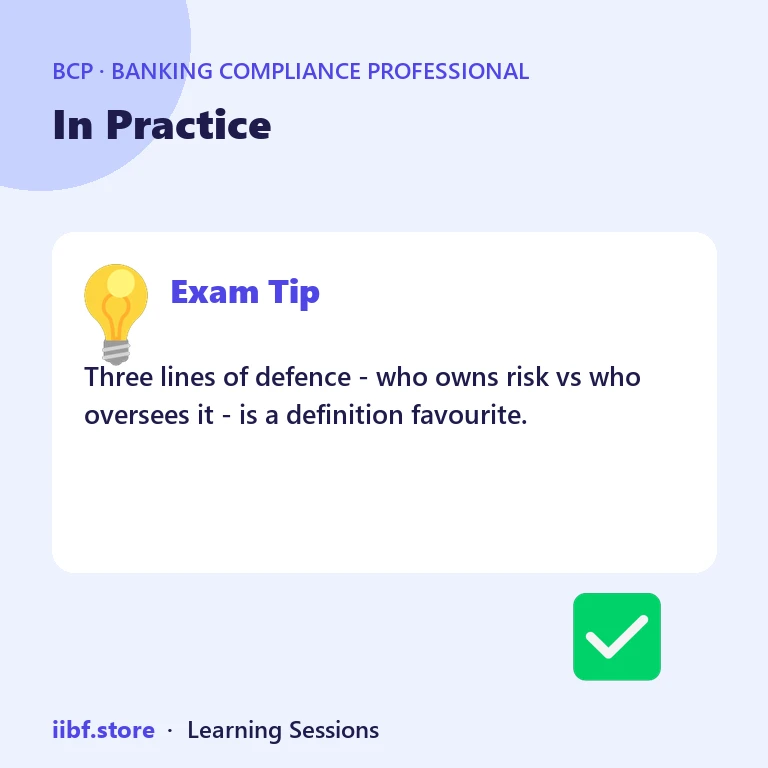
💡 Exam Tip: RBI's Protected Disclosures Scheme applies to private and foreign banks; public sector banks use the CVC's PIDPI route instead. Examiners frequently swap these two in distractor options — read the bank type in the question stem carefully.
Compliance teams should also track this alongside broader supervisory reporting; the chapter on recent important reports of RBI is a useful companion for seeing how disclosure trends feed into supervisory commentary.
📋 Public Sector Banks: The CVC's PIDPI Resolution
Public sector banks, being government-owned entities, fall under the Central Vigilance Commission's Public Interest Disclosure and Protection of Informers (PIDPI) Resolution of 2004. A whistleblower — again required to disclose their identity, sealed in an envelope marked appropriately so it is opened only by authorised CVC staff — can report corruption, misuse of office, or criminal offences by a public servant, which for this purpose includes PSB employees and officers.
The CVC does not investigate the complaint itself in most cases; it forwards the matter for inquiry to the appropriate disciplinary authority or the Central Bureau of Investigation, while keeping oversight of the process and shielding the complainant's identity from the organisation under scrutiny. If the complainant faces harassment or victimisation as a result of the disclosure, the CVC can direct the concerned department to take corrective action, up to and including transferring or otherwise protecting the individual.
⚠️ Common Mistake: Candidates often assume the PIDPI Resolution and RBI's Protected Disclosures Scheme are interchangeable. They are not — the PIDPI route only applies where the entity is a government organisation or PSU, which is why it governs public sector banks but not their private or foreign-owned peers.
Both routes share a philosophy worth remembering: disclosure and protection are handled by an authority structurally outside the accused person's control, which is precisely what makes either mechanism credible rather than symbolic.
⚖️ Vigil Mechanism Under Company Law and SEBI LODR
Ownership-specific routes are not the whole picture. Section 177(9) and (10) of the Companies Act, 2013 require every listed company — and certain other classes prescribed by rule, including companies that accept public deposits or have borrowed over ₹50 crore from banks or financial institutions — to establish a vigil mechanism for directors and employees to report genuine concerns. This mechanism must be overseen by the Audit Committee, and in exceptional cases must allow direct access to the Audit Committee's chairperson, bypassing the normal management chain entirely.
Listed banks carry a second, parallel obligation under SEBI's Listing Obligations and Disclosure Requirements (LODR) Regulations, specifically Regulation 22, which mandates a whistle blower policy with adequate safeguards against victimisation and, again, direct access to the audit committee chair in appropriate cases. In practice, most listed banks run a single unified policy that simultaneously satisfies the Companies Act requirement, SEBI LODR, and — where applicable — the RBI or CVC route, so an employee has more than one door to knock on depending on the severity and nature of the concern.
📌 Remember: A listed private bank can face whistleblower obligations under three frameworks at once — Companies Act vigil mechanism, SEBI LODR, and RBI's Protected Disclosures Scheme. None of these substitutes for the others; a robust compliance programme maps all three into one coherent policy.
🛡️ Confidentiality, Non-Retaliation and Making the Channel Credible
A policy document is not a control. Supervisors increasingly test whether the whistle blower mechanism in banks actually functions — whether complaints received translate into documented inquiries, whether outcomes are tracked, and whether anyone who raised a concern in good faith was later penalised, however indirectly, through a stalled promotion or a punitive transfer. Compliance functions are expected to monitor these outcomes as part of periodic reporting to the Audit Committee and the Board, not merely maintain the policy as a static document.
Building genuine trust in the mechanism also depends on how a bank handles restrictions on internal information flows more broadly, since whistleblowing often intersects with insider knowledge; and the same discipline that governs statutory boundaries elsewhere in a bank's operations — for instance under the chapter on statutory restrictions — reinforces why confidentiality controls around a disclosure must be airtight. Where a bank's outsourced or partner arrangements are involved, for example in co-lending with a non-banking financial company in India, the vigil mechanism should extend to concerns raised about the partner relationship too, since fraud risk does not stop at the bank's own payroll.
Finally, a whistle-blowing channel is only as strong as the culture around it. Boards that publicise anonymised case outcomes, train staff on how and where to report, and visibly protect complainants build a system employees actually use — which is the entire point of having one.
| Bank Type / Framework | Governing Route | Complaint Goes To | Anonymous Complaints Accepted |
|---|---|---|---|
| Public Sector Banks | CVC's PIDPI Resolution, 2004 | Central Vigilance Commission | ❌ |
| Private & Foreign Banks | RBI Protected Disclosures Scheme | RBI Fraud Monitoring, Central Office | ❌ |
| All Listed Banks | Companies Act 2013, Section 177(9) | Audit Committee Chairperson | ❌ |
| All Listed Banks | SEBI LODR, Regulation 22 | Audit Committee | ❌ |
Notice the pattern in the table: every credible route insists on a known complainant, because protection and follow-up both require the authority to be able to reach the person. What differs is who receives the disclosure and under which statute — exactly the distinction BCP exam questions probe. This threads directly into how a bank frames its CCO reporting line, since the Chief Compliance Officer is usually the internal escalation point that whistleblower complaints route through before — or alongside — an external authority.
🧠 Practice MCQs: Whistle Blower Mechanism in Banks
Q1. Under RBI's Protected Disclosures Scheme, a complaint against the top management of a private bank is addressed to: (a) the Banking Ombudsman (b) RBI's fraud monitoring vertical at its Central Office (c) SEBI (d) the Insolvency and Bankruptcy Board of India
Answer: (b) — RBI's Central Office fraud monitoring function is the designated recipient for private and foreign bank disclosures.
Q2. The CVC's PIDPI Resolution, 2004 primarily governs whistleblower complaints relating to: (a) private banks only (b) foreign banks only (c) public sector banks and other government organisations (d) NBFCs only
Answer: (c) — PIDPI applies to government organisations and PSUs, which is why it covers public sector banks, not privately or foreign-owned banks.
Q3. Under Section 177 of the Companies Act, 2013, the vigil mechanism of a listed bank must be overseen by: (a) the full Board of Directors (b) the Audit Committee (c) the Nomination and Remuneration Committee (d) the Managing Director directly
Answer: (b) — The Audit Committee oversees the vigil mechanism and must provide direct access to its chairperson in exceptional cases.
Q4. SEBI's LODR Regulation 22 requires a listed bank's whistle blower policy to provide direct access, in appropriate cases, to: (a) the statutory auditor (b) the chairperson of the Audit Committee (c) the RBI Governor (d) the Registrar of Companies
Answer: (b) — Regulation 22 mirrors the Companies Act requirement of direct access to the Audit Committee chair, bypassing normal reporting lines.
Q5. A safeguard common to RBI's, the CVC's, and the Companies Act's whistleblower frameworks is: (a) mandatory public disclosure of the complainant's name (b) protection against victimisation of a good-faith complainant (c) a processing fee for every complaint filed (d) restricting complaints to permanent employees only
Answer: (b) — Every credible route protects a good-faith complainant from retaliation, even where the identity is known to the receiving authority.
Want chapter-wise mock tests with 100+ MCQs? Start practising free →
❓ Frequently Asked Questions
Is anonymous whistleblowing accepted under RBI's Protected Disclosures Scheme?
No. RBI requires the complainant to disclose their identity so it can seek clarifications and offer protection; what is guaranteed is confidentiality of that identity from the bank concerned, not anonymity to RBI itself.
Which route applies to a private sector bank employee reporting fraud by the CEO?
Such a complaint should go through RBI's Protected Disclosures Scheme for private sector and foreign banks, addressed to the fraud monitoring vertical at RBI's Central Office, Mumbai — not the CVC, which covers government-owned entities.
Do public sector banks also need a vigil mechanism under the Companies Act?
If a public sector bank is listed, it must also maintain a Section 177 vigil mechanism and a SEBI LODR whistle blower policy in addition to the CVC's PIDPI route, since these obligations arise from listing status, not ownership.
What happens if a whistleblower faces retaliation after filing a complaint?
Under all major frameworks — RBI's scheme, the PIDPI Resolution, the Companies Act vigil mechanism, and SEBI LODR — the receiving authority can direct corrective action against retaliation, and persistent victimisation of a good-faith complainant is itself treated as a serious compliance and governance failure.
🎯 Get Exam-Ready on Bank Governance Topics
The whistle blower mechanism in banks is a compact but high-yield BCP topic precisely because it forces you to match ownership type to the correct statutory route — RBI for private and foreign banks, the CVC's PIDPI Resolution for public sector banks, and the Companies Act plus SEBI LODR layered on top for every listed bank. Nail that mapping and you have covered a topic examiners return to often. For related ground, revisit the sibling reads on CBCP exam preparation and RBI regulatory reporting CIMS to build a fuller governance picture, and browse every article tagged under Banking Compliance Professional for the full syllabus sweep. Verify the current scheme text on the Reserve Bank of India and Central Vigilance Commission websites before an exam attempt, since procedural details are periodically refreshed. Ready to test yourself against exam-pattern questions? Start a free BCP mock test →
Prefer revising from a printed book?
Chapter-wise books with MCQs after every chapter — minimal pages, complete coverage, delivered anywhere in India. Every book has a free sample to read first.




















Practice this topic
Take a free mock test, download chapter PDFs, or watch a video class — all included on iibf.store.
Keep reading