Withdrawal of CIRP Under Section 12A IBC: CAIIB Guide
A corporate insolvency case does not always have to end in a resolution plan or a liquidation order. Once a lender, an operational creditor, or the corporate debtor itself works out a settlement outside the National Company Law Tribunal (NCLT), the law gives them a formal exit route. This is the withdrawal of CIRP under Section 12A of the Insolvency and Bankruptcy Code, 2016. For JAIIB and CAIIB candidates this provision comes up often because it sits at the crossroads of creditor rights, Committee of Creditors (CoC) voting, and NCLT discretion. This article explains when withdrawal is allowed, who must approve it, and how the process works in practice.
⚖️ Section 12A: The Legal Basis for Withdrawal
Before 2018, the Code had no direct route to withdraw a case once the NCLT admitted it. Creditors and debtors who settled after admission were stuck inside a rigid timeline. The Insolvency and Bankruptcy Code (Amendment) Act, 2018 fixed this gap by inserting Section 12A. It allows the Adjudicating Authority to permit withdrawal of an admitted application for initiation of the corporate insolvency resolution process, on such terms and conditions as may be specified. The provision is deliberately narrow. It does not create a general right to exit; it creates a conditional, supervised one. The applicant who wants out must approach the tribunal, not simply walk away, and the request is tested against the interests of every creditor in the class, not just the one asking to withdraw. This matters because CIRP is a collective proceeding. Once the corporate debtor enters the process, the case stops being a private dispute between the applicant and the debtor and becomes a common pool problem for every financial and operational creditor. Section 12A recognises that a genuine settlement can still make sense, but it puts a gatekeeper in front of it so a single creditor cannot unilaterally shut down a process that others are relying on. Regulation 30A of the CIRP Regulations, framed by the Insolvency and Bankruptcy Board of India (IBBI), lays down the mechanics of the application, including the format and the stage-wise route it must follow.
🗳️ The 90 Percent Voting Threshold Explained
The headline number every candidate must remember is 90 percent. Once the Committee of Creditors is constituted, a withdrawal application can go to the NCLT only after it is approved by 90 percent of the voting share of the CoC. This is one of the highest approval thresholds anywhere in the Code, higher even than the 66 percent needed to approve a resolution plan. The logic is straightforward. Withdrawal ends the case for everyone, not just the applicant, so the law wants near-unanimous creditor comfort before that happens. If even a small block of dissenting financial creditors together hold more than 10 percent of the voting share, they can block withdrawal and insist the process continue toward a resolution plan or liquidation. Before the CoC is constituted, the situation is simpler: the applicant can approach the NCLT directly with a withdrawal request, typically through the interim resolution professional, since there is no committee yet to vote. Once commencement of CIRP has happened and the CoC exists, the 90 percent rule kicks in and stays in force for the rest of the case.
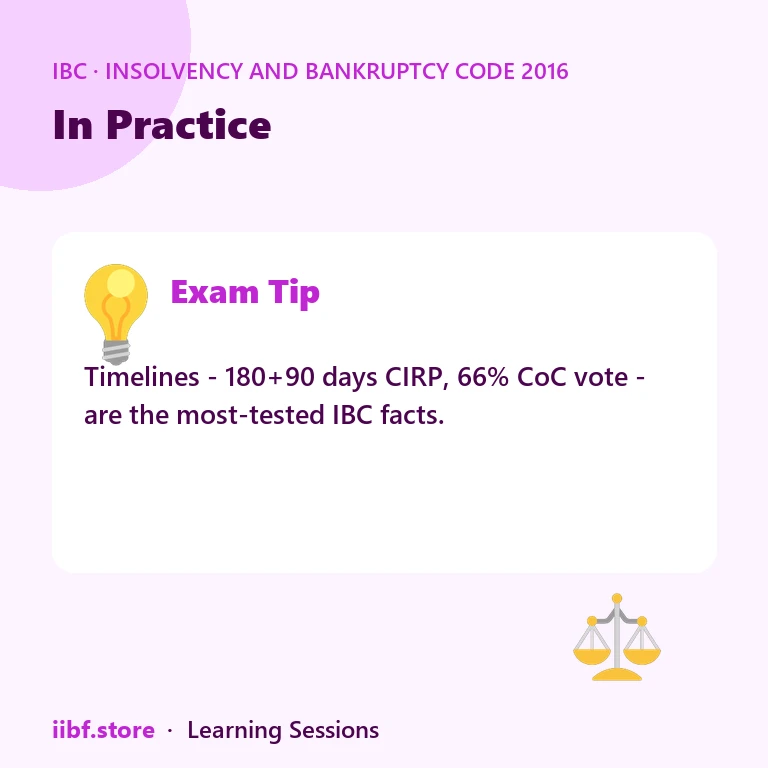
💡 Exam Tip: Memorise the two different regimes — no CoC yet means direct application to NCLT, CoC constituted means 90 percent voting share is mandatory before the matter even reaches the tribunal.
📝 Step-by-Step Withdrawal Procedure
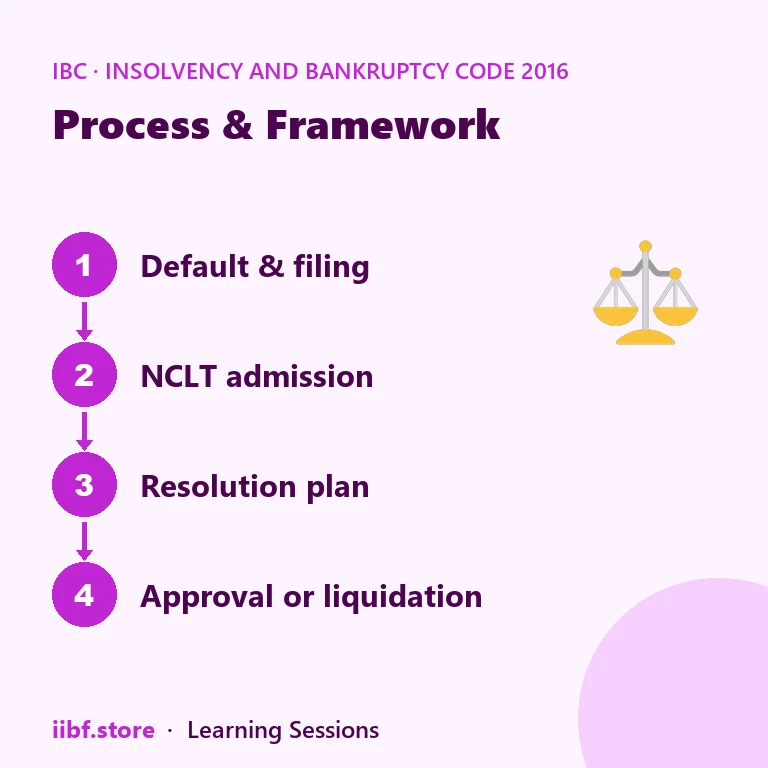
The process has a clear sequence. First, the applicant who filed the original CIRP application submits a withdrawal request in the prescribed form to the interim resolution professional or resolution professional, along with the bank guarantee or cost undertaking required under the regulations. Second, if the CoC has not yet been constituted, the resolution professional forwards the request straight to the NCLT for approval. Third, if the CoC is already in place, the resolution professional places the request before the committee, and it must clear the 90 percent voting share threshold within the timeline fixed by the regulations. Fourth, once the CoC approves, the resolution professional forwards the decision to the NCLT, which retains the final say and can examine whether the settlement is genuine and not being used to defeat other creditors. The roles and duties of the IRP and RP during this stage are largely administrative — collecting the application, verifying it is complete, and placing it before the right forum — but the professional cannot approve or reject a withdrawal on their own authority. That decision belongs to the CoC and, ultimately, to the NCLT.
⚠️ Common Mistake: Students often assume Section 12A withdrawal is the same as an out-of-court settlement. It is not — once CIRP is admitted, any exit must go through the CoC and the NCLT, even if the underlying dispute is fully resolved between the two original parties.
🔍 Withdrawal Before vs After Admission
It helps to separate withdrawal under Section 12A from the ordinary withdrawal of a petition that has not yet been admitted. Before the NCLT admits the application, the rules governing tribunal procedure apply, and the applicant can usually withdraw with comparatively simple permission from the bench, since no other creditor's rights have yet been triggered. After admission, the case belongs to the collective, and Section 12A's higher bar applies. The table below lines up the two situations side by side, along with the stage after a resolution plan is already approved, when withdrawal is no longer available at all.
| Stage of the case | Governing rule | Approval needed | CoC in existence |
|---|---|---|---|
| Before NCLT admits the application | NCLT procedural rules | Tribunal's permission, no creditor vote | ❌ No |
| After admission, CoC not yet formed | Section 12A + Regulation 30A | Direct application to NCLT via IRP | ❌ No |
| After admission, CoC formed | Section 12A + Regulation 30A | 90% CoC voting share, then NCLT approval | ✅ Yes |
| After resolution plan is approved | Not permitted under Section 12A | Not available | ✅ Yes (process closed) |
📌 Remember: Withdrawal is a one-way door once exercised — a withdrawn CIRP application does not bar a fresh application later if the settlement later collapses, but the earlier case itself cannot be revived.
🏦 Why This Matters for Bankers and Creditors
For bank officers who sit on a Committee of Creditors, Section 12A decisions are not academic. A promoter who has defaulted may offer a one-time settlement soon after admission, hoping to avoid the reputational and regulatory consequences of a full CIRP. The bank's credit and legal teams must weigh the settlement offer against the likely recovery through a resolution plan or through the liquidation process under IBC if the case runs its full course. Voting to allow withdrawal effectively closes off both of those alternative paths, so most banks insist on strict conditions — full principal recovery, all CIRP costs paid, and a bank guarantee to cover any shortfall — before supporting a 90 percent vote. Disputes about withdrawal terms are frequently litigated before the NCLT and NCLAT under IBC, particularly on whether the NCLT can impose its own conditions beyond what the CoC agreed. Bankers preparing for CAIIB should also connect this topic back to the insolvency commencement date, since the clock for CIRP timelines keeps running while a withdrawal application is pending, and a delayed decision can eat into the overall resolution window.
Security interests and recovery routes for banks are not limited to the Code. Candidates should also revisit types of mortgages under the Transfer of Property Act to see how a settlement reached during withdrawal talks interacts with the underlying secured asset, since a mortgage does not disappear just because the CIRP application is withdrawn. For a broader map of related chapters, browse the IBC topic hub on iibf.store, and revise the parent chapter on credit recovery laws for banks to place Section 12A in the wider recovery toolkit banks use alongside the Code.
🧠 Practice MCQs: Withdrawal of CIRP under Section 12A
Q1. Under Section 12A of the IBC, once the Committee of Creditors is constituted, what voting share is required to approve withdrawal of a CIRP application? (a) 51% (b) 66% (c) 75% (d) 90%
Answer: (d) — Section 12A fixes the threshold at 90 percent of the voting share of the Committee of Creditors, higher than the 66 percent needed for resolution plan approval.
Q2. Section 12A was inserted into the Insolvency and Bankruptcy Code, 2016 through which amendment? (a) The 2016 principal Act itself (b) The Insolvency and Bankruptcy Code (Amendment) Act, 2018 (c) The Insolvency and Bankruptcy Code (Amendment) Act, 2020 (d) A Supreme Court judgment
Answer: (b) — Section 12A was added by the 2018 amendment to give a supervised exit route for cases settled after admission.
Q3. If the Committee of Creditors has not yet been constituted, how is a withdrawal application under Section 12A processed? (a) It cannot be filed at all (b) It is forwarded directly to the NCLT by the resolution professional (c) It automatically lapses (d) It needs approval from the IBBI first
Answer: (b) — Before the CoC exists there is no committee to vote, so the interim resolution professional forwards the request straight to the NCLT.
Q4. Which regulation of the CIRP Regulations lays down the procedure for a Section 12A withdrawal application? (a) Regulation 30A (b) Regulation 40A (c) Regulation 8 (d) Regulation 36
Answer: (a) — Regulation 30A, framed by the Insolvency and Bankruptcy Board of India, sets out the form and stage-wise process for withdrawal applications.
Q5. Once a resolution plan has already been approved by the NCLT, can the case still be withdrawn under Section 12A? (a) Yes, with 90% CoC approval (b) Yes, but only with unanimous approval (c) No, withdrawal is not available at that stage (d) Yes, if the resolution applicant agrees
Answer: (c) — Section 12A withdrawal applies only while CIRP is running; once a resolution plan is approved the process is closed and withdrawal is no longer available.
Want chapter-wise mock tests with 100+ MCQs? Start practising free →
❓ Frequently Asked Questions
Can an operational creditor also apply for withdrawal under Section 12A?
Yes, Section 12A applies to the applicant who filed the CIRP case, whether that applicant is a financial creditor, an operational creditor, or the corporate debtor itself, as long as the same approval route is followed.
Does the NCLT have to accept a withdrawal even after 90% CoC approval?
No, 90 percent CoC approval is a precondition, not a guarantee. The NCLT independently examines the terms of settlement and can reject or modify the request if it finds the withdrawal unfair to remaining stakeholders.
What happens to the resolution professional's fees when a case is withdrawn?
The withdrawal terms approved by the CoC typically include payment of the CIRP costs incurred up to that point, including the resolution professional's fees and any interim finance raised, before the case formally closes.
Is there a time limit within which a Section 12A application must be decided?
The regulations expect the resolution professional and the CoC to process the request promptly, but the overall CIRP timeline keeps running while the withdrawal application is pending, so delays reduce the time left for resolution or liquidation if withdrawal fails.
Section 12A gives the Code a pressure valve — a way to let genuine settlements close a case without forcing every dispute through a full resolution plan or liquidation. For exam purposes, keep the 90 percent threshold, the role of Regulation 30A, and the difference between pre-admission and post-admission withdrawal firmly in mind. To test yourself against exam-style questions on this and every other IBC topic, head to iibf.store/tests and practice with full-length mock sets before your next attempt.
Quick quiz on this topic
5 exam-style questions from our free test bank — check yourself before you move on.
Practice this topic
Take a free mock test, download chapter PDFs, or watch a video class — all included on iibf.store.