Resolution Plan Approval Under IBC: Section 31 and NCLT Scrutiny Explained
The resolution plan approval under IBC is the moment a corporate insolvency resolution process either succeeds or collapses into liquidation. Everything that happens during CIRP — the moratorium, claim verification, the information memorandum, the invitation for expressions of interest — exists only to produce one document that the Committee of Creditors can vote on and the National Company Law Tribunal can bless. For IIBF candidates, this is the highest-yield area of the Insolvency and Bankruptcy Code 2016 paper, because it sits exactly where statute, regulation and Supreme Court precedent intersect.
This guide walks through the full approval chain: what the resolution professional must verify under Section 30(2), how the CoC votes, what the NCLT can and cannot examine under Section 31, and how appeals travel to the NCLAT and the Supreme Court. If you are still building the base, start with Commencement of CIRP before returning here.
📜 What a Resolution Plan Must Contain
A resolution plan is a proposal by a resolution applicant for insolvency resolution of the corporate debtor as a going concern. It is not merely a settlement offer to lenders — it is a business continuity document. Under the CIRP Regulations, it must identify the specific sources of funds, provide for the term of the plan and its implementation schedule, and specify the management and control of the business during that term.
Critically, the plan must provide for payment of insolvency resolution process costs in priority to all other debts. It must also address the operational creditors and the dissenting financial creditors, and it must lay out how supervision of implementation will work — typically through a monitoring committee that includes representatives of creditors and the resolution applicant.
The plan may propose a range of measures: transfer of assets, merger or amalgamation, satisfaction or modification of security interests, curing or waiving of defaults, reduction in the amount payable to creditors, extension of maturity dates, change in interest rates, and amendment of the constitutional documents of the corporate debtor. What it may not do is contravene any provision of law for the time being in force. That single clause is the hook on which many plans have been challenged.
The resolution applicant must also be eligible. A person hit by any of the disqualifications in Section 29A — including undischarged insolvents, wilful defaulters, and persons whose accounts have been classified as non-performing for one year or more without clearing overdues — cannot submit a plan, and connected persons are caught too.
📌 Remember: A resolution plan that is commercially attractive but legally non-compliant is still liable to be rejected. Compliance with Section 30(2) is a gate, not a preference.
🔍 Section 30(2): The Resolution Professional's Compliance Check
Before any plan reaches the CoC, the resolution professional must examine it and confirm that it satisfies each requirement of Section 30(2). This is a mandatory statutory filter and one of the most examinable duties of the RP. The RP must be satisfied that the plan provides for payment of CIRP costs in priority, provides for payment of debts of operational creditors in the manner specified, provides for the management of the affairs of the corporate debtor after approval, provides for implementation and supervision, and does not contravene any law in force.
The operational creditor protection deserves close attention. Operational creditors must receive an amount that is not less than what they would have received in a liquidation under the Section 53 waterfall, or the amount that would have been paid had the plan distribution followed Section 53 — whichever is higher. Dissenting financial creditors are entitled to be paid at least the amount they would receive under Section 53 in a liquidation, and that payment is made in priority to consenting financial creditors.
The RP does not, however, sit in judgment on the commercial merits. He verifies compliance; he does not decide whether the price is good. That distinction runs through the entire architecture of the Code and is examined repeatedly. For the full scope of these duties, see Roles and Duties of IRP and RP and our detailed piece on the role of resolution professional under IBC.
💡 Exam Tip: If a question asks who "approves" a resolution plan, the answer is the CoC (commercially) and the Adjudicating Authority (legally). The RP only presents compliant plans. He approves nothing.
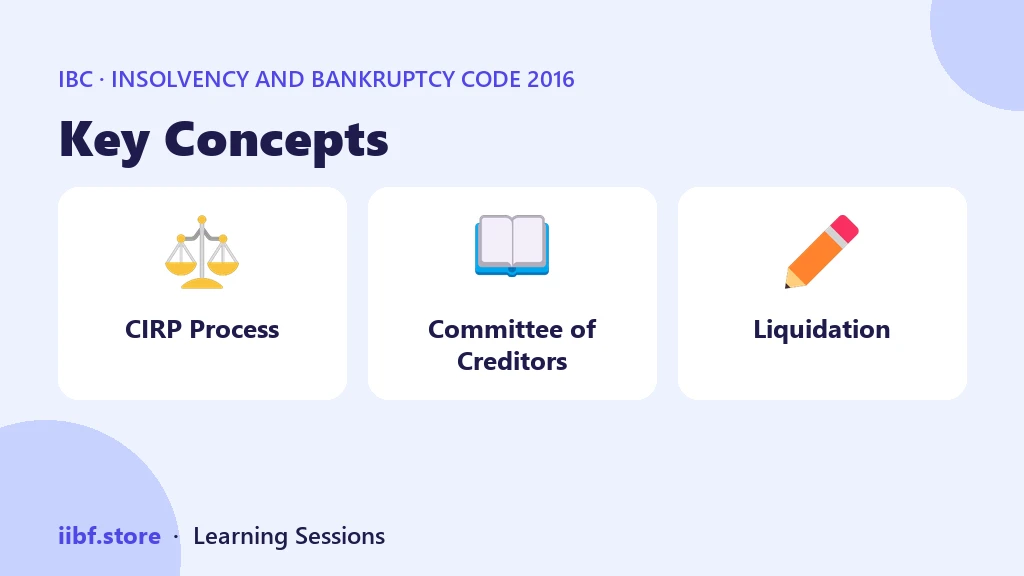
🗳️ CoC Voting and the 66% Threshold
Once the RP certifies compliance, the plan goes to the Committee of Creditors. Under Section 30(4), the CoC may approve a resolution plan by a vote of not less than sixty-six per cent of the voting share of the financial creditors. Voting share is proportionate to the financial debt owed to each creditor — it is not one-creditor-one-vote. Operational creditors, even large ones, have no vote unless they qualify as financial creditors.
The CoC is expressly permitted to consider feasibility and viability, the manner of distribution proposed, and whether the plan takes into account the interests of all stakeholders. The Supreme Court in the Essar Steel judgment confirmed that this evaluation is the commercial wisdom of the CoC, and that it is non-justiciable so long as the statutory requirements are met. The CoC may distribute unequally between classes of creditors provided the statutory minimums are respected.
Where the plan involves a combination requiring approval under competition law, that approval must be obtained before the CoC grants its approval. Where no plan secures the required majority within the CIRP period — 180 days, extendable by up to 90 days, subject to the outer limit of 330 days including litigation time — the corporate debtor proceeds to liquidation. The consequences of that path are covered in Failure of CIRP or Business: Liquidation and Voluntary Liquidation.
⚖️ Section 31 and the Limits of NCLT Scrutiny
The approved plan is submitted by the RP to the Adjudicating Authority. Under Section 31(1), if the NCLT is satisfied that the plan as approved by the CoC meets the requirements of Section 30(2), it shall by order approve the plan, and that plan becomes binding on the corporate debtor, its employees, members, creditors, guarantors and other stakeholders, including the Central Government, State Governments and local authorities to whom statutory dues are owed. The Tribunal must also be satisfied that the plan has provisions for its effective implementation.
The scope of scrutiny is deliberately narrow. The NCLT exercises limited judicial review — it checks statutory compliance, not commercial soundness. It cannot modify a plan, cannot substitute its own view of adequacy of payment, and cannot direct the CoC to reconsider on commercial grounds. If the plan does not comply with Section 30(2), the Tribunal may reject it under Section 31(2), which typically triggers liquidation.
| Question before the NCLT | Within scrutiny? | Basis |
|---|---|---|
| Are CIRP costs paid in priority? | ✅ Yes | Section 30(2)(a) |
| Do operational creditors get the statutory minimum? | ✅ Yes | Section 30(2)(b) |
| Is the resolution applicant eligible? | ✅ Yes | Section 29A |
| Does the plan contravene any law in force? | ✅ Yes | Section 30(2)(e) |
| Is the plan feasible and viable commercially? | ❌ No | CoC commercial wisdom |
| Should a creditor have received a higher amount? | ❌ No | Beyond judicial review |
| Can the Tribunal rewrite plan terms? | ❌ No | No power to modify |
⚠️ Common Mistake: Candidates write that the NCLT "may modify the plan to protect creditors". It cannot. Its only choices are approve under Section 31(1) or reject under Section 31(2).
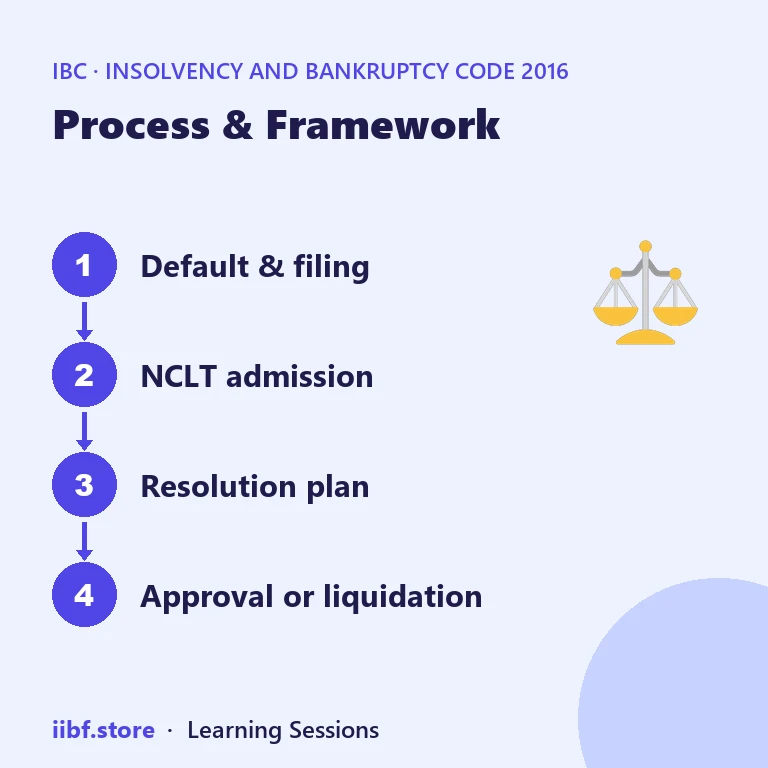
🏛️ Appeals to NCLAT and the Supreme Court
An appeal against an order approving a resolution plan lies to the National Company Law Appellate Tribunal, but only on the limited grounds set out in Section 61(3): that the plan contravenes a provision of law in force, that there has been material irregularity in the exercise of powers by the resolution professional, that debts owed to operational creditors have not been provided for as required, that insolvency resolution process costs have not been provided for in priority, or that the plan does not comply with any other criteria specified by the Board.
The appeal must be filed within thirty days, with the appellate tribunal empowered to condone a delay of up to a further fifteen days on sufficient cause. From the NCLAT, an appeal lies to the Supreme Court under Section 62, only on a question of law arising out of the order, within forty-five days, extendable by fifteen days.
The finality principle matters. The Supreme Court has held that a successfully resolved corporate debtor takes over on a clean slate: claims that were not part of the approved resolution plan stand extinguished, and no person can initiate proceedings in respect of such claims. Equally, an approved plan cannot be withdrawn or unilaterally modified by the successful applicant merely because circumstances changed after approval. This certainty is what makes the Code work as a credit discipline tool, a theme developed in Evolution of Insolvency and Bankruptcy Code.
For deeper reading on adjacent topics, see our guides on the moratorium under Section 14 IBC and the pre-packaged insolvency resolution process, which follows a compressed version of this same approval chain. Bankers tracking early stress signals should also review SMA Classification Norms, since most IBC filings begin life as a special mention account. The regulatory framework for stressed assets resolution is set out by the Reserve Bank of India, and the exam syllabus is published by IIBF. Browse all our notes at the Insolvency and Bankruptcy Code 2016 tag hub.
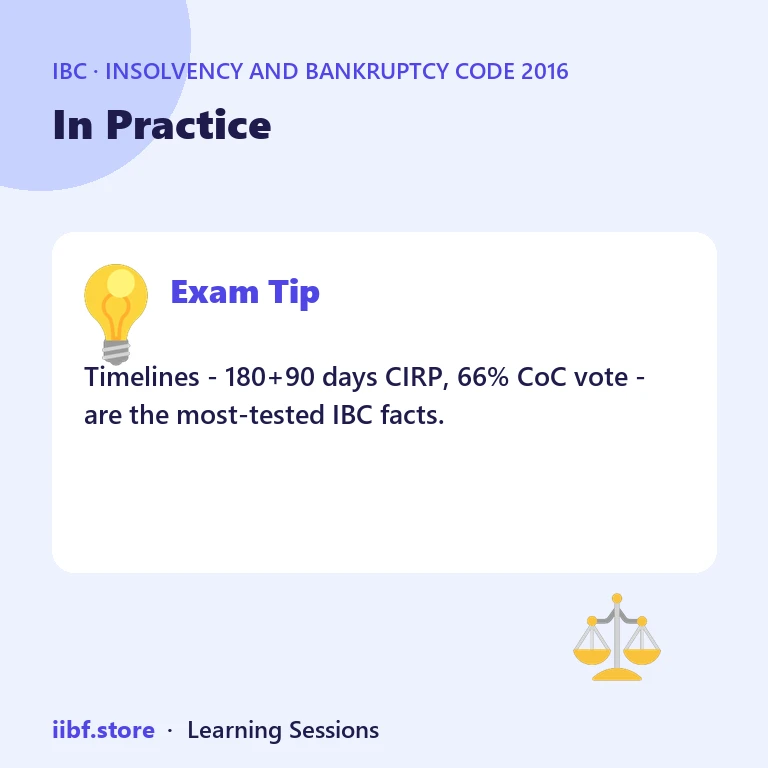
🧠 Practice MCQs: Resolution Plan Approval and NCLT Scrutiny
Q1. What is the minimum voting share of financial creditors required for the CoC to approve a resolution plan? (a) 51% (b) 66% (c) 75% (d) 90%
Answer: (b) — Section 30(4) requires not less than sixty-six per cent of the voting share of financial creditors.
Q2. Under Section 31, the NCLT approves a resolution plan when it is satisfied that the plan meets the requirements of which provision? (a) Section 12 (b) Section 29A only (c) Section 30(2) (d) Section 53
Answer: (c) — The Adjudicating Authority's satisfaction is anchored to compliance with Section 30(2).
Q3. Which of the following is NOT a ground of appeal under Section 61(3) against an order approving a resolution plan? (a) The plan contravenes a law in force (b) The CoC accepted too low a price (c) Material irregularity by the resolution professional (d) CIRP costs not provided in priority
Answer: (b) — Commercial adequacy is the CoC's commercial wisdom and is not an appellate ground.
Q4. Dissenting financial creditors under a resolution plan are entitled to receive at least: (a) The full admitted claim (b) The amount payable under Section 53 in a liquidation (c) Nothing (d) The same as consenting creditors
Answer: (b) — They must receive not less than the amount payable under the Section 53 waterfall, paid in priority.
Q5. An appeal from an NCLAT order to the Supreme Court under Section 62 lies: (a) On any ground (b) Only on a question of law arising out of the order (c) Only with CoC consent (d) Only in cross-border cases
Answer: (b) — Section 62 confines the Supreme Court appeal to a question of law, filed within forty-five days.
Want chapter-wise mock tests with 100+ MCQs? Start practising free →
❓ Frequently Asked Questions
Can the NCLT reduce the amount payable to a creditor under a resolution plan?
No. The Tribunal has no power to modify the plan. It may only approve it if Section 30(2) is satisfied, or reject it under Section 31(2), which ordinarily leads to liquidation.
Are government dues binding on the resolution applicant after approval?
Yes. Section 31(1) makes the approved plan binding on the Central Government, State Governments and local authorities in respect of statutory dues, and claims not forming part of the plan stand extinguished.
Who submits the approved resolution plan to the Adjudicating Authority?
The resolution professional submits it, after certifying compliance with Section 30(2) and obtaining CoC approval by the required sixty-six per cent voting share.
What happens if no resolution plan is approved within the CIRP timeline?
The Adjudicating Authority passes a liquidation order. The CIRP period is 180 days, extendable by up to 90 days, with an outer limit of 330 days including time consumed in legal proceedings.
🎯 Conclusion
Resolution plan approval is the pivot of the entire Code: the RP filters for legality, the CoC decides commercially by a sixty-six per cent vote, and the NCLT confirms compliance without second-guessing the price. Appeals are deliberately narrow, and finality is deliberately strong. If you can explain that division of labour in three sentences, you can answer most exam questions on this chapter. Reinforce it with Chapter 4 - Structure of the IBC, then test yourself with full-length mocks at iibf.store/tests.
Prefer revising from a printed book?
Chapter-wise books with MCQs after every chapter — minimal pages, complete coverage, delivered anywhere in India. Every book has a free sample to read first.
132 pages · 225 MCQs
Learning Sessions · Ashish Sir
188 pages · 435 MCQs
Learning Sessions · Ashish Sir
117 pages · 236 MCQs
Learning Sessions · Ashish Sir
Learning Sessions · Ashish Sir
118 pages · 299 MCQs
Learning Sessions · Ashish Sir
Learning Sessions · Ashish Sir
Learning Sessions · Ashish Sir
Learning Sessions · Ashish Sir
115 pages · 255 MCQs
Learning Sessions · Ashish Sir
Learning Sessions · Ashish Sir
334 pages · 936 MCQs
Learning Sessions · Ashish Sir
Learning Sessions · Ashish Sir
115 pages · 344 MCQs
Learning Sessions · Ashish Sir
107 pages · 240 MCQs
Learning Sessions · Ashish Sir
90 pages · 150 MCQs
Learning Sessions · Ashish Sir
Learning Sessions · Ashish Sir
131 pages · 672 MCQs
Learning Sessions · Ashish Sir
221 pages · 831 MCQs
Learning Sessions · Ashish Sir
128 pages · 524 MCQs
Learning Sessions · Ashish Sir
107 pages · 445 MCQs
Learning Sessions · Ashish Sir
148 pages · 478 MCQs
Learning Sessions · Ashish Sir
151 pages · 465 MCQs
Learning Sessions · Ashish Sir
148 pages · 375 MCQs
Learning Sessions · Ashish Sir
216 pages · 895 MCQs
Learning Sessions · Ashish Sir
109 pages · 300 MCQs
Learning Sessions · Ashish Sir
104 pages · 360 MCQs
Learning Sessions · Ashish Sir
82 pages · 297 MCQs
Learning Sessions · Ashish Sir
151 pages · 600 MCQs
Learning Sessions · Ashish Sir
98 pages · 282 MCQs
Learning Sessions · Ashish Sir
Quick quiz on this topic
5 exam-style questions from our free test bank — check yourself before you move on.
Practice this topic
Take a free mock test, download chapter PDFs, or watch a video class — all included on iibf.store.