13th Bipartite Settlement 2026: Salary Hike, 5-Day Week & Pension
If you work in a public sector bank, one question has been doing the rounds in every branch WhatsApp group this year: when does the next pay revision land? The 13th Bipartite Settlement is the wage agreement that will answer it, and the 2026 updates have finally given bankers a concrete timeline to watch. This guide breaks down the latest news on the 13th Bipartite Settlement — the likely salary hike, the truth about 5-day banking, and what happens to pension — using only what has actually been confirmed, not the hype numbers floating around social media.
13th Bipartite Settlement Latest Update 2026 · Watch on YouTube
What the 13th Bipartite Settlement actually is
Bank wages in India are not fixed by a pay commission the way central government salaries are. Instead, they are negotiated between the Indian Banks' Association (IBA), which represents management, and the United Forum of Bank Unions (UFBU), which represents employees and officers. The agreement they sign is called a bipartite settlement, and it is revised roughly every five years. The 13th Bipartite Settlement is simply the next round in that long-running series.
Each settlement resets four things at once: basic pay and the dearness allowance (DA) formula, the special allowances and perks, the pension and family-pension terms, and working conditions such as holidays. Because it touches every one of those levers, the 13th Bipartite Settlement matters to serving staff, retirees, and anyone planning a banking career alike.
The latest 2026 update: a 12-month deadline
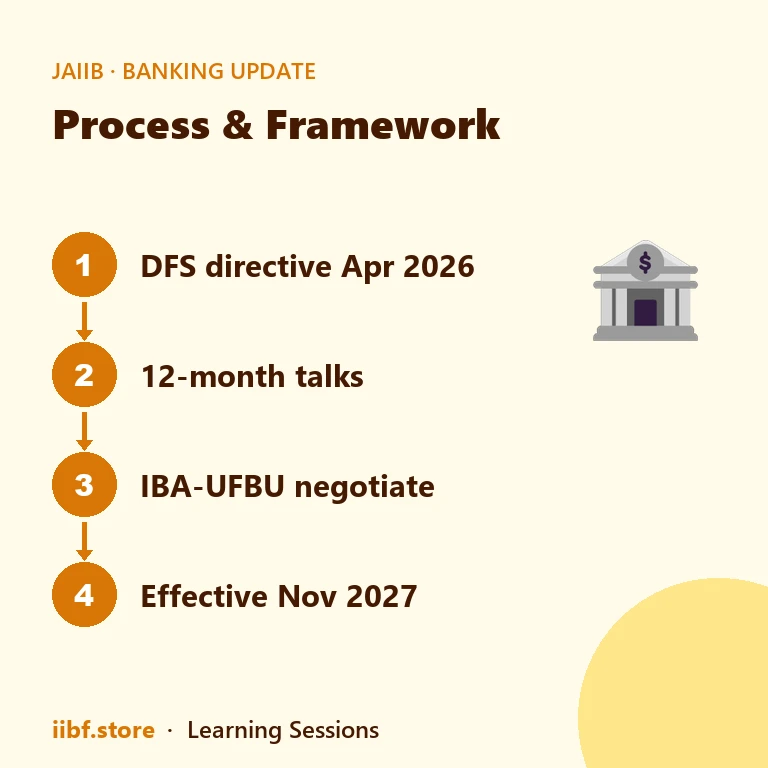
The headline development this year came from the government, not the unions. In a directive dated 20 April 2026, the Department of Financial Services (DFS) under the Ministry of Finance asked the State Bank of India and all nationalised banks to start and finish the wage-revision negotiations within a maximum of twelve months. The stated aim is a smooth rollout from 1 November 2027, which is when the current settlement period ends.
That single instruction is why the 13th Bipartite Settlement is suddenly back in the news. For the first time there is an official outer limit on the talks, which historically dragged on well past their due date. It does not mean money hits your account tomorrow — negotiations still have to run their course — but it does anchor the process to a real calendar for once.
Expected salary hike: what the numbers really say
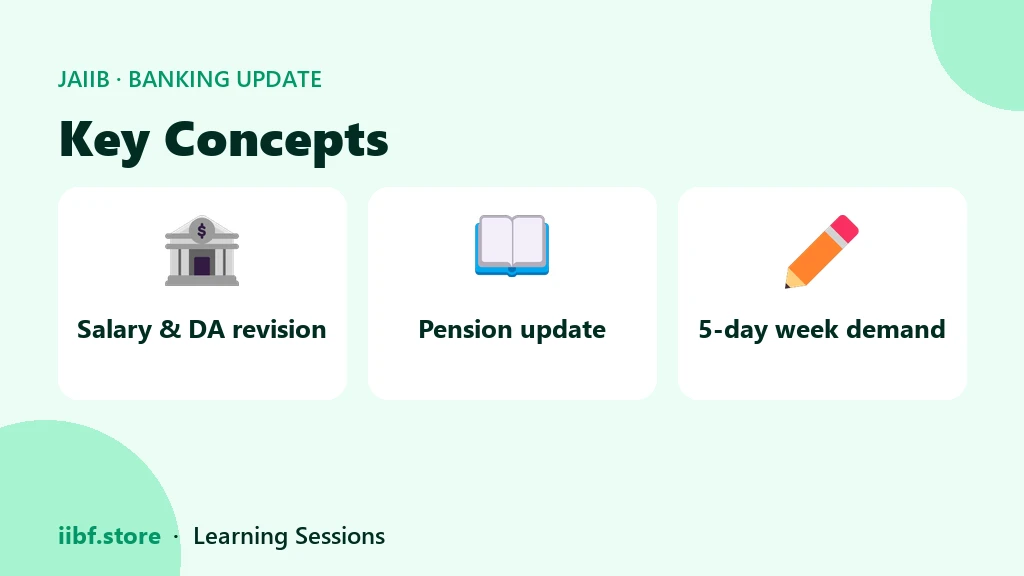
The most-searched part of any bipartite update is the raise. Here it pays to separate demand from likely outcome. The previous 12th settlement delivered a 17% increase on the wage bill. Early projections for the 13th Bipartite Settlement put the figure in the 15–20% range, while the unions are expected to open with a demand closer to 25–30%. The final number always lands somewhere between the union ask and what banks say they can afford, so treat any precise percentage you see online as a forecast, not a fact.
| Parameter | 12th Bipartite Settlement | 13th Bipartite Settlement (expected) |
|---|---|---|
| Effective from | 1 November 2022 | 1 November 2027 (targeted) |
| Wage-bill hike | 17% | 15–20% projected (union demand 25–30%) |
| Negotiating parties | IBA & UFBU | IBA & UFBU |
| Revision cycle | 5 years | 5 years |
| 5-day week | Agreed in principle, not notified | Key demand, pending Govt notification |
5-day banking and pension: separating fact from wish-list
Two demands generate the most excitement, so be precise about where they stand. A five-day week — all Saturdays off — has been agreed in principle between IBA and the unions, but it is not yet in force. It requires a final notification from the Government of India, and until that gazette appears, the second and fourth Saturdays remain the only guaranteed offs. Anyone telling you the 13th Bipartite Settlement has already delivered a five-day week is running ahead of the paperwork.
On pension, the recurring demands are periodic updation for older retirees and improvements to family pension. These are live agenda items for the settlement rather than settled outcomes. The sensible reading: expect movement, but wait for the signed record note before assuming any specific figure.
What bankers and aspirants should do now
If you are already in service, the practical move is to keep an eye on official UFBU and IBA communications rather than forwarded screenshots. If you are preparing to join the industry, the settlement is a reminder that banking still offers structured, negotiated pay growth — a strong reason to clear your certifications early. Candidates targeting promotions should lock in JAIIB and CAIIB, since both carry direct increments under the very allowance structure the 13th Bipartite Settlement will revise.
Build a steady routine with a study planner, test yourself on free mock tests, and keep reading current banking developments on the iibf.store blog. Promotions plus the next wage revision compound — the earlier you qualify, the more of the hike you actually capture.
Frequently Asked Questions
When will the 13th Bipartite Settlement be implemented?
The government has directed banks to complete negotiations within 12 months of the April 2026 directive, targeting effect from 1 November 2027. Actual payout depends on when the settlement is signed.
How much salary hike is expected in the 13th Bipartite Settlement?
Projections point to a 15–20% rise on the wage bill, against a likely union demand of 25–30%. The 12th settlement gave 17%. Any exact figure before signing is a forecast, not a confirmed number.
Is 5-day banking part of the 13th Bipartite Settlement?
A five-day week is a key employee demand and has been agreed in principle, but it is not yet implemented. It needs a final Government of India notification before all Saturdays become holidays.
Who negotiates the bipartite settlement?
The Indian Banks' Association (IBA) negotiates on behalf of bank management, and the United Forum of Bank Unions (UFBU) represents employees and officers. They revise pay, DA, pension and perks roughly every five years.
The bottom line: the 13th Bipartite Settlement is now on a defined clock, with a realistic mid-teens-to-twenty-percent hike, a five-day week that still awaits notification, and a November 2027 target. Prepare for your promotions today so you are ready to benefit the moment the ink dries. Start with a free practice test and keep your preparation moving.
Free Revision PDFs — One-Liners & True/False
Printable last-minute revision sheets for 13th Bipartite Settlement 2026: Salary Hike, 5-Day Week & Pension: 20 quick-fire one-liners and 20 true/false questions, each with answers & explanations. Free to download and share.
Prefer revising from a printed book?
Chapter-wise books with MCQs after every chapter — minimal pages, complete coverage, delivered anywhere in India. Every book has a free sample to read first.

























Quick quiz on this topic
5 exam-style questions from our free test bank — check yourself before you move on.
Practice this topic
Take a free mock test, download chapter PDFs, or watch a video class — all included on iibf.store.