CAIIB ABM Exam Guide: Module Weightage and Study Plan
Advanced Bank Management is one of the toughest papers in the CAIIB curriculum because it mixes statistics, HR, credit and marketing into one exam. If you are staring at the syllabus wondering where to start, this CAIIB ABM exam guide breaks the paper into modules, ranks topics by priority, and lays out a study plan you can follow around a full-time banking job.
Most candidates do not fail the CAIIB ABM exam because the concepts are hard. They fail because the syllabus feels scattered and revision starts too late. A little structure fixes both problems, and that structure is what this guide gives you.
📚 CAIIB ABM Syllabus and Module Weightage
The CAIIB ABM paper is built from four broad modules: Business Statistics, Human Resource Management, Credit Management, and Marketing in a bank setting. Each module draws questions from a mix of theory and applied numericals, so you cannot skip any one of them entirely.
Business Statistics covers tools like measures of central tendency, dispersion, skewness and kurtosis, plus correlation and regression. Credit Management leans on appraisal and monitoring, including term loans and working capital assessment.
HR Management tests recruitment, training and appraisal systems, while Marketing covers segmentation and digital banking basics. The table below gives a quick, relative view of where each module sits and which parts this guide covers in depth.
| Module | Core Topics | Relative Weightage | Covered in This Guide |
|---|---|---|---|
| Business Statistics | Central tendency, dispersion, correlation, regression, time series | High | ✅ |
| Credit Management | Term loans, working capital, credit monitoring, compliance | High | ✅ |
| Human Resource Management | Recruitment, training, HR & IT, appraisal systems | Medium | ✅ |
| Marketing in Banking | Segmentation, CRM, digital marketing | Medium | ❌ |
| Treasury & Risk Overlap | Forex, investment basics shared with BFM | Low-Medium | ❌ |
📊 High-Weightage Topics You Cannot Skip
Statistics and credit together carry most of the paper, so start your ABM exam prep there. Correlation and regression questions often appear as short numericals, and they reward candidates who practise formulas rather than just reading theory.
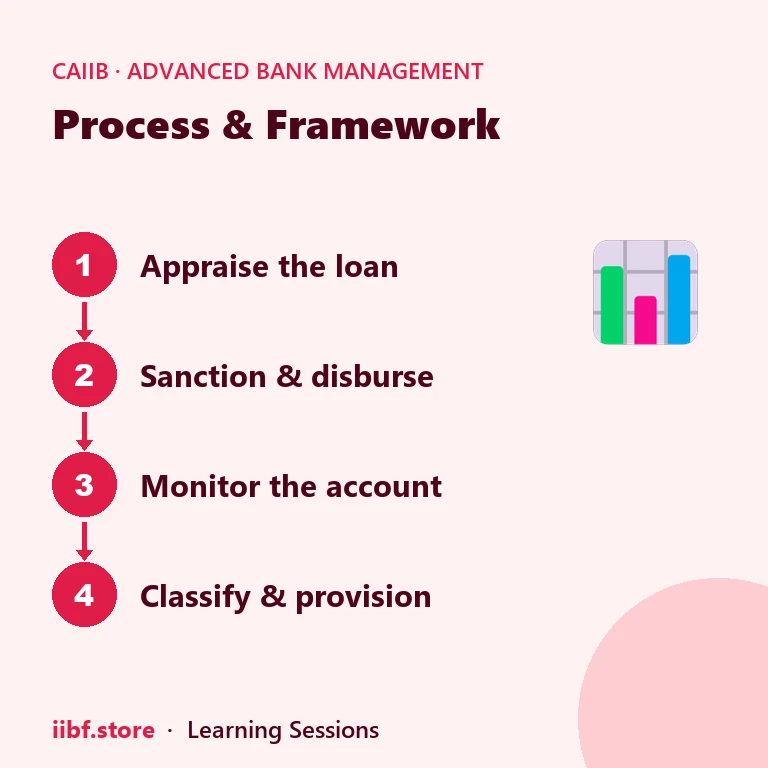
On the credit side, examiners like to test credit control and credit monitoring alongside term loan appraisal. Knowing the sequence of appraisal, sanction, disbursement and monitoring will help you answer scenario-based questions quickly.
💡 Exam Tip: Build a one-page formula sheet for statistics before you start revision. Reviewing it daily for five minutes beats re-reading the full chapter every time.
Do not treat statistics as a separate subject. Banks actually use these tools to track NPA trends and portfolio quality, so the concepts connect directly to credit topics you will study anyway.
💼 HR and Compliance Modules Bankers Often Underrate
HR Management feels light compared to statistics and credit, so many candidates under-prepare it and lose easy marks. This module covers how banks manage development of human resources, from training design to career planning.
It also covers HR and information technology, which is increasingly relevant as banks digitise payroll, appraisal and learning systems. Expect direct, definition-style questions here rather than long numericals.
Compliance is the other under-rated topic. The paper tests the framework for identification of compliance issues and compliance risks, which links HR governance to broader risk management.
⚠️ Common Mistake: Skipping HR and compliance chapters to save time for statistics. These sections are shorter to read and easier to score if you revise them even once.
Treat HR and compliance as low-effort, high-return marks. A single focused read a few days before the exam is usually enough to lock in the definitions.
🗓️ A Practical Study Plan to Clear the CAIIB ABM Exam
Spread your preparation across four stages instead of cramming everything together. Start with statistics and credit since they need practice, not just reading, and practice takes longer to build.
Move to working capital finance next, since it connects directly to term loan appraisal and credit monitoring you already covered. Keep HR and marketing for the final stretch, when you need lighter, faster revision.
📌 Remember: Revisit the CAIIB ABM exam pattern on IIBF's own site close to your exam date, since formats can be updated between cycles.
In the last week, rotate between mock questions and your formula sheet instead of reading new material. Active recall through practice questions works better than passive re-reading at this stage.
Keep a small mistake log through your preparation. Every time you get a mock question wrong, write down why, since repeated mistakes usually point to one or two weak topics you can fix quickly.
🎯 Exam-Day Strategy and How ABM Connects to Other Papers
On exam day, attempt statistics and credit questions first while your formula recall is freshest. Save HR and marketing questions for later, since they depend on memory rather than working through numbers.
ABM does not exist in isolation. Credit topics you learn here connect to how banks handle stressed assets, which is why it helps to also read about NPA classification and provisioning and a full walkthrough of term loan appraisal in banks.
Treasury concepts touched on in ABM go much deeper in BFM. If you want the fuller picture, our guide to treasury operations in banks is a useful companion read, and BFM candidates should also look at securitisation of standard assets for how banks manage balance-sheet risk beyond ABM.
Keep your answers concise in the descriptive portions. Examiners reward candidates who state the concept, give one example, and move on, rather than writing long, unfocused paragraphs.
🧠 Practice MCQs: CAIIB ABM Exam
Q1. In a right-skewed (positively skewed) distribution, which measure of central tendency is typically the highest? (a) Mean (b) Median (c) Mode (d) They are always equal
Answer: (a) — In a positively skewed distribution the mean is pulled toward the long right tail, so mean exceeds median, which exceeds mode.
Q2. Which ratio is most commonly used to test a borrower's debt-servicing capacity in term loan appraisal? (a) Current Ratio (b) Debt Service Coverage Ratio (c) Quick Ratio (d) Stock Turnover Ratio
Answer: (b) — Debt Service Coverage Ratio measures whether projected cash accruals can comfortably cover loan instalments and interest.
Q3. Which HR function focuses on aligning employee skill development with the bank's future needs? (a) Recruitment (b) Training and Development (c) Compensation (d) Exit Interview
Answer: (b) — Training and Development builds capability ahead of future roles, unlike recruitment or compensation which address present-day staffing.
Q4. In working capital assessment, MPBF stands for and estimates: (a) Maximum Permissible Bank Finance (b) Minimum Profit before Financial Fees (c) Market Price of Bank Funds (d) Mandatory Provisioning for Bad Finance
Answer: (a) — Maximum Permissible Bank Finance estimates the ceiling on working capital finance a bank can extend based on the borrower's current assets and liabilities.
Q5. A correlation coefficient of -0.9 between two variables indicates: (a) Strong positive relationship (b) No relationship (c) Strong negative relationship (d) Perfect positive relationship
Answer: (c) — A coefficient close to -1 shows a strong negative relationship, meaning the variables move in opposite directions.
Want chapter-wise mock tests with 100+ MCQs? Start practising free →
❓ Frequently Asked Questions
What are the main modules in the CAIIB ABM syllabus?
The paper is organised into Business Statistics, Human Resource Management, Credit Management and Marketing, with statistics and credit generally carrying the most weight.
Is the CAIIB ABM exam tougher than BFM?
Both papers are demanding in different ways. ABM leans on statistics and HR concepts, while BFM focuses more on treasury, risk and financial statements, so difficulty often depends on your own background.
How should I split my study time for the CAIIB ABM exam?
A common approach is to front-load statistics and credit topics early since they need practice, then cover HR and marketing closer to the exam since they are faster to revise.
Where can I check the official CAIIB ABM exam pattern?
Always confirm the current syllabus, exam pattern and eligibility on the official IIBF website, since formats can be revised between exam cycles.
Clearing the CAIIB ABM exam comes down to prioritising statistics and credit, not skipping HR and compliance, and practising with real mock questions in the final weeks. Browse more Advanced Bank Management articles on this tag, or head straight to our CAIIB course for structured, chapter-wise preparation.
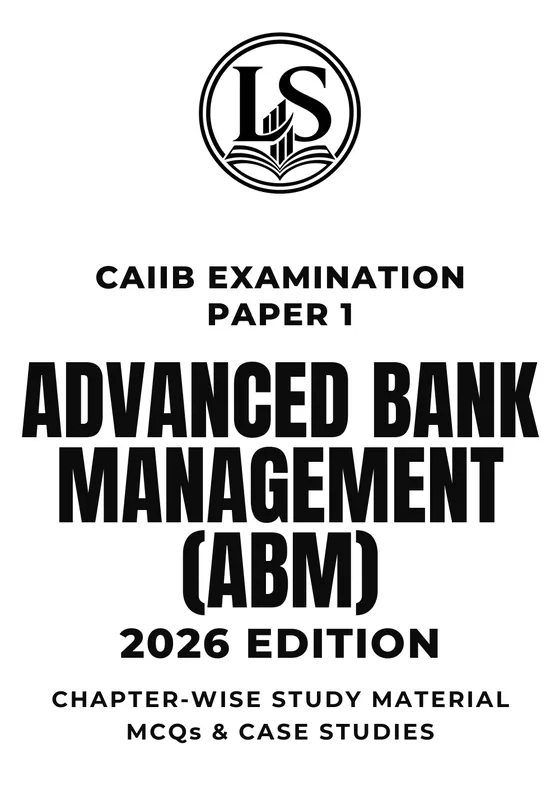
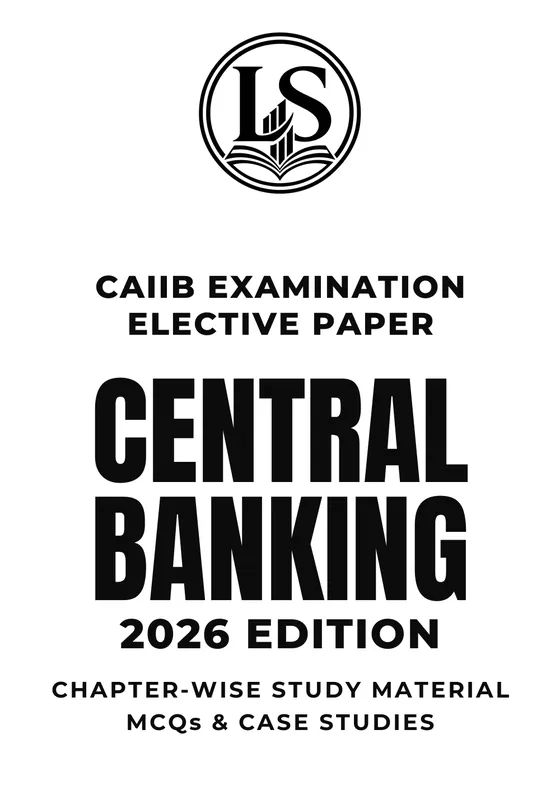
Prefer revising from a printed book?
Chapter-wise books with MCQs after every chapter — minimal pages, complete coverage, delivered anywhere in India. Every book has a free sample to read first.












Quick quiz on this topic
5 exam-style questions from our free test bank — check yourself before you move on.
Practice this topic
Take a free mock test, download chapter PDFs, or watch a video class — all included on iibf.store.